
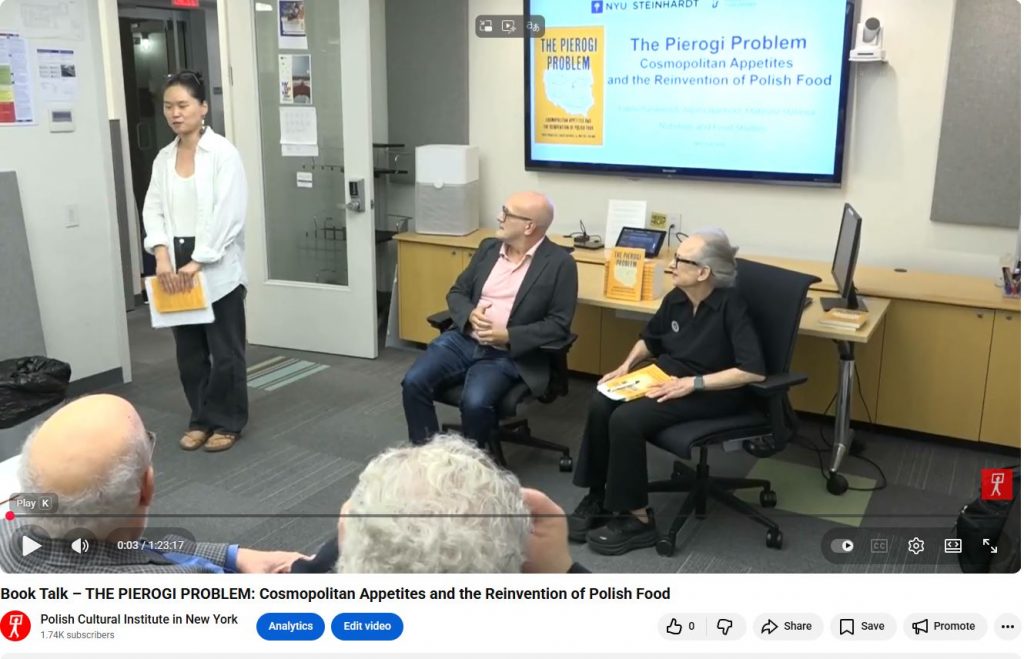
Book Talk – THE PIEROGI PROBLEM: Cosmopolitan Appetites and the Reinvention of Polish Food
Friday, September 26, 2025 at 5:30 PM
New York University 5th Floor, Room 510
411 Lafayette Street, New York, NY 10003
To RSVP, use the QR code on the image or click here.
Enjoy the book discount code UCPSAVE30
Video recording is available on our YouTube.
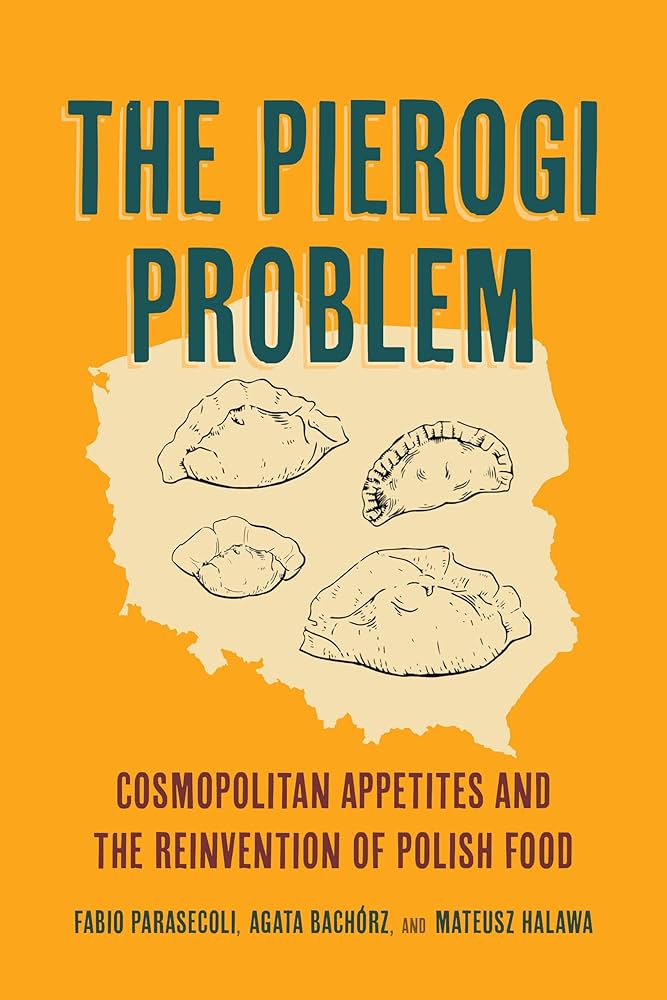
The culinary landscape of Poland is significantly changing, reshaped by a new generation of food producers, chefs, and media personalities. The Pierogi Problem examines people’s networks, places, material culture, and media to explain how Polish tastemakers embrace context-specific strategies to localize discourses, practices, and values amid an increasingly globalized foodie culture. The decades following the end of Poland’s socialist regime were marked by a rising interest in foreign cuisines and Western forms of consumption. Today, however, ingredients, cooking techniques, and dishes that were once considered ordinary or part of the country’s uncomfortable past are being refashioned to reflect transformations in cultural hierarchies. This book chronicles how and why local, traditional, and artisanal foods are reemerging for changing cosmopolitan appetites.
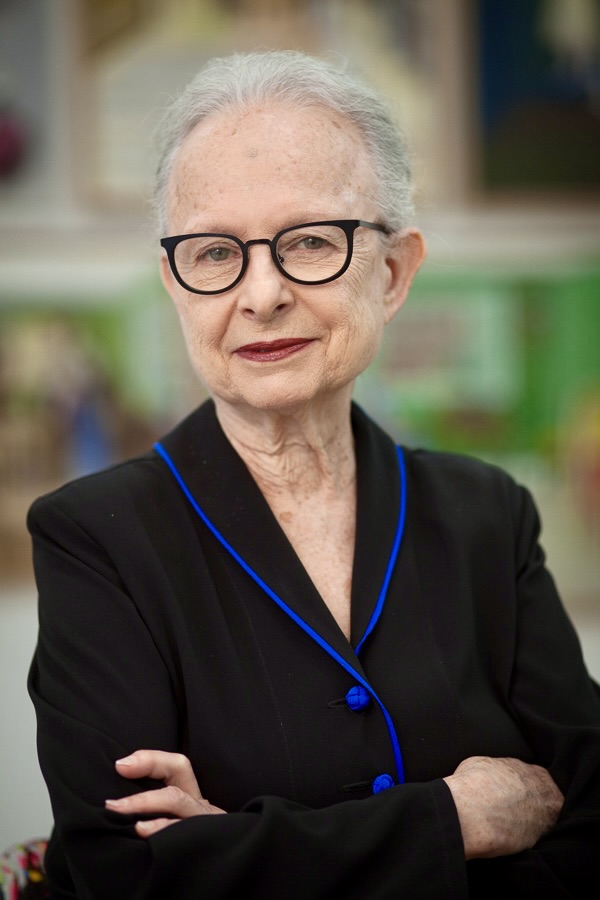
Barbara Kirshenblatt-Gimblett is University Professor emerita and Professor Emerita of Performance Studies at New York University, where she taught “Food and Performance,” a graduate seminar, for many years. She is currently Ronald S. Lauder Chief Curator of the Core Exhibition at POLIN Museum of the History of Polish Jews, in Warsaw. Her books include Destination Culture: Tourism, Museums, and Heritage (University of California Press, 1998); Image Before My Eyes: A Photographic History of Jewish Life in Poland, 1864–1939 with Lucjan Dobroszycki (Schocken, 1987); They Called Me Mayer July: Painted Memories of a Jewish Childhood in Poland Before the Holocaust with Mayer Kirshenblatt (University of California Press, 2007); The Art of Being Jewish in Modern Times with Jonathan Karp (University of Pennsylvania Press, 2013), and Anne Frank Unbound: Media, Imagination, Memory with Jeffrey Shandler (University of Indiana Press, 2012).
She was awarded the 2021 Lifetime Achievement Award from the American Folklore Society; honored for lifetime achievement by the Foundation for Jewish Culture; received honorary doctorates from the Jewish Theological Seminary of America, University of Haifa, and Indiana University; the 2015 Marshall Sklare Award for her contribution to the social scientific study of Jewry; and was decorated with the Officer’s Cross of the Order of Merit of the Republic of Poland. She was elected to the American Academy of Arts and Sciences and awarded the Dan David Prize. She serves or has served on advisory boards for the YIVO Institute for Jewish Research, Council of American Jewish Museums, Jewish Museum Vienna, Jewish Museum Berlin, and the Jewish Museum and Tolerance Center in Moscow, and as vice-chair of ICMEMO International Committee of Memorial Museums in Remembrance of the Victims of Public Crimes. She also advises on museum and exhibition projects in Lithuania, Belarus, Albania, Israel, New Zealand, and the United States.
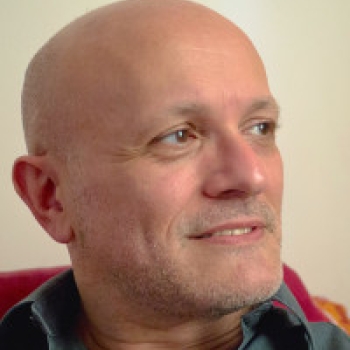
Fabio Parasecoli is Professor of Food Studies in the Nutrition and Food Studies Department at New York University and a fellow at the Institute of Philosophy and Sociology of the Polish Academy of Sciences. His research explores the cultural politics of food, particularly in media, design, heritage, and international affairs. Recent books include Knowing Where It Comes From: Labeling Traditional Foods to Compete in a Global Market (2017), Food (2019), Global Brooklyn: Designing Food Experiences in World Cities (2021, coedited with Mateusz Halawa), Gastronativism: Food, Identity, Politics (2022), Practicing Food Studies (2024, coedited with Amy Bentley and Krishnendu Ray) and The Pierogi Problem: Cosmopolitan Appetites and the Reinvention of Polish Food (2025, coauthored with Agata Bachórz and Mateusz Halawa). fabioparasecoli.com
Through multidisciplinary collaboration and autoethnographic reflection, the authors conceptualize the cultural ambitions, culinary identities, and political entanglements of Polish ‘tastemakers’ who (re)configure the historical and sensory qualities of local foods. A must-read for food scholars.—Cristina Grasseni, Professor of Anthropology, Leiden University
Much work looks at how ‘traditional’ foods become fashionable, but The Pierogi Problem goes deeper, unraveling the aspirations and anxieties tied up in the work of curating new Polish cuisine to fit twenty-first-century global trends, tastes, and digital spaces.—Michaela DeSoucey, author of Contested Tastes: Foie Gras and the Politics of Food
About the Book
The culinary landscape of Poland is significantly changing, reshaped by a new generation of food producers, chefs, and media personalities. The Pierogi Problem examines people’s networks, places, material culture, and media to explain how Polish tastemakers embrace context-specific strategies to localize discourses, practices, and values amid an increasingly globalized food culture. The decades following the end of Poland’s socialist regime were marked by a rising interest in foreign cuisines and Western forms of consumption. Today, however, ingredients, cooking techniques, and dishes that were once considered ordinary or part of the country’s uncomfortable past are being refashioned to reflect transformations in cultural hierarchies. The Pierogi Problem chronicles how and why local, traditional, and artisanal foods are reemerging for changing cosmopolitan appetites. More…
About the Authors
Fabio Parasecoli is Professor in the Department of Nutrition and Food Studies at New York University. He is author of numerous books, including Gastronativism: Food, Identity, Politics.
Agata Bachórz is Assistant Professor in the Faculty of Social Sciences at the University of Gdańsk, Poland.
Mateusz Halawa is an anthropologist and sociologist working between academic practice and design strategy.
The event is co-organized with the Polish Cultural Institute New York.