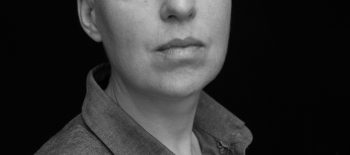

Zofia Hartman, author of “Sugihara’s List” in conversation with Agi Legutko of Columbia University
Thursday, October 16, 2025 at 6:30 – 8:30 PM
The Ukrainian Institute of America
2 E 79th St, New York, NY 10075
Watch the recorded event on our YouTube channel.

The Polish Cultural Institute New York invites to the conversation between Zofia Hartman, author of the book Sugihara’s List, which explores the story of the visas issued by Chiune Sugihara (1900–1986), the Japanese Vice-Consul in Lithuania, that saved the lives of thousands of Jews during World War II and Agi Legutko of Columbia University.
In the summer of 1940, the last weeks of the independent Republic of Lithuania, Chiune Sugihara serving as consul of the Empire of Japan in Kaunas and a spy, issued thousands of transit visas to Jewish refugees, mainly from Poland, enabling them to escape via Japan to safe places around the world. Officially, they were to travel through Japan on their way to the Dutch island of Curaçao in the Caribbean. In reality, no one was going to Curaçao, and most of the Jews who were saved eventually found refuge in Japan, the Shanghai ghetto, Australia, or New Zealand. This remarkable and still little-known story, told by Zofia Hartman, a researcher and author of a book on the subject, shows how rescue came from the most unexpected direction.
The Dutch and Poles also played a role in the diplomatic rescue operation. An official of Japan, allied with Germany, saving Jews? The Soviets agreeing to let them pass through Siberia? Sugihara’s story is mysterious and not yet fully understood. The author shows how it has been received and how ambiguous it is. And it seems that the process of Sugihara’s assimilation into the social consciousness.
During the event, Hartman will speak about the process of writing the book, the historical research behind it, and the stories of the refugees who were granted a “new life” thanks to Sugihara’s courageous actions. The event will be an opportunity to look at Sugihara not only as a hero, but also as a figure whose reception still raises questions today.
The special guest of the evening is Jolanta Nitoslawska, granddaughter of Polish diplomat Tadeusz Romer, Polish Ambassador in Japan 1937-1941

About the book
In my mind I count all the names, browse through all the faces. The children, grandchildren, now even great grandchildren and even the little grandson of a granddaughter, so a great, great grandson. Cousins… a great clan. One big Israeli family. From Jerusalem to the Negev desert. They are far away, and to tell you the truth, I visit them less and less often. And as far as the great grandchildren are concerned, I can’t say I know them. But I have them, and they have themselves. They are alive. All this because their ancestor, the family sage, Warsaw lawyer Zerach Warhaftig, father, grandfather and great grandfather, was on Sugihara’s list. The now famous and at the time lifesaving visas were issued by the Japanese consul to him, his wife and half-year-old son in Kaunas. Together with other immigrants they traversed Siberia and reached a welcoming Japan before traveling further on to America and, finally, once the war was over, settling down in Jerusalem. A trip around the world. And with a great sense of timing – in 1948, Zerach Warhaftig, together with thirty other founding fathers and mothers, signed Israel’s declaration of independence. He served the country for another half a century as a politician, lawyer and professor. He was the first to write the story of the Jewish refugees who emigrated from Kaunas and of the noble personage of the Japanese consul who saved people’s lives by breaking with procedures. Personally, Zerach was my uncle, the brother of my grandmother, one of the most important people in my life. In his Jerusalem apartment, I absorbed Judaism and Hebrew, we spoke about family and Jewish history. If not for him, I wouldn’t be a translator or a rabbinic literature lecturer today. And so, I too am greatly in debt to Chiune Sugihara. – Piotr Paziński

Zofia Hartman, a young researcher, activist, cultural animator, and oboist. She specializes in the study of Chiune Sugihara and the history associated with him. In 2024, her book Sugihara’s List was published, for which she was honored with the Przegląd Wschodni Award (Eastern Review Award) in 2025. She is currently pursuing a doctorate at the University of Łódź, focusing on the post-war history of the former Sobibór extermination camp.
She completed a five-year cultural studies program at the Faculty of Polish Studies at Jagiellonian University in Kraków. In 2020, she also completed over a decade of classical music education, culminating in studies at the Krzysztof Penderecki Academy of Music in Kraków, where she specialized in instrumental performance.
Her interests include Jewish culture and history, music, and literature. She regularly performs as an oboist in Poland and abroad. She combines her academic research with cultural event organization, primarily concerts and literary meetings. She is the main character of the film “Hidden Heritage” directed by Sławomir Grünberg (the film is in post-production).

Dr. Agnieszka (Agi) Legutko is Senior Lecturer in Yiddish and Director of the Yiddish Language Program at Columbia University. She received her Ph.D. with distinction in Yiddish studies from Columbia University. She specializes in modern Yiddish literature, language, and culture, women and gender studies, and spirit possession in Judaism. Her research interests include trauma, memory, performance, and the body represented in Jewish literature, theater and film, as well Polish and Jewish cultural interconnections. Her publications have appeared in several journals and essay collections on Yiddish literature and culture, suchas Silent Souls? Women in Yiddish Culture, Dybbuk: Between Two Worlds, Theatermachine: Tadeusz Kantor in Context, The Dybbuk Century: The Jewish Play That Possessed the World, and the upcoming special issue for Studies in American Jewish Literature, Beyond Canonization: The Contested Legacy of Isaac Bashevis Singer. She is the creator of the Dybbuk Archives, an online archive built with the support of the 2022 Provost’s Grant, documenting the production history of S. An-sky’s Dybbuk, or Between Two Worlds (1914/1917), one of the most famous plays in Jewish theater, and is currently completing a manuscript exploring the trope of dybbuk possession in modern Jewish cultures. She is the recipient of the 2024 Lenfest Award for Distinguished Faculty, and the 2024 Presidential Award for Outstanding Teaching. She loves sharing her passion for Yiddish with her students at Columbia and beyond.
Austeria Publishing House (based in Kraków, 6 Szeroka st.) offers the most valuable books related to Jewish subjects as well as European literature, books translated into Polish from English, French, Italian, German, Hungarian, Yiddish or Hebrew.
LOGTV, Ltd. was founded in 1999 by the acclaimed documentary filmmaker, Slawomir , for the production and distribution of documentary films. The films produced by LOGTV, Ltd. were not only shown and awarded at festivals but also distributed in cinemas and shown on TV around the world. Educational activities are of key importance for LOGTV, Ltd. – the films are screened not only in cinemas and on TV, but also in educational institutions. The company run together with Barbara Grünberg acts as a participant and organizer of seminars and lectures accompanying the screenings of its films.
The Ukrainian Institute of America, Inc. is a nonprofit organization dedicated to promoting the art, music and literature of Ukraine and the Ukrainian diaspora. It serves both as a center for the Ukrainian-American community and as America’s “Window on Ukraine,” hosting art exhibits, concerts, film screenings, poetry readings, literary evenings, children’s programs, lectures, symposia, and full educational programs, all open to the public.
MORE:
Vessels of Light – The Symphony for Sugihara: Lera Auerbach created the music, libretto, and artistic concept for Symphony No. 6, “Vessels of Light,” for Violoncello, Choir, and Orchestra where she weaves a multilayered tapestry of words and music with Yiddish poetry, the art of Japanese Kintsugi, the mystical Shevirat ha-kelim (“breaking of the vessels”), and the silent words of biblical Psalm 121 in a work she dedicates to Chiune Sugihara and all those who risk everything to save others.
A documentary about the Vessels of Light project.
Press about Vessels of Light:
Yad Vashem commissions musical tribute to Chiune Sugihara by Jerusalem Post
Kristina Reiko Cooper: How the heroic acts of Chiune Sugihara influenced a new work for cello by The Strand
Cellist Kristina Reiko Cooper to Appear as Soloist in Holocaust Memoria Day Concert by Musical America