
Rachela Auerbach with Samuel Kassow – Encounters with Polish and Ukrainian Literature
S5E12 and all video recordings are available on our YouTube.
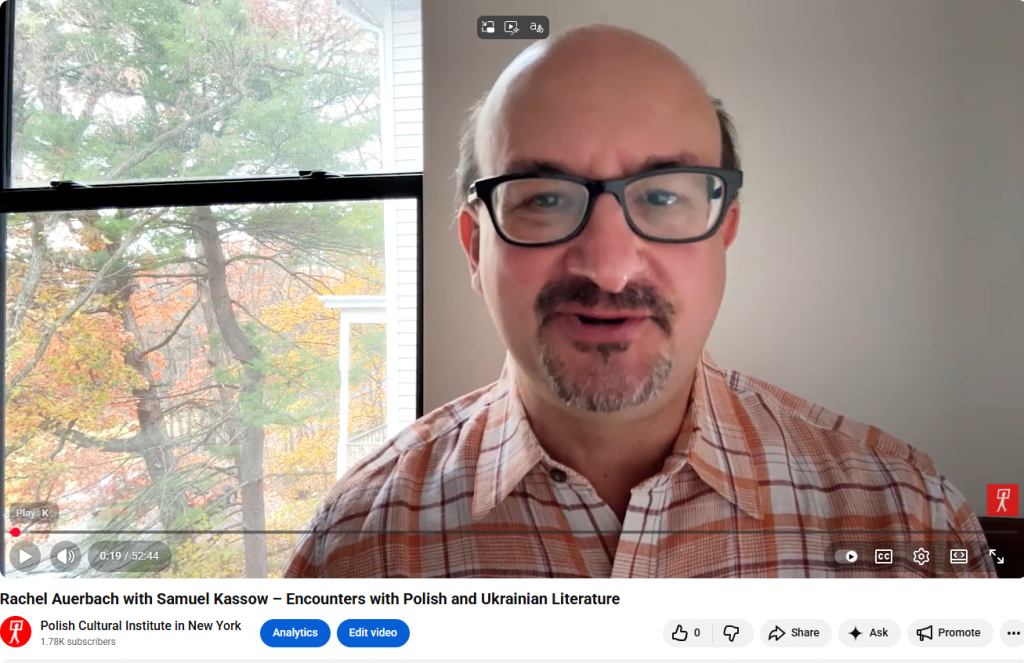
Encounters with Polish and Ukrainian Literature is a video series for anyone interested in literature and the culture of books and reading. Each month, host David A. Goldfarb will present a new topic in conversation with an expert on that author or book or movement in Polish literature. More about the Encounters with Polish and Ukrainian Literature series and the timeline.
Rachela Auerbach (Rokhl Oyerbakh, 1903-76) was born in what today is Lanivtsy in contemporary Ukraine, and was a key figure in the Polish-Jewish intelligentsia in L’viv (then Lwów) and Warsaw, moving to Tel Aviv in 1950. She had been part of Yiddish Modernist circles between the wars, as an editor of the literary journal Tsushtayer, encouraging Bruno Schulz to publish his prose and Debora Vogel to write poetry in Yiddish, which was not Vogel’s native language. She was also a journalist for the L’viv paper Chwila and other publications. During the Second World War, she documented everyday life in the Warsaw Ghetto from her position as director of a soup kitchen and as a member of the Oneg Shabbat group that compiled the secret Ringelblum Archive the known parts of which are housed today at the Jewish Historical Institute in Warsaw. She was one of three survivors among the Oneg Shabbat circle who helped to unearth the archives buried during the war, later founding the Department for the Collection of Witness Testimony at Yad Vashem in Israel, and testified at the 1961 trial of Adolf Eichmann in Jerusalem, always stressing the importance of survivor testimony bearing witness to the Holocaust in ways that could not be attested through documents or statistics.
In this episode, we focus on her Warsaw Testament looking at some of the vignettes she captured in the soup kitchen during the war. We consider some of the key moments in her biography such as her relationship with poet Itzik Manger and the turning points mentioned above as well as others, and how she championed the importance of bearing witness and memorializing the dead and the destruction of Jewish culture.
Rachela Auerbach in English translation and recommended resources:
Rachela Auerbach. The Jewish Revolt: A Warsaw Ghetto Exhibition. Tr. Michael Wex. Jerusalem: Toby Press, 2025.
Rachela Auerbach from Yizkor. Tr. Leonard Wolf in David Roskies, ed. The Literature of Destruction: Jewish Responses to Catastrophe. Philadelphia-New York-Jerusalem: The Jewish Publication Society, 1989).
Rachela Auerbach. Warsaw Testament. Ed. and tr. Samuel Kassow. Amherst, Mass.: White Goat Books, 2024.
Samuel Kassow. Who Will Write Our History? Emanuel Ringelblum, the Warsaw Ghetto, and the Oyneg Shabes Archive. Bloomington, Ind.: Indiana University Press, 2018.
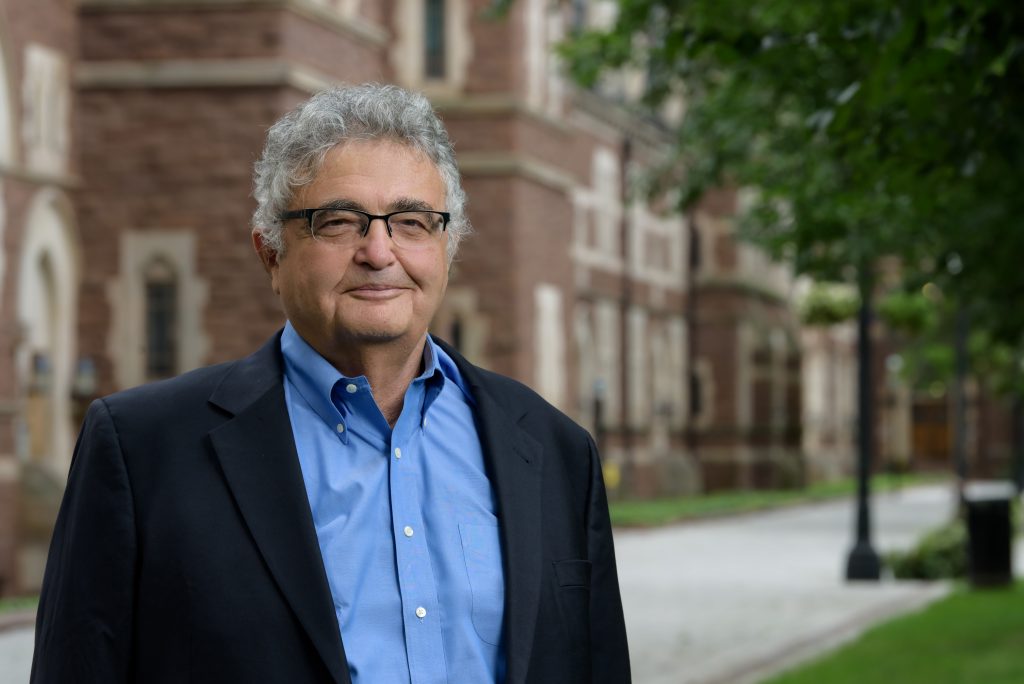
Samuel Kassow, Charles H. Northam Professor of History at Trinity College, holds a Ph.D. from Princeton University. He has been a Lady Davis Visiting Professor at the Hebrew University, the Leon I. Mirell Visiting Professor at Harvard and the Shier Distinguished Visiting Professor at the University of Toronto. From 2006 until 2013 he was the lead historian for two galleries of the recently opened POLIN Museum of the History of Polish Jews in Warsaw. He has been elected a Fellow of the American Academy of Jewish Research. Professor Kassow is the author of Students Professors and the State in Tsarist Russia: 1884-1917 (University of California Press, 1989), The Distinctive Life of East European Jewry (YIVO, 2003), and Who will Write our History: Emanuel Ringelblum and the Secret Ghetto Archive (Indiana, 2007), which received the Orbis Prize of the AAASS and which was a finalist for a National Jewish Book Award. It has been translated into eight languages. He is also co-editor of Between Tsar and People (Princeton University Press, 1993), and co-edited with David Roskies, Catastrophe and Rebirth, 1939–1973, volume 9 of The Posen Library of Jewish Culture and Civilization, and edited In Those Nightmarish Days: the Ghetto Reportage of Peretz Opoczynski and Josef Zelkowicz (Yale 2015). His translation of Rachel Auerbach’s Warsaw Testament, published by the White Goat Press, received a National Jewish Book Award in March 2025. A child of Holocaust survivors, Professor Kassow spent his earliest years in a Displaced Persons camp in Germany.
David A. Goldfarb, Host & Producer
Bartek Remisko, Curator and Executive Producer
Natalia Iyudin, Producer
Lead image: Rachela Auerbach, photo credit © Żydowski Instytut Historiczny (Jewish Historical Institute)
Guest photo: Photo courtesy of Samuel Kassow