

Polish Poetry Unites is a video series for anyone interested in literature, history and reading. In each episode Edward Hirsch, a distinguished American poet, and the president of the Guggenheim Memorial Foundation, will introduce a celebrated Polish poet to American audiences.
Watch the episode on YouTube channel.
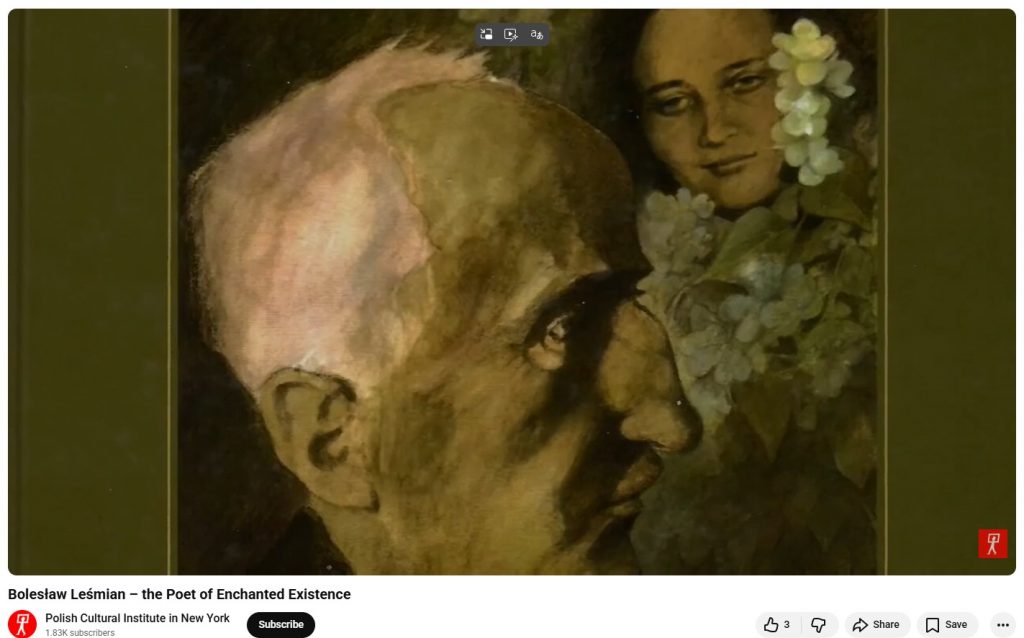
This episode of Polish Poetry Unites introduces to American audiences the life and work of Bolesław Leśmian.
Following the forward by Edward Hirsch about the life and work of the poet, the video showcases the story of Kinga Fulara, a high school student from Starachowice, Poland who presents Lesmian’s poem The Secret, in translation of Joanna Trzzeciak Huss.
Edward Hirsch states: “Lesmian is a remarkable figure in Polish poetry. He is born in 1877. He died in 1937. He’s writing at a time when Polish literature was very nationalistic, filled with political and social concerns. He took Polish poetry in another direction, in a more inward, psychological, philosophical direction. He’s hard to get a handle on because he was so formally inventive. His work is filled with neologisms and a very experimental syntax. He’s a cosmopolitan person, the first European poet really to bring the techniques of symbolism and expressionism into Polish poetry. He’s been hard for me to understand and to get a feeling for because his experimental technique and his wordplay make him almost untranslatable, which has been difficult for his reputation internationally. But hopefully we’re going to continue to get better translations of his work because he’s an original figure. There is a term in Polish literature, which is Lesmianesque, which is sort of the equivalent of Kafkaesque. And it means sensual, dreamlike, and a slightly eerie atmosphere. And this blend of the surreal and the natural is one of the things that gives his poetry its distinctive quality.
The poem in the film, wonderful poem, sometimes translated mystery, but more accurately, I think, translated by Joanna Huss as The Secret, is a marvelous poem in which a couple are in the woods. in some kind of embrace and secret communication. And they’re caught or spied on by the woman’s younger sister. What I love about the film is the high school girl in the film knows this poem from the time she’s six years old. And at first, she identified with the younger sister. who spies the lovers. And then later the poem comes back to her when she herself is more womanly and she identifies not with the younger sister, but with the lover herself. I think this is a wonderful way that a poem can mean different things to you at different times in your life.”
The Secret by Bolesław Leśmian
No one saw us, except perhaps
The flying, fluttering moths
How sweet that our caresses
are known only to us.
Harvesting heather, your younger sister
Has heard us from far away.
She now speaks to us in a whisper.
Once silent, she lowers her gaze.
Across the garden and everywhere
she flits, lost in her singing!
To us ‘tis sweet that she’s aware
Of that which no one else is.
Translated from the Polish by Joanna Huss
Tajemnica Bolesław Leśmian
Nikt nas nie widział – chyba te ćmy,
Co puszyścieją w przelocie.
I tak nam słodko, że tylko – my
Wiemy o naszej pieszczocie.
Młodsza twa siostra, zrywając wrzos,
Śledziła szept nasz daleki…
I mówiąc z nami, ucisza głos –
A milknąc – spuszcza powieki.
I po ogrodzie mknie wzdłuż i wszerz,
Zaprzepaszczona w swym śpiewie!
I tak nam słodko, że ona też
Wie o tym, o czym nikt nie wie…
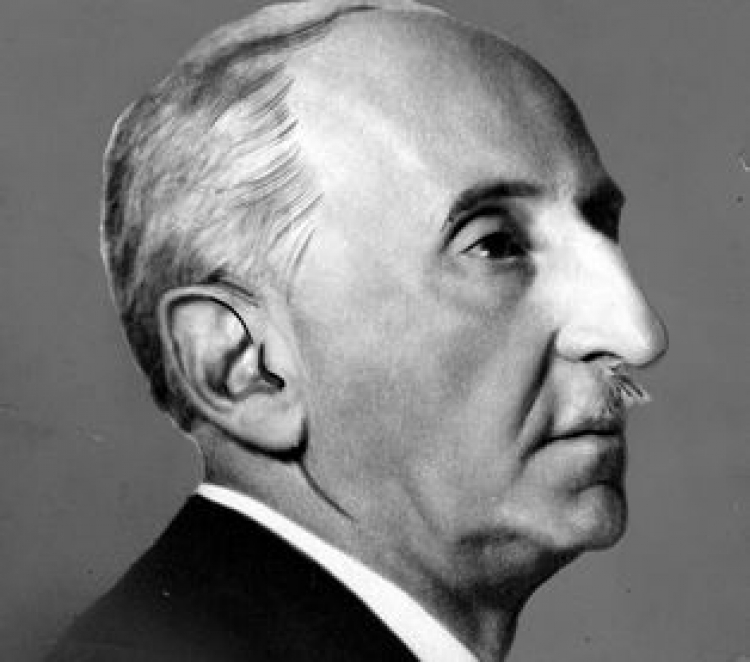
Bolesław Leśmian (born Lesman) was likely born on January 22, 1877, in Warsaw, though he sometimes claimed 1878 as his birth year. He died on November 5, 1937, also in Warsaw. A lyric poet, Leśmian was among the first to bring Symbolism and Expressionism into Polish poetry.
Born into a Jewish family, Leśmian was educated in Kiev, Ukraine, where he studied law. He spent several years in France. During most of his later life he functioned as a minor public official in provincial Polish towns. Among his few works are Sad rozstajny (1912; “Orchard”); Łąka (1920; “The Meadow”), the volume that established his reputation; Napój cienisty (1936; “The Shadowy Drink”); and Dziejba leśna (1938; “Woodland Tale”). Leśmian published little and met with limited recognition. Nonetheless, he was elected a member of the Polish Academy of Literature in 1933.
Influenced by the Young Poland movement’s poetry, Leśmian soon developed an original style, combining elements of the fantastic with folklore, the grotesque with realistic observations, and the symbolic with the visionary. A volume of his poems appeared in English translation as Mythematics and Extropy: Selected Poems of Boleslaw Leśmian (1984).
(Source Britanica)
The POLISH POETRY UNITES episode about Bolesław Leśmian was produced with additional support from: the Museum of Literature in Warsaw and New York Women in Film & Television
Lead image: Bolesław Leśmian. Fot. NAC
Bio image: Bolesław Leśmian. Źródło: NAC
Moderator: Edward Hirsch
Writer and Director: Ewa Zadrzyńska
Curator and Executive Producer: Bartek Remisko


Polish Creatives 🗓