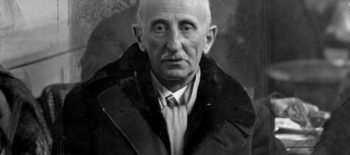

Exhibition to span entire New Museum and feature the work of more than two hundred international artists, writers, scientists, architects, and filmmakers, including three Polish artists Aneta Grzeszykowska, Goshka Macuga and Alina Szapocznikow, among others.
Tuesday, March 31 – Sunday, May 31, 2026
New Museum
235 Bowery, New York, NY 1000
Tickets
The New Museum announced the complete artist list for New Humans: Memories of the Future, the first exhibition to span the entirety of the expanded New Museum, opening on March 21, 2026. Across the New Museum’s SANAA-designed building and OMA-designed expansion, New Humans will trace a diagonal history of the past one hundred years through the work of more than two hundred international artists, writers, scientists, architects, and filmmakers. The exhibition highlights key moments when dramatic technological and societal changes spurred new conceptions of humanity and new visions for its possible futures. Continuing the New Museum’s long history of presenting provocative and timely group exhibitions, New Humans: Memories of the Future will explore artists’ enduring preoccupation with what it means to be human in the face of sweeping technological changes.
Key works by three Polish artists Aneta Grzeszykowska, Goshka Macuga and Alina Szapocznikow, are essential to the presentation of New Humans. Grzeszykowska (b. 1974) will be represented by her photographic series Mama (2018), in which she uses a lifelike silicone model of her own body to explore family relationship, self-representation, and blurred lines between the real and the artificial. Macuga (b.1967) will be represented by her robot-assisted drawing projects Before the Beginning and After the End (2016) and Transhumanism (2017), which bring together archival images, cultural references, and machine-made drawings to examine how human knowledge is created, stored, and reshaped by new technologies. In dialogue with these works, we will also present Kaprys – Monstre (1967) by Alina Szapoznikow(b.1926), whose sculptural practice uses cast body fragments made of resin and other industrial materials to confront vulnerability, memory, and the lasting impact of trauma on the human form. Collectively, the works of these Polish artists examine how the human body is reimagined through personal experience, technology, and cultural memory.
Spanning over a century and featuring artists from more than fifty countries, the exhibition highlights rarely seen works while also premiering more than fifteen new commissions by some of today’s most exciting contemporary artists, including Ryan Gander, Camille Henrot, Jamian Juliano-Villani, Wangechi Mutu, Hito Steyerl, Alice Wang, and Santiago Yahuarcani, among many others. Canonical figures of twentieth-century art, like Constantin Brâncuși, André Breton, Salvador Dalí, Man Ray, and August Sander, are brought into dialogue with overlooked and eccentric visionaries such as Bruce Lacey, Rammellzee, Toyen, and Unica Zürn. The wide range of works captures individualized responses to moments of sweeping global change, offering proposals that resonate with our contemporary moment while also documenting dreams of futures that never arrived.
As with earlier thematic exhibitions at the New Museum, New Humans finds the roots of the contemporary in the layers of the past. The exhibition highlights recurring collective fears of and aspirations for new technologies as they emerge with the potential to shape—or even dominate—human life. Rejecting the idea of linear progress in both humanity and technology, the show stages their relationship as a series of leaps, returns, and reversals, placing artists and objects in critical dialogue across time. Most notably, the exhibition establishes a symmetry between the 1920s and the present, when the term “robot” first appeared, automated factory labor rose, mechanized warfare emerged, and new media proliferated. These phenomena echo today’s disruptive diffusion of AI, contemporary warfare, and the complex networks of misinformation that shape communication in the digital age.
Highlighting these transhistorical correspondences, the exhibition connects medical devices invented for soldiers returning from World War I to contemporary imaginings of a transhumanist future. The image of the “New Man” and the “New Woman” in early twentieth-century avant-garde work presages cyborgs and bioengineered bodies imagined by today’s artists and technologists. Broken and reassembled bodies in the work of Hans Bellmer and Hannah Höch, for example, anticipate transhuman forms explored by Berenice Olmedo, Cao Fei, and Janiva Ellis. Similarly, the flood of AI-generated images and videos in our digital landscape finds its precedent in machine-aided computer drawings and programmed art of the 1960s by pioneering women such as Analívia Cordeiro, Vera Molnár, and Lillian Schwartz.
New Humans considers how scientific advances have transformed representations of the human body, offering portraits of life from the embryonic stage to post-human possibilities. Diagrams, models, and documentation of scientific discoveries—including Lennart Nilsson’s photographs of embryos, Santiago Ramón y Cajal’s brain diagrams, Franz Tschakert’s Glass Man, and Wilder Graves Penfield’s sensory homunculus—provide both anatomical insight and artistic inspiration. Artists like Yuri Ancarani, Lucy Beech, and Angela Su use surgical technology, bioengineering, and medical illustration to create surreal works. Figures range from sleek automatons to human-animal hybrids, while mechanical life forms by Lee Bul, Lynn Hershman Leeson, Pamela Rosenkranz, and Andro Wekua appear alongside iconic pop-culture beings like Carlo Rambaldi’s E.T. and H.R. Giger’s Necronom from Alien. The exhibition shows how machines have profoundly reshaped our understanding of labor, gender, intelligence, collectivity, and creativity.
The show traces pivotal historical moments such as the myth of the “New Man” and the emergence of the “New Woman” in Bauhaus and avant-garde contexts, with works by El Lissitzky, Francis Picabia, Marianne Brandt, Karla Grosch, and Florence Henri. Futurists, Dadaists, and Surrealists imagined mechanical offspring—children born without mothers—that reflected both technological wonder and the looming specter of fascism. From Elsa von Freytag-Loringhoven’s industrial readymade God, created with Morton Livingston Schamberg, to Dalí’s Geopoliticus Child Watching the Birth of the New Man, these works inaugurated a new world in which technological and political upheavals demanded the creation of new human forms.
In the post–World War II era, more monstrous forms of figuration emerged in response to the Holocaust and the atomic bomb, uniting artists such as Francis Bacon, Jacqueline de Jong, Alberto Giacometti, Eva Hesse, Alina Szapocznikow, and Tatsuo Ikeda. International figures including F.N. Souza, Demas Nwoko, and Uche Okeke imagined postcolonial bodies that expanded upon European modernism, creating new humans for new nations. These works highlight the tension between idealized, engineered humans and bodies shaped by technological violence, alongside those that fall outside techno-utopian visions, embracing aberration and nonhuman relationships as a liberatory potential. Contemporary artists such as Julien Creuzet, Jaider Esbell, Jana Euler, Christopher Kulendran Thomas, Tau Lewis, and Portia Zvavahera continue to explore speculative universes where definitions of the human are constantly renegotiated with the natural and animal world.
The exhibition also envisions spaces—both natural and architectural—where new forms of life may thrive. Imaginary cities by Sophia Al-Maria, Bodys Isek Kingelez, Gyula Kosice, Constant Nieuwenhuys, Hariton Pushwagner, and Albert Robida serve as habitats for chimeric beings, including Anicka Yi’s hovering aerobes displayed in the fourth-floor galleries of the OMA-designed building. These works visualize potential futures and reflect collective advances and upheavals in society, presenting myriad possibilities for the humans we may become.
New Humans: Memories of the Future is curated by Massimiliano Gioni, Edlis Neeson Artistic Director; Gary Carrion-Murayari, Kraus Family Senior Curator; Vivian Crockett, Allen and Lola Goldring Curator; and Madeline Weisburg, Senior Assistant Curator; with Calvin Wang, Curatorial Assistant. Special thanks to Lexington Davis, Laura Hakel, Clara von Turkovich, and Ian Wallace for their contributions.
ABOUT THE ARTISTS
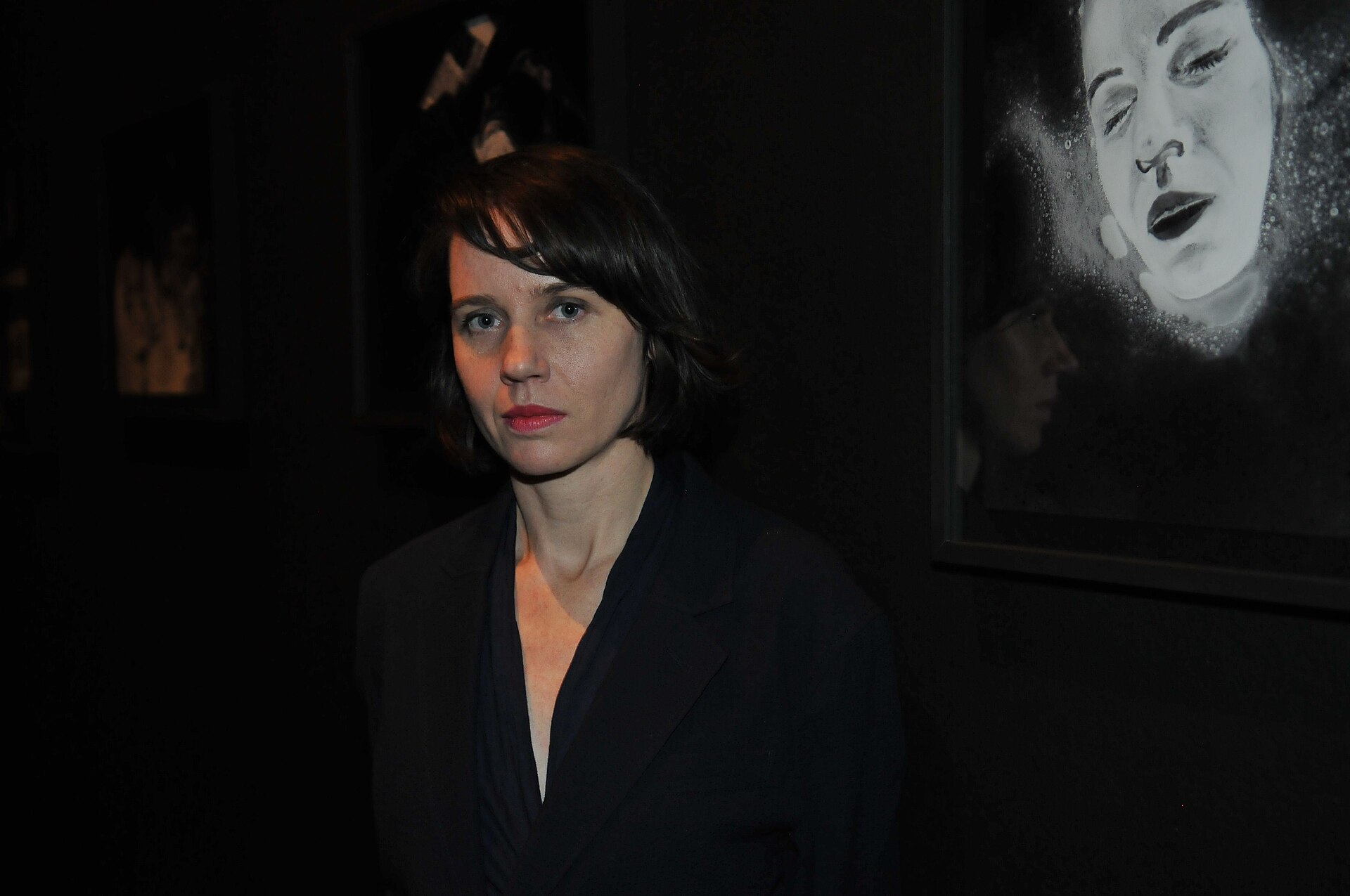
Aneta Grzeszykowska (b. 1974, Warsaw, Poland) is known for performance, photography, sculpture, and video exploring the fragmented body and the blurred boundaries between human and nonhuman, synthetic and organic; in her photographic series Mama (2018), she portrays her body as a lifelike silicone double interacted with by her daughter, challenging traditional maternal roles and self-representation.
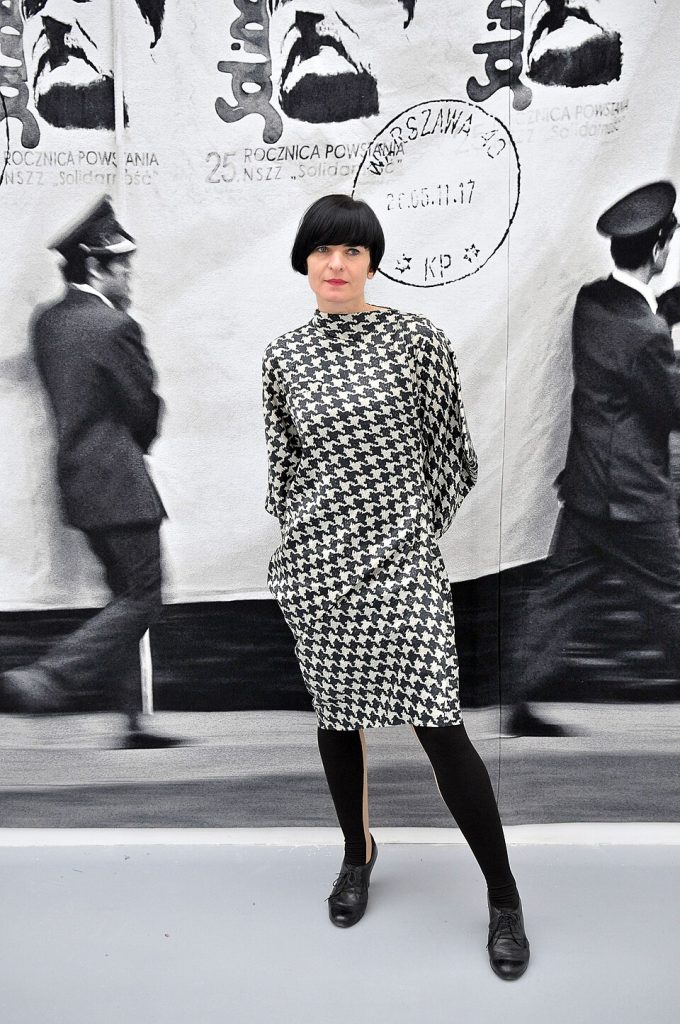
Goshka Macuga (b. 1967, Warsaw, Poland) creates large-scale installations combining artifacts, archival materials, robotic drawings, and tapestries to examine human knowledge and cultural memory, including Before the Beginning and After the End (2016) and Transhumanism (2017), where a robot executes crude line drawings inspired by Harold Cohen’s AARON program.
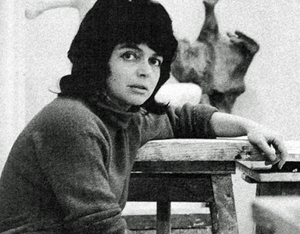
Alina Szapocznikow (b. 1926, Kalisz, Poland; d. 1973, Passy, France), a Holocaust survivor, is celebrated for sculptures that confront the vulnerability and ephemerality of the human body, including Kaprys – Monstre (1967), which uses casts of body parts, resin, and lighting to create a fragile, grotesque, and ambiguous figure reflecting both the horrors and transcendence of embodied experience.
ARTIST LIST
A.C.M. (b. Alfred Corinne Marié, 1951, Hargicourt, France; d. 2023, Hargicourt, France)
Rebecca Allen (b. 1953, Marshall, MI)
Sophia Al-Maria (b. 1983, Tacoma, WA)
Monira Al Qadiri (b. 1983, Dakar, Senegal)
Yuri Ancarani (b. 1972, Ravenna, Italy)
Karel Appel (b. 1921, Amsterdam, Netherlands; d. 2006, Zurich, Switzerland)
Ayé A. Aton (b. Robert Underwood, 1940, Versailles, KY; d. 2017, Lexington, KY)
Francis Bacon (b. 1909, Dublin, Ireland; d. 1992, Madrid, Spain)
Nanni Balestrini (b. 1935, Milan, Italy; d. 2019, Rome, Italy)
Ivana Bašić (b. 1986, Belgrade, Yugoslavia [present-day Serbia])
Thomas Bayrle (b. 1937, Berlin, Germany)
Lucy Beech (b. 1985, Hull, UK)
Hans Bellmer (b. 1902, Kattowitz, German Empire [present-day Katowice, Poland]; d. 1975, Paris, France)
Benedetta (b. Benedetta Cappa, 1897, Rome, Italy; d. 1977, Venice, Italy)
Meriem Bennani (b. 1988, Rabat, Morocco)
Emery Blagdon (b. 1907, Callaway, NE; d. 1986, Callaway, NE)
Erwin Blumenfeld (b. 1897, Berlin, Germany; d. 1969, Rome, Italy)
Alexander “Skunder” Boghossian (b. 1937, Addis Ababa, Ethiopia; d. 2003, Washington, DC)
F.W. Bogler (b. 1902, Hofgeismar, Germany; d. 1945, Zell am See, Austria)
Kurt Schmidt (b. 1901, Limbach/Sachsen, Germany; d. 1991, Gera, Germany)
Georg Teltscher (b. 1904, Purkersdorf, Austro-Hungarian Empire [present-day Austria]; d. 1983, London, UK)
Martha Boto (b. 1925, Buenos Aires, Argentina; d. 2004, Paris, France)
Constantin Brâncuși (b. 1876, Hobiţa, Romania; d. 1957, Paris, France)
Marianne Brandt (b. 1893, Chemnitz, Germany; d. 1983, Kirchberg, Germany)
K.P. Brehmer (b. 1938, Berlin, Germany; d. 1997, Hamburg, Germany)
André Breton (b. 1896, Tinchebray, France; d. 1966, Paris, France)
Teresa Burga (b. 1935, Iquitos, Peru; d. 2021, Lima, Peru)
Miriam Cahn (b. 1949, Basel, Switzerland)
Cao Fei (b. 1978, Guangzhou, China)
Enrique Castro-Cid (b. 1937, Santiago, Chile; d. 1992, Santiago, Chile)
Giannina Censi (b. 1913, Milan, Italy; d. 1995, Voghera, Italy)
Barbara Chase-Riboud (b. 1939, Philadelphia, PA)
Iakov Chernikhov (b. 1889, Pavlohrad, Russian Empire [present-day Ukraine]; d. 1951, Moscow, USSR)
Thomas Chimes (b. 1921, Philadelphia, PA; d. 2009, Philadelphia, PA)
Anna Coleman Ladd (b. 1878, Philadelphia, PA; d. 1939, Santa Barbara, CA)
Constant (b. Constant Nieuwenhuys, 1920, Amsterdam, The Netherlands; d. 2005, Utrecht, The Netherlands)
Analívia Cordeiro (b. 1954, São Paulo, Brazil)
Magda Cordell McHale (b. Magda Lustigova, 1921, Nové Zámky, Hungary [present-day Slovakia]; d. 2008, Sloan, NY)
Henrique Alvim Corrêa (b. 1876, Rio de Janeiro, Brazil; d. 1910, Brussels, Belgium)
Beatriz Cortez (b. 1970, San Salvador, El Salvador)
Julien Creuzet (b. 1986, Paris, France)
Vitória Cribb (b. 1996, Rio de Janeiro, Brazil)
Cui Jie (b. 1983, Shanghai, China)
Salvador Dalí (b. 1904, Figueres, Spain; d. 1989, Figueres, Spain)
Lenora de Barros (b. 1953, São Paulo, Brazil)
Jacqueline de Jong (b. 1939, Hengelo, The Netherlands; d. 2024, Amsterdam, The Netherlands)
Jorge de la Vega (b. 1930, Buenos Aires, Argentina; d. 1971, Buenos Aires, Argentina)
Jeremy Deller (b. 1966, London, UK)
Agnes Denes (b. 1931, Budapest, Hungary)
Simon Denny (b. 1982, Auckland, New Zealand)
Sara Deraedt (b. 1984, Asse, Belgium)
Valentine de Saint-Point (b. 1875, Lyon, France; d. 1953, Cairo, Egypt)
Stephanie Dinkins (b. 1964, Perth Amboy, NJ)
Patricia Domínguez (b. 1984, Santiago, Chile)
ABOUT THE NEW MUSEUM
The New Museum is the only museum in New York City exclusively devoted to contemporary art. Founded in 1977, it serves as a center for exhibitions, information, and documentation about living artists from around the world.
From its beginnings as a one-room office on Hudson Street to the inauguration of its first freestanding building on the Bowery, designed by SANAA in 2007, the New Museum continues to be a place of experimentation and a hub of new art and new ideas.
PUBLICATION
New Humans: Memories of the Future is accompanied by a fully illustrated catalog copublished by Phaidon and the New Museum, edited by Massimiliano Gioni, Gary Carrion-Murayari, and Madeline Weisburg, with Calvin Wang.
The catalog features essays by Aaron Betsky, Gary Carrion-Murayari, Erin Christovale, Meghan Forbes, Hal Foster, Massimiliano Gioni, Sophie Lewis, Eric Michaud, Katy Siegel, McKenzie Wark, and Gary Zhexi Zhang, as well as monographic texts on all the featured artists.
PUBLIC PROGRAMS
New Humans public programs will include conversations and workshops with exhibiting artists, including Cannupa Hanska Luger, Steffani Jemison, Precious Okoyomon, Berenice Olmedo, WangShui, Hito Steyerl, and Anicka Yi, alongside other artists and thinkers, including Kate Crawford, Lou Cornum, Leslie Cuyjet, David Gissen, Trevor Paglen, and Ariel Yelen.
The program series will culminate with a performance by Sun Ra Arkestra. Details about these programs and other special events celebrating the New Museum’s reopening will be announced in the coming weeks.
The lead sponsor for New Humans: Memories of the Future is supported by leadership from the Daniel Xu & Flora Huang Foundation, major support from Lonti Ebers, the Amant Foundation Major Exhibitions Fund, and The Andy Warhol Foundation for the Visual Arts, with artist commissions generously provided by the Neeson / Edlis Artist Commissions Fund; we gratefully acknowledge the Artistic Director’s Circle, International Leadership Council, Artemis Council of the New Museum, and Friends of New Humans, with Hartwig Art Foundation as presenting partner.