
On 27 January 2026, we will commemorate the 81st anniversary of the liberation of the German Nazi concentration.
Details about the commemoration event and organizational information can be found at the Auschwitz-Birkenau Memorial and Museum, the site of the former German Nazi concentration and extermination camp.
Learn about the history of Auschwitz in online lessons
and in the Auschwitz-Birkenau State Museum podcast “On Auschwitz.”
Learn more about Auschwitz-Birkenau State Museum from Auschwitz. A Monograph on the Human, a book by Piotr Cywiński, Director of the Auschwitz-Birkenau State Museum in Oświęcim since 2006.
Auschwitz-Birkenau State Museum:
On 27 January 2026, we will commemorate the 81st anniversary of the liberation of the German Nazi concentration and extermination camp Auschwitz. The main commemoration event, which will begin at 4:00 p.m., will take place in the so-called central sauna building on the grounds of the former Auschwitz II-Birkenau camp. It is located in the immediate vicinity of the ruins of the gas chamber and crematorium IV.
The event will be held under the honorary patronage of the President of the Republic of Poland, Karol Nawrocki.
“After the 80th anniversary of the liberation, which resonated widely around the world, we can all see that memory is a great gift from the Survivors—one that was often underestimated in the past. It is within memory that we can find the much-needed points of reference, wise warnings, essential safeguards, and guidance that reaches beyond our own times. That is why this and future anniversaries will increasingly focus on the words of the Survivors—both those who are still with us and those who, in the past, recorded their experiences, memories, testimonies, and warnings,” said the director of the Auschwitz Museum, Dr. Piotr M. A. Cywiński.
All Auschwitz Survivors are invited to the commemoration event, each with one accompanying person. Please contact the organizing team directly.
In order to fully focus on the voices of the Victims and Survivors of Auschwitz, a decision was made to refrain from any political speeches on this particular day and at this particular place. This decision was unanimously supported by the International Auschwitz Council.
Due to the very limited number of places in the historic space, where we will primarily be hosting the Survivors, we encourage everyone to watch the broadcast on television or online. A special open sector will also be prepared at the Memorial Site.
Until the liberation of some 7 thousand prisoners remaining at the site of the camp by soldiers of the Red Army, the German Nazis murdered approx. 1.1 million people in Auschwitz, mostly Jews, but also Poles, the Roma, Soviet prisoners of war and people of other nationalities.
We talk about the history of Auschwitz in our online lessons and our podcast “On Auschwitz.” Thanks to the “Auschwitz. In Front of Your Eyes” platform you can take an online guided tour of the Memorial from any place in the world.
For the world today, Auschwitz is a symbol of the Holocaust and the atrocities of World War II. In 2005 the United Nations declared 27 January as the International Holocaust Remembrance Day.
January 27 – on that day the International Holocaust Remembrance Day was designated by the United Nations General Assembly resolution on 1 November 2005 to commemorate the tragedy of 6 million Jews murdered during the Second World War by the German Nazi regime. The UN calls for this time to be a warning to all people against hatred, racism and prejudice. The main event commemorating the Holocaust Remembrance Day every year takes place the Auschwitz-Birkenau Museum and Memorial on January 27, since on that day the concentration camp was liberated by Red Army soldiers in 1945. Auschwitz-Birkenau is one of the many German concentration and death camps set up during WWII on occupied Polish lands. It’s the most recognizable symbol and place of genocide in the world. State Muzeum Auschwitz-Birkenau was set up on its former prisoners’ initiative. It has been operating uninterruptedly since 1947.
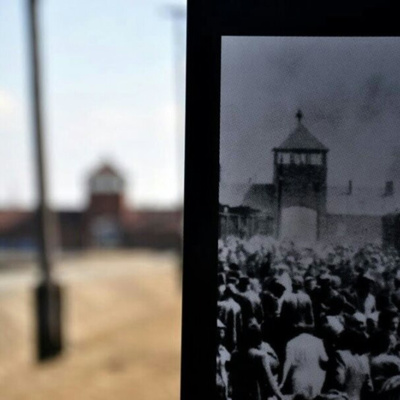
About the Podcast
Listen to On Auschwitz Podcast
The official podcast of the Auschwitz Memorial. The history of Auschwitz is exceptionally complex. It combined two functions: a concentration camp and an extermination center. Nazi Germany persecuted various groups of people there, and the camp complex continually expanded and transformed itself. In the podcast “On Auschwitz,” we discuss the details of the history of the camp as well as our contemporary memory of this important and special place.
Virtual visit of Auschwitz-Birkenau State Museum: www.panorama.auschwitz.org
More photos: www.auschwitz.org/en/gallery