
Urban Water Awareness Day: Hidden Systems, Shared Futures
Public Program: Saturday, September 19, 2026 at 3:30-8:00 PM
Exhibition on view: September 18-20, 2026
Flux IV, 56-21 2nd St, Long Island City, NY 11101
RSVP at this link
Urban Waterfront Walk: Hart Mankin, Environmental Educator, Newtown Creek Alliance
3:30–5:30 PM
Panel Discussion: Karolina Częczek (Only If), Marlisa Wise and Benedict Clouette (Interval Projects), moderated by Paula Vilaplana de Miguel, Assistant Curator at the Department of Architecture and Design, Museum of Modern Art in New York (MoMA)
5:30–6:30 PM
Screening: Sanctuary, Mist (2026) from series Remedies by Sasha Huber and Petri Saarikko
6:30–8:00 PM
Workshop: Water Portraits of Queens: A Community Ecology Archive with Adelle Lin
6:30–8:00 PM
Reception: drinks and light refreshments will be served
6:30–8:00 PM
Exhibition: Source Materials by GBS Bioart, featuring Public Pools. Drawings and design by Karolina Czeczek and Only If, and photography by Anna Morgowicz.
On view: September 18–20, 2026
Gallery hours: Fri–Sun 12:00–6:00 PM
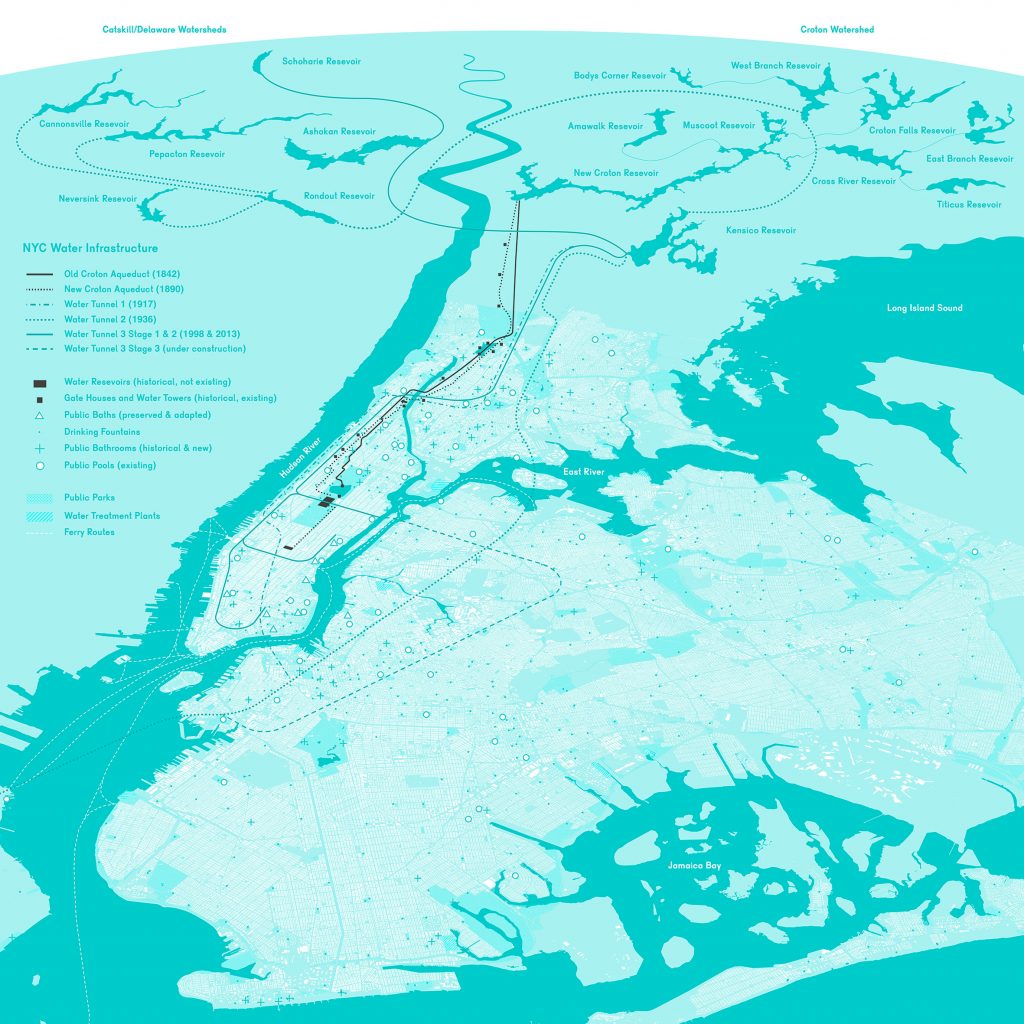
Water Map of New York City Drawing by Karolina Czeczek and Only If—
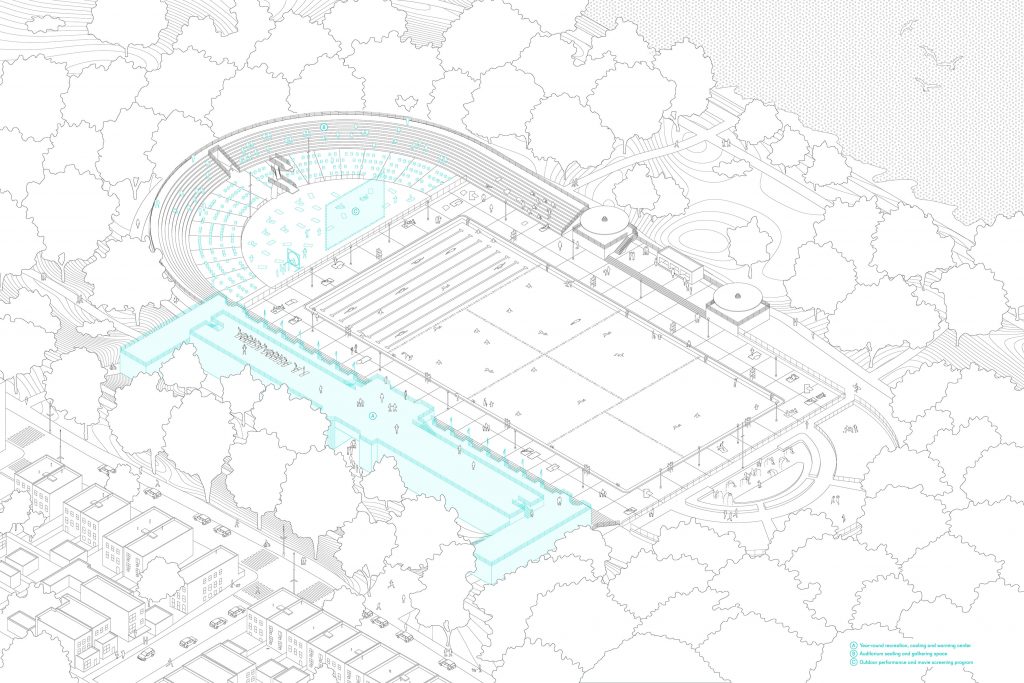
Astoria Pool, Queens, NY / Proposal – Cooling & Warming Center and Performance Venue
Drawing and design by Karolina Czeczek and Only If—
ECO Solidarity returns with its 5th edition in collaboration with Shared Grounds initiative of the Finnish Cultural Institute in New York and Flux Factory with an engaging diverse program centering on New Yorkers’ relationship with urban waters through art, architecture, public policy, city walk and storytelling.
Taking the NYC Ferry at dusk, as glimmering sunrays soak into the East River rippling beneath the fractured reflection of the Manhattan skyline, one is reminded that New York is a city profoundly shaped by water. Beneath its rivers, estuaries, canals, and harbors accumulate submerged layered histories of industry, public life and ecological transformation. What remains beneath the surface?
Urban Water Awareness Day is a public program consisting of an urban waterfront walk, panel discussion, workshop, and film screening presented in conjunction with New York Climate Week. The program brings together artists, architects, urbanists, environmental advocates, and community organizations, to examine water as a civic, social, and cultural framework, not merely a technical system. Through public dialogue, site-based learning, architectural design, and artistic practice, it reflects on municipal water as space for environmental justice, climate resilience, urban policy, and public health alongside models for ecological restoration and climate-adaptive design. This program reveals how water continues to shape everyday life and how some of the city’s most pressing environmental, social, and political challenges converge in the municipal waters of a warming New York City. It is a joint initiative of Shared Grounds and ECO Solidarity, a collaborative project represented by the Finnish Cultural Institute in New York, Flux Factory, and the Polish Cultural Institute New York.
Often hidden beneath streets and woven into the built environment, water infrastructure remains largely invisible despite its profound influence on public health, urban development, and climate adaptation. These systems, ranging from reservoirs and waterways to public pools, waterfronts, and estuaries, have shaped the growth, memory, and daily life of New York City for generations. As rising temperatures, extreme weather events, and aging infrastructure put increasing pressure on urban environments, questions of stewardship and resilience become ever more urgent. Urban Water Awareness Day proves that cultural programs play an important role in this context by making invisible systems visible, fostering public awareness, and encouraging new ways of imagining climate resilience in the city.
Through architectural research and drawings of Karolina Częczek and Only If, and Anna Morgowicz’s photographs, the Public Pools project reimagines New York City’s municipal pools as essential civic and ecological infrastructure beyond their seasonal use. The research explores the history, form, and social and cultural aspects of the swimming pool as an architectural type. The pool serves as a device to engage specific aspects of public space and architectural invention while revealing the undercurrents of urban policy.
The project is illustrated by a catalog of New York City public pools, photographs and writings. Through the NYC Water Map, the project reveals the city’s interconnected watershed, from upstate reservoirs to neighborhood pools, demonstrating how it influences public health, heat mitigation, and everyday urban life. The project also proposes practical, climate-adaptive solutions built upon the city’s existing water systems. These speculative proposals applied to five distinct typologies of New York City pools, ranging from programmatic extensions to architectural interventions, foster use of public amenities and promote climate resiliency.
Expanding this perspective from citywide water infrastructure to neighborhood landscapes, Interval Projects explores how architecture can reconnect cities with ecological systems. The New York–based practice, founded by Marlisa Wise and Benedict Clouette, works at the intersection of architecture, urban ecology, and public space, transforming overlooked sites into resilient civic landscapes. Their work on the Dutch Kills Loop in Long Island City proves how ecological restoration, adaptive design, and public access can reimagine post-industrial waterfronts in response to climate change.
Together, Karolina Częczek’s Public Pools and Interval Projects’ vision for the Dutch Kills Loop reframe urban water as shared civic infrastructure. Through architecture, ecological restoration, and cultural programming, Urban Water Awareness Day explores how design can strengthen public health, expand access to the waterfront, and foster more resilient relationships between cities, freight rail, hidden waterways and community-led reclamation.
Newtown Creek: case study of environmental justice in Long Island City and Greenpoint
Newtown Creek, a 3.8-mile tidal estuary bordering Long Island City and Greenpoint, has evolved from a vital wetland into one of New York City’s most polluted waterways and a federally designated Superfund site. Decades of industrial contamination, combined sewer overflows, and aging water infrastructure have made the creek increasingly vulnerable to rising sea levels and more frequent extreme weather events. In response, the Newtown Creek Alliance has led community-driven efforts to restore habitats, expand waterfront access, and advance green infrastructure—exemplifying how ecological restoration, civic stewardship, and public engagement can contribute to a more resilient urban future.
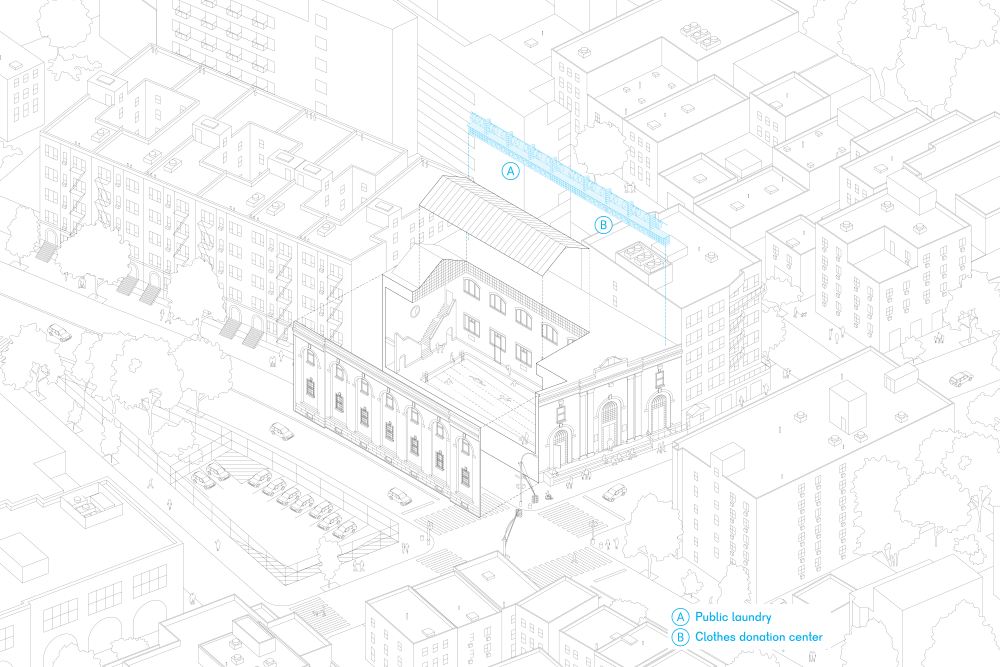
Metropolitan Pool, Brooklyn, NY / Public Laundry, drawing and design by Karolina Czeczek and Only If.
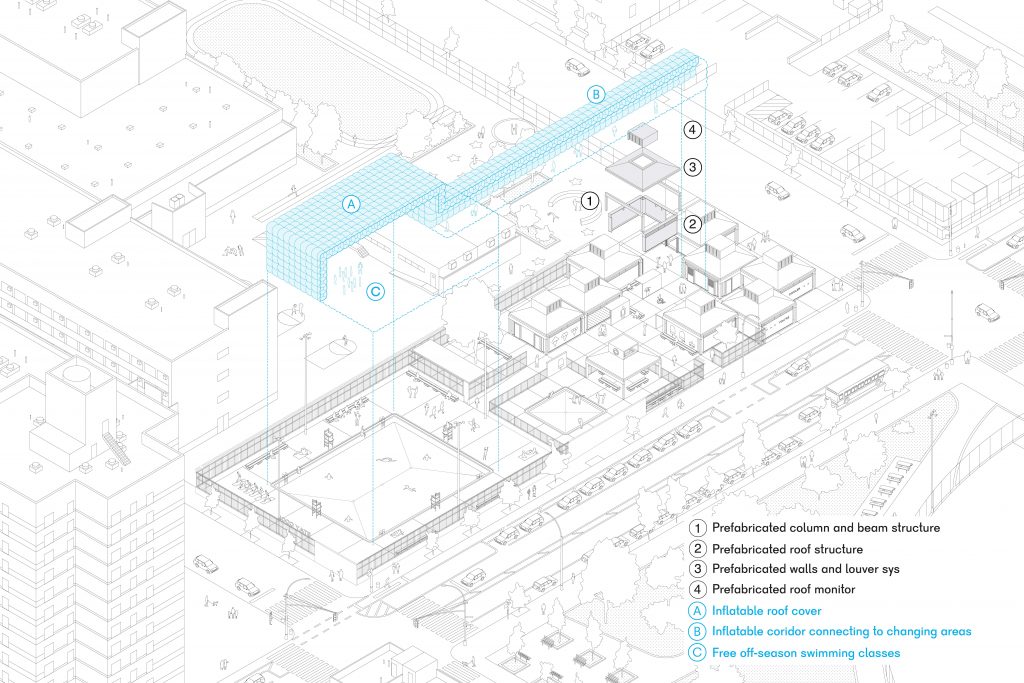
Metropolitan Pool, Brooklyn, NY / Public Laundry, drawing and design by Karolina Czeczek and Only If.
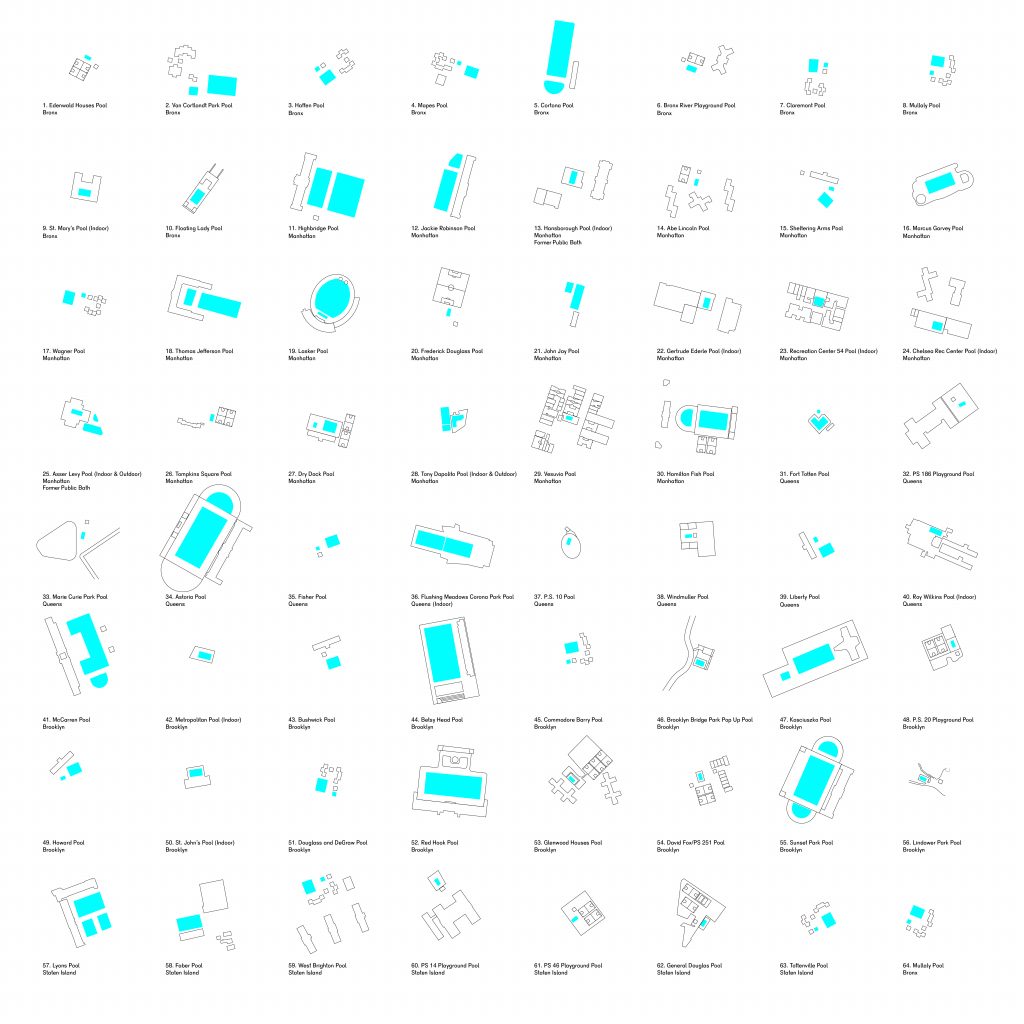
New York City Public Pool Catalogue, drawing by Karolina Czeczek and Only If.
PROGRAM
Saturday, September 19, 2026, 3:30–8:00 PM
Urban Waterfront Walk
3:30–5:30 PM
Led by Hart Mankin, the Newtown Creek Alliance Environmental Educator, the educational waterfront walk explores Newtown Creek and Dutch Kills as living case studies of waterfront contamination, climate vulnerability, and environmental justice, tracing one of New York City’s most historically industrialized waterways as it undergoes ecological restoration. Starting at Hunters Point Avenue, the route passes the Dutch Kills Loop beneath the Long Island Expressway, continues along the Montauk Cut-Off rail corridor and the Borden Avenue waterfront, before concluding at Flux IV. Together, these sites reveal the layered relationship between freight rail, hidden waterways and community-led reclamation. Experiencing the creek firsthand transforms an often-invisible infrastructure into a living landscape where environmental history, urban planning, and public space converge.
Panel Discussion & Q&A
5:30–6:30 PM
A public conversation examining water as civic infrastructure and a catalyst for environmental resilience, public health, and community well-being. Participants include architect Karolina Częczek of Only If, architects Marlisa Wise and Benedict Clouette of Interval Projects in conversation moderated by Paula Vilaplana de Miguel, Assistant Curator at the Department of Architecture and Design of the Museum of Modern Art in New York (MoMA).
An exhibition featuring selections from Public Pools, drawings, the architectural maquette of Kościuszko Pool by Karolina Częczek and Only If, and photographs by Anna Morgowicz will be on view at Flux IV from September 18-20, 2026.
and photographs by Anna Morgowicz will be on view at Flux IV from September 18-20, 2026.
Film Screening
6:30–8:00 PM
Screening of Sanctuary, Mist (2026) from series Remedies by Sasha Huber and Petri Saarikko. Through moving image, the work reflects on ecology, healing, memory, and the complex relationships between humans and the environments they inhabit. Sanctuary, Mist was commissioned by the 2nd Helsinki Biennale in 2023 and this is the documentation of the generative art installation filmed by Petri Saarikko. Its length is 18 min.
Workshop
6:30–8:00 PM
Water Portraits of Queens: A Community Ecology Archive by Adelle Yingxi Lin, is an interactive installation and performance that weaves together community narratives, multilingual calligraphy, and Newtown Creek’s changing ecology into a collective portrait of Queens through gestures of collective healing, and environmental care.
Reception
6:30–8:00 PM
An informal gathering that brings together artists, architects, designers, environmental advocates, researchers, and community members for continued conversation and the exchange of ideas.
Exhibition: Source Materials presented by GBS Bioart featuring Public Pools. Drawings and design by Karolina Czeczek and Only If, and photography by Anna Morgowicz.
On view September 18–20 2026
The Genspace Biomaterials Studio (GBS) presents the GBS Bioart Exhibition, featuring artists who work with biomaterials such as mycelium, SCOBY, biocement, natural dyes, and food waste. At the intersection of art, science, and sustainability, the exhibition showcases emerging material practices that address ecological challenges and envision new relationships between design, the environment, and the living world.
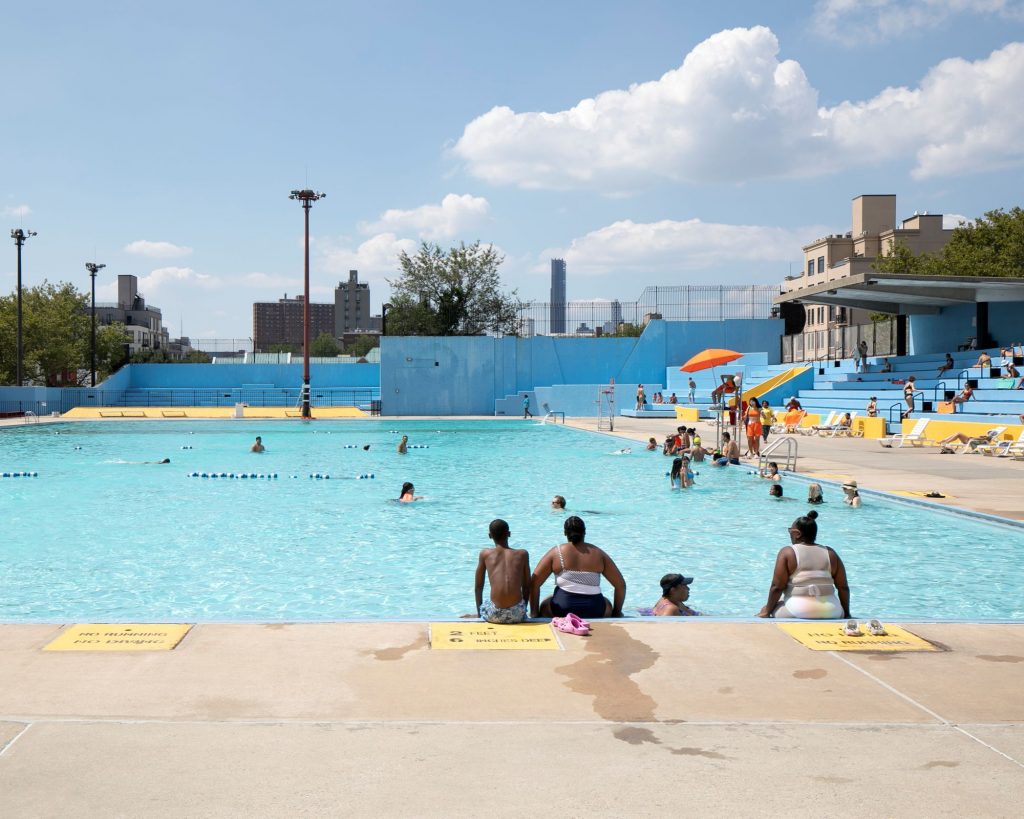
The People’s Pool, 2022, digital photograph (for C-Print, to be framed), image: 16 × 20″ (40.6 × 50.8 cm), photograph by Anna Morgowicz © Anna Morgowicz / Esto
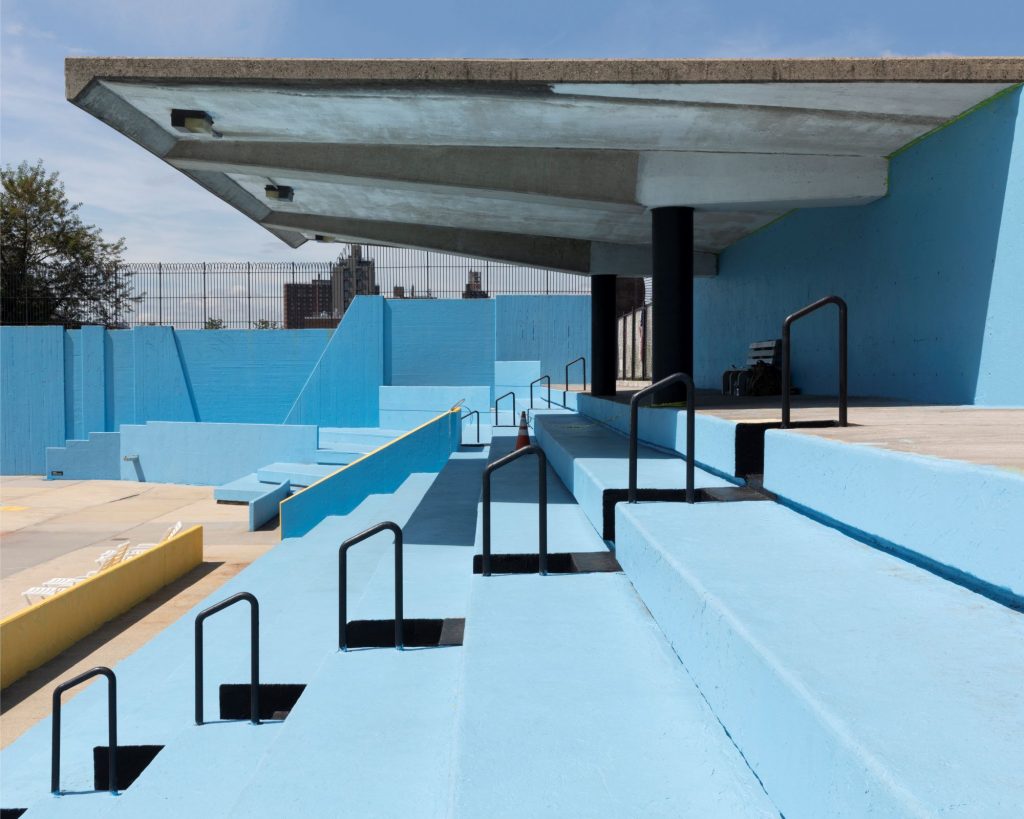
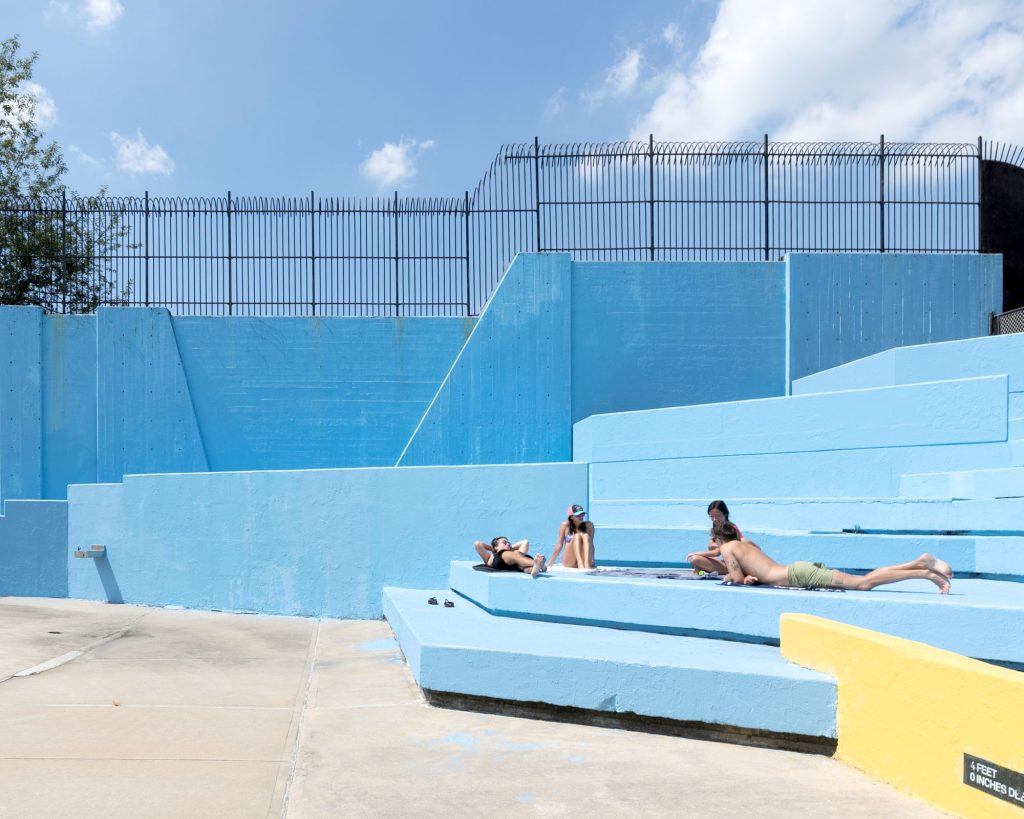
The People’s Pool, 2022, digital photograph (for C-Print, to be framed), image: 16 × 20″ (40.6 × 50.8 cm), photograph by Anna Morgowicz © Anna Morgowicz / Esto
ABOUT PARTNERS
Shared Grounds:
Shared Grounds is a recurring experimental exhibition initiated by curators Elina Suoyrjö (formerly at the Finnish Cultural Institute in New York) and Meghana Karnik (Flux Factory). Informed by eco-feminist thought, the project speculates on placemaking through interspecies alliances and shared knowledge, and imagines a public realm shaped by humans and nonhumans alike. Each edition gathers a new group of Finnish and New York–based artists, who begin their research independently but share a conviction to live interdependently and to build ways of sharing space and understanding one another.
The exhibition grew out of an interest in the complexity of public space in a city like New York. It asks who has access to the public realm, how we are allowed to use it, and how space is shared. The artists are politically conscious and critical of the present, but approach these questions through harmonious, humorous, empathetic, or devotional means rather than irony or cynicism. Shared Grounds is a collaboration between the Finnish Cultural Institute in New York and the Flux Factory artist collective.
ECO Solidarity:
ECO Solidarity is an award-winning international platform of the Polish Cultural Institute New York, launched in 2020 in partnership with WantedDesign and ICFF, and developed with Studio Rygalik and the European Union National Institutes for Culture (EUNIC). Exploring the role of design, architecture, and contemporary culture in addressing climate resilience, public health, and environmental sustainability, the initiative brings together leading architects, designers, artists, and researchers through exhibitions, talks, workshops, and public programs.
Supported by two consecutive EUNIC Cluster Fund Awards in 2022 and 2023, ECO Solidarity received the ICFF Editors’ Award for Best Booth in 2022. In 2023, the initiative was recognized by Dezeen as one of the “12 Things to See and Do” during NYCxDESIGN and by SixtySix Magazine in its “Best of NYCxDesign” selection. The initiative’s name draws inspiration from Poland’s historic Solidarność (Solidarity) movement, reflecting a belief that collective action and cross-disciplinary collaboration can help shape more resilient, equitable, and sustainable futures.
Finnish Cultural Institute in New York (FCINY):
Finnish Cultural Institute in New York works across the fields of contemporary art, design and architecture, creating dialogue between Finnish and American professionals and audiences. Founded in 1990, the institute has grown from a residency program to an organization commissioning large-scale projects and events that foster critical dialogue and work to build support for professionals in architecture, design and contemporary art.
Flux Factory:
Flux Factory’s mission is to support emerging artists through residencies, exhibitions, education, and collaborative opportunities. Flux is an artist-led space that builds sustainable communities and retains creative vitality in NYC. Since 1994 Flux has hosted over 300 Artists-in-Residence, both local and international, as well as staged over 700 exhibitions across all disciplines. Flux’s home in Long Island City is a creative hive that incubates experimentation with collaborative processes. Flux hosts over 75 annual multidisciplinary events; all are free to the public while all participating artists are compensated. Each year Flux selects 40 Artists-in-Residence to develop their creative practices by offering affordable studios, shared workspaces (such as a print shop, wood shop, and technical office), a solo exhibition, as well as professional development opportunities.
Polish Cultural Institute New York:
Established in 2000, the Polish Cultural Institute New York is a diplomatic mission of the Republic of Poland to the United States operating under the Ministry of Foreign Affairs. The PCINY’s mission is to share Polish heritage, history, and art with American audiences and to promote Poland’s contributions to world culture. The Institute initiates, supports, and promotes collaboration between Poland and the United States in various fields, including visual art, design, film, theater, dance, literature, and music, as well as other areas of intellectual and social life.
Newtown Creek Alliance is a community-based organization dedicated to restoring, revealing, and revitalizing Newtown Creek, a 3.8-mile tidal estuary and federally designated Superfund site bordering Brooklyn and Queens. Since 2002, the Alliance has served as a catalyst for effective community action, working to restore water quality, habitat, public access, and commerce along the creek. Our programs combine hands-on ecological restoration with environmental education, including school field trips, guided walking tours, and public stewardship events. Through advocacy, monitoring, and community partnerships, NCA works to ensure Newtown Creek’s recovery reflects the needs and voices of the neighborhoods it runs through.
The Hunters Point Parks Conservancy enhances, activates, and advocates for the parks and waterfront of Long Island City, bringing communities together, protecting vital outdoor spaces, and ensuring lasting access for all. Hunters Point Parks Conservancy was formed in 1998 by a group of dedicated Long Island City residents determined to improve the quality of life at the waterfront in Hunter’s Point, Long Island City. We run over 200 free programs a year for the community, including yoga and fitness sessions, kids programs, movie nights, and art classes, and bring volunteers to the parks to help support the local ecosystem. We also run environmental education, public paddle, and advocacy programs from the Queens Landing Boathouse and Environmental Center.
WantedDesign, founded in 2011, has evolved into a membership program. It is a dynamic connector and amplifier for global design, fostering creative synergy and serving as a pivotal crossroad for the international design community.
PANEL SPEAKERS
Karolina Częczek, Only If Architecture, Public Pools
Karolina Częczek is a Principal of Only If—, a New York City-based design practice for architecture and Critic at Yale School of Architecture. Only If is a New York City-based design practice for architecture and urbanism founded in 2013 and led by Adam Snow Frampton, AIA and Karolina Czeczek, RA. Only If’s projects span a range of different types and scales, from commercial interiors, to single- and multi-family residential, to larger-scale urban planning, research, and speculation. In 2023 Only If’s People’s Pool project was part of the inaugural exhibition at the Museum of Modern Art, “Architecture Now: New York, New Publics,” featuring projects that envision a more accessible, sustainable, and equitable New York. Karolina is a 2013 Fulbright Scholar and 2023 recipient of the New York State Grant for the Arts (NYSCA).
Czeczek is a registered architect in the Netherlands and Poland and previously worked at the Office for Metropolitan Architecture (OMA) in Rotterdam and Hong Kong.
Only If Architecture is a New York based architecture and design practice founded by architect Karolina Częczek. Working across architecture, urbanism, research, and public space, the studio explores how design can address contemporary environmental and social challenges. Through projects that connect civic infrastructure, ecology, and public life, Only If develops innovative approaches to climate adaptation and urban resilience.
The Public Pools research explores the history, form, and social and cultural aspects of the swimming pool as an architectural type. The pool serves as a device to engage specific aspects of public space and architectural invention while revealing the undercurrents of urban policy. The research is organized as a catalog of New York City public pools, and is illustrated by photographs and writings highlighting broader issues related to urban waters. It is accompanied by speculative proposals, ranging from architectural interventions to programmatic extensions, applied to five distinct typologies of New York City pools. This project aims to spark a broader public conversation around the importance of free and accessible spaces for public recreation, as well as issues related to climate resiliency and city planning.
Interval Projects, Marlisa Wise and Benedict Clouette
Interval Projects is a New York-based architecture and urbanism practice founded by Marlisa Wise and Benedict Clouette. Working at the intersection of design, public space, and environmental justice, the practice collaborates with municipalities, advocacy organizations, and local communities to develop projects that connect architecture with civic engagement, ecological restoration, and public access to urban landscapes.
Their work spans adaptive reuse, community-led planning, environmental remediation, and waterfront design. Notable projects include the Dutch Kills Loop in Long Island City—a vision for transforming an overlooked industrial corridor into publicly accessible open space—as well as environmental restoration initiatives for the Silver Bow Creek Superfund Site in Montana. Through research, design, and public collaboration, Interval Projects explores how architecture can support more equitable and resilient urban futures.
Moderator: Paula Vilaplana de Miguel, Assistant Curator at the Department of Architecture and Design, Museum of Modern Art in New York (MoMA)
Paula Vilaplana de Miguel is a curator, cultural strategist, and creative director working across architecture and design, technology, and contemporary art. Paula currently serves as Assistant Curator at The Museum of Modern Art in New York (MoMA), where she has developed projects including Peggy Weil: Core Memory; The Many Lives of the Nakagin Capsule Tower; Down to Earth, and Body Constructs. She has developed projects for institutions such as the Shanghai Art Biennial, The Victoria and Albert Museum, The Venice Architecture Biennial, and Triennale Milano, and Ca2M, among others and her work has been published internationally.
Workshop: Adelle Yingxi Lin
Water Portraits of Queens: A Community Ecology Archive
Adelle Yingxi Lin is a Malaysian artist and technologist whose work bridges performance, language, and participatory systems. Through installation, embodied research, and public ritual, she explores how cultural memory, technology, and collective experience shape meaning. Her practice develops forms that foreground care, ritual, and relation.
Water Portraits of Queens: A Community Ecology Archive is a participatory installation and performance project in which Queens residents create calligraphic textiles shaped by community stories and Newtown Creek’s shifting water chemistry. The work explores how place, language, and environmental conditions co-author a shared cultural archive. For this workshop, Adelle invites participants to write gestures of healing in their own languages and place them into water, where they are transformed into a collective portrait of the borough shaped by memory, ecology, and care.
Film: Sasha Huber & Petri Saarikko
Sanctuary, Mist (2026) from series Remedies
Sasha Huber (b. 1975) is a Helsinki-based internationally recognised visual artist-researcher of Swiss-Haitian heritage. Huber’s work is concerned with the politics of memory, care and belonging in relation to colonial residues left in the environment. Connecting history and the present, she uses and responds to archival material within a layered creative practice that encompasses performance-based reparative interventions, video, photography, and collaborations. Huber also usurps the staple gun, aware of its symbolic significance as a weapon, while offering the potential to renegotiate unequal power dynamics and the possibility of repair, symbolically stitching wounds together (pain-things). Known for her artistic research contribution to the “Demounting Louis Agassiz” campaign, she is aiming at reassessing the glaciologist’s contentious racist heritage. She holds an MA in visual culture from Aalto University in Helsinki and is presently undertaking a practice-based PhD in artistic research at Zurich University of the Arts.
Petri Saarikko (b. 1973) is Helsinki-based artist and designer. In his site-specific installations, Saarikko combines social commentary with his work as a designer and his background in new media. His work is highly performative in nature. Saarikko does not shy away from provocation. He often challenges ideas of national identity, artistic authorship or official political discourses by changing their context and thus showing the true, artificial nature of these phenomena. His work seeks to expose power relations, to make room for individual narratives, and takes a stand on behalf of equality.
Sasha Huber and Petri Saarikko collaborate regularly in a creative partnership under the name Remedies. Together they have initiated the long-term project Remedies Universe (since 2011) which explores aural family-knowledge in different geographical and cultural contexts and been invited to artist residencies around the world. In 2018, Huber was the recipient of a State Art Award from the Arts Promotion Centre Finland. In 2021–2024 her work is touring under the title “You Name It”, produced by The Power Plant Contemporary Art Gallery in Toronto and Autograph in London. A comprehensive book with the same title was published by Mousse Publishing in November 2022. Sasha Huber’s work is continued to be supported by Arts Promotion Center Finland through a long-term grant. At Urban Water Awareness Day, Remedies will be showing Sanctuary, Mist (2026), from series Remedies, a one channel video, initially part of the commissioned installation for the Helsinki Biennial in 2023. The new video work was commissioned for their exhibition in Germany, entitled Shelter on view September 18-November 8, 2026 at the Galerie für Gegenwartskunst, Freiburg, Germany. It focuses on colonial power structures and their lasting impact. Through their work, the two artists explore artistic and Indigenous practices that open up new narratives of solidarity.
Urban Waterfront Walk:
Newtown Creek Alliance is a community-based organization dedicated to restoring, revealing, and revitalizing Newtown Creek. We work to restore community health, water quality, habitat, access, and vibrant commerce along Newtown Creek. Since 2002, the Alliance has served as a catalyst for effective community action.
Exhibition: About GBS at Genspace Bioart
GBS (Grow Beyond Soil) is a community-driven biomaterials research group at Genspace Bioart exploring the intersection of biology, design, and material innovation. Through collaborative research, experimentation, and its annual six-month Bioart Incubator, GBS brings together artists, designers, scientists, and community biolabs to develop sustainable biomaterials and imagine future ecological approaches to making. Founded in 2009, Genspace Bioart is the world’s first community biology laboratory. Based in New York City, it provides hands-on STEAM education, public programs, and collaborative research opportunities that make the life sciences accessible to artists, researchers, educators, entrepreneurs, and the broader public while fostering innovation across biotechnology, neuroscience, genomics, and environmental science.
Urban Water Awareness Day is presented by Shared Grounds and ECO Solidarity, a collaborative initiative of the Finnish Cultural Institute in New York, Flux Factory, and the Polish Cultural Institute New York.
Program partners: Only If Architecture, Interval Projects, Newtown Creek Alliance, and Genspace Bioart.
Cultural partners: WantedDesign, Hunters Point Park Conservancy