
Watch on MUBI
Commemorating the centennial of Polish director Andrzej Wajda (1926–2016), one of Central and Eastern Europe’s most politically provocative postwar filmmakers, the program offers an opportunity to encounter Wajda’s cinema anew and to consider its enduring explorations of history, memory, identity, politics, and the individual caught within forces larger than themselves.
The cinema of Andrzej Wajda explores a fundamental political question: the place of the individual amid the turbulent currents of history. One of Poland’s great chroniclers of national identity, the consummate filmmaker championed stories of resilience and solidarity in the face of totalitarianism. Despite international acclaim, including a Palme d’Or and an honorary Academy Award®, Wajda spent much of his career battling censorship under Soviet rule. But that ideological tyranny only redoubles the radical potency of his work.
Echoing the disobedient spirit of the French New Wave, Wajda’s Innocent Sorcerers (1960) taps into youthful alienation, a sentiment that would fuel Poland’s 1968 student protests. Generational discontent also drives Man of Marble (1977), which follows an intrepid filmmaker as she investigates the downfall of a socialist hero. Wajda’s critique of state propaganda carries into its sequel, Man of Iron (1981). Once banned, this searing drama swells with the revolutionary fervor of a monumental workers’ strike. But speaking truth to power is dangerous business. In Without Anesthesia (1979), a journalist’s public condemnation of state silence leads to both professional and personal ruin.
Wajda’s films not only contend with contemporary struggles; they also resurface historical turmoil. Rich in allegory, his period dramas excavate buried conflicts while alluding to present upheavals. Both The Wedding (1973) and The Promised Land (1975) are set at the turn of the twentieth century, an era marked by the flourishing of neoromantic art alongside rapid industrialization in Poland. Countering the exuberance of cultural and economic transformation, these films capture a nation in stasis, haunted by past divisions and ongoing exploitation. Celebrating Wajda’s centenary, this decades-spanning collection honors a legend who, like his iron-willed protagonists, persevered against all odds.d of its time, and as a body of cinema whose questions remain deeply relevant today.
Mubi curators introduce the films in this program.
“A sophisticated comedy of seduction, the film oozes with youth and director Andrzej Wajda gives it an intoxicating sensual fizz.”
– Evening Standard
“Wajda shows his anti-heroes as amiable, innocent, rebellious victims of a world-wide atmosphere impregnated with the fall-out of fear and nihilism.”
– Robert Vas, Sight and Sound
“All we need to do is watch—delighted by Wajda’s sudden switch to gaiety—with the spontaneous feelings of innocence on one hand and questioning maturity on the other.”
– Monthly Film Bulletin
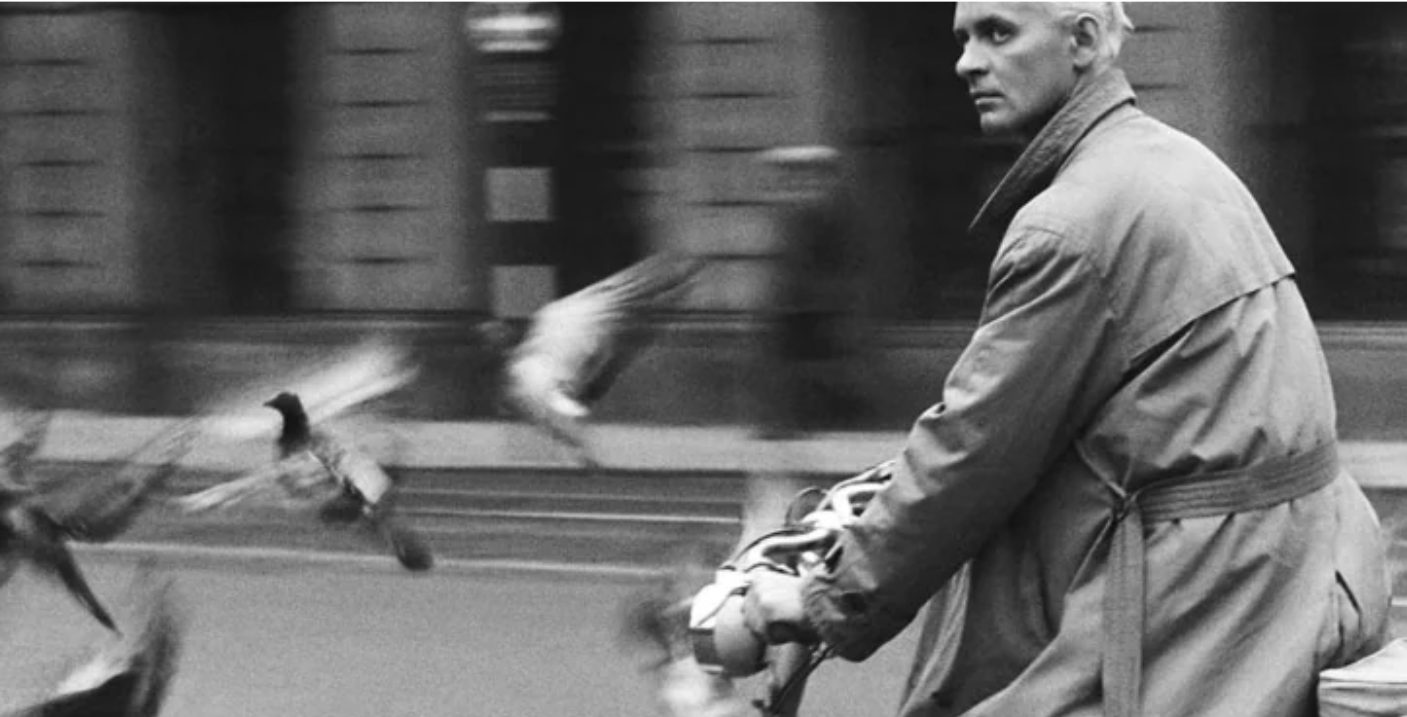
Innocent Sorcerers
Andrzej Wajda / Niewinni czarodzieje / 1960 / 88min / 4K restoration
Starring Tadeusz Łomnicki, Krystyna Stypułkowska
Imbued with the disobedient spirit of the French New Wave, Andrzej Wajda’s drifting tale of youthful alienation recognizes the discontent that would later fuel Poland’s 1968 student protests. Cowritten by Jerzy Skolimowski, another cinematic great, Innocent Sorcerers wears its ennui with style.
“A visually stunning, incredibly sensual, and increasingly surreal film of breathtaking beauty and terror.”
–The Los Angeles Times
“A riotous wedding celebration that doubles as a devastating autopsy of a nation in paralysis, Andrzej Wajda’s adaptation of a 1901 beloved classic is as politically urgent as it is visually intoxicating.”
– James Morton, The Independent
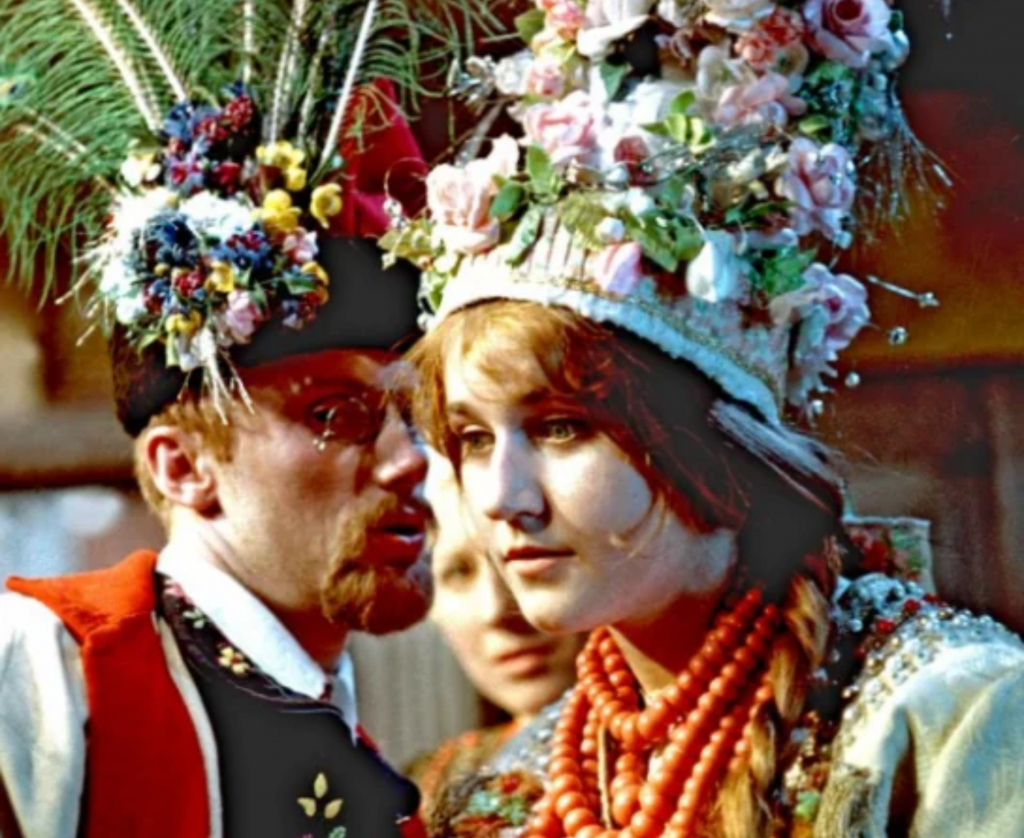
The Wedding
Andrzej Wajda / Wesele / 1972 / 106min / 35mm
Starring Daniel Olbrychski, Ewa Ziętek, Marek Walczewski, Iza Olszewska
The most visually baroque of Andrzej Wajda’s 1970s films, this modernist adaptation of a Polish stage classic thrillingly departs from the director’s typically restrained style. Swinging between the sacred and the profane, The Wedding spins the nuptial ceremony into an unholy vortex of allegory.

“Jerzy’s growing panic is beautifully illuminated in Mr. Zapasiewicz, who manages to find heroic stature in a character who has always compromised. One of the more provocative movies of the year to date.”
– Vincent Canby, The New York Times
Rough Treatment (Without Anesthesia)
Andrzej Wajda / Bez znieczulenia / 1978 / 131min / 35mm
Starring Zbigniew Zapasiewicz, Ewa Dałkowska, Andrzej Seweryn, Krystyna Janda
n this empathetic portrait of a troubled journalist, Andrzej Wajda deepens his interest in truth-tellers with an added emphasis on personal sacrifice. Squeezed into sterile offices and cluttered apartments, Without Anesthesia conjures the all-consuming claustrophobia of life under authoritarianism.
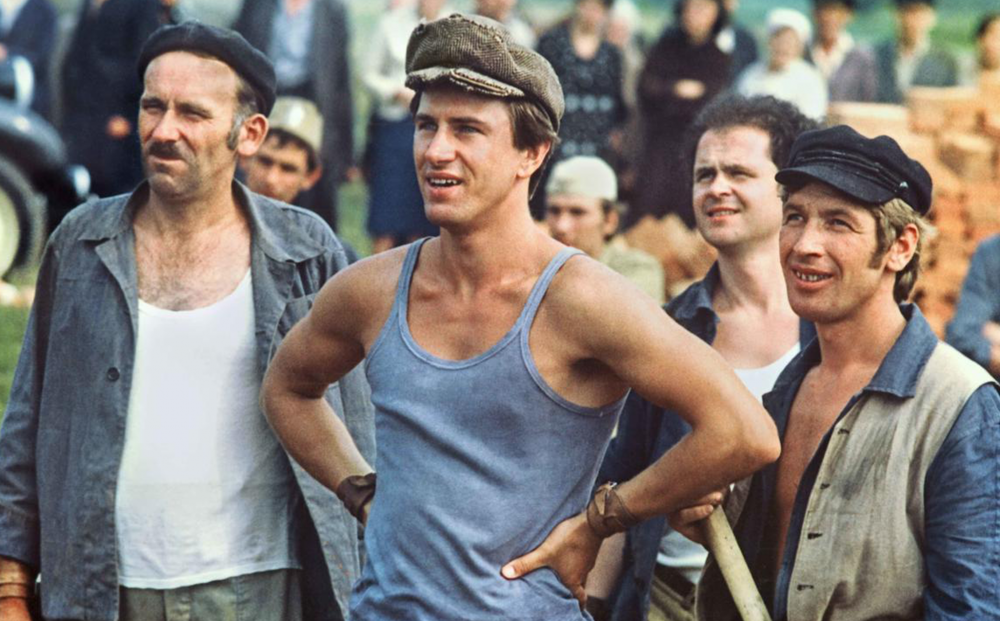
“Andrzej Wajda’s Man of Marble is the Polish CITIZEN KANE—with all that implies about the film’s structure, scope, ambition, impact, influence, and choice of protagonist… A dynamic, brilliantly structured, and continually engrossing work with the immediacy of a battlefield dispatch.”
– J. Hoberman, The Village Voice
“A political epic, compassionate and as bitterly funny as a cartoon… a big, fascinating, risky film that testifies not only to Mr. Wajda’s remarkable vision, but also to the vitality of contemporary Polish life.”
– Vincent Canby, The New York Times
“It’s a long, riveting exploration, bitterly comic, utterly convincing, as exciting as a thriller and one of the best records we have of its time.”
– Phillip French, The Observer (UK)
Man of Marble
Andrzej Wajda / Człowiek z marmuru / 1977 / 161min / 35mm
Starring Jerzy Radziwiłowicz, Tadeusz Łomnicki
With this proletarian riff on Citizen Kane, Andrzej Wajda lays bare the staggering impact of 1950s Stalinist propaganda on 1970s Soviet Poland. Parting the poisonous fog of ideological indoctrination, this intricate masterwork beholds filmmaking as both a tool of suppression and a key to liberation.
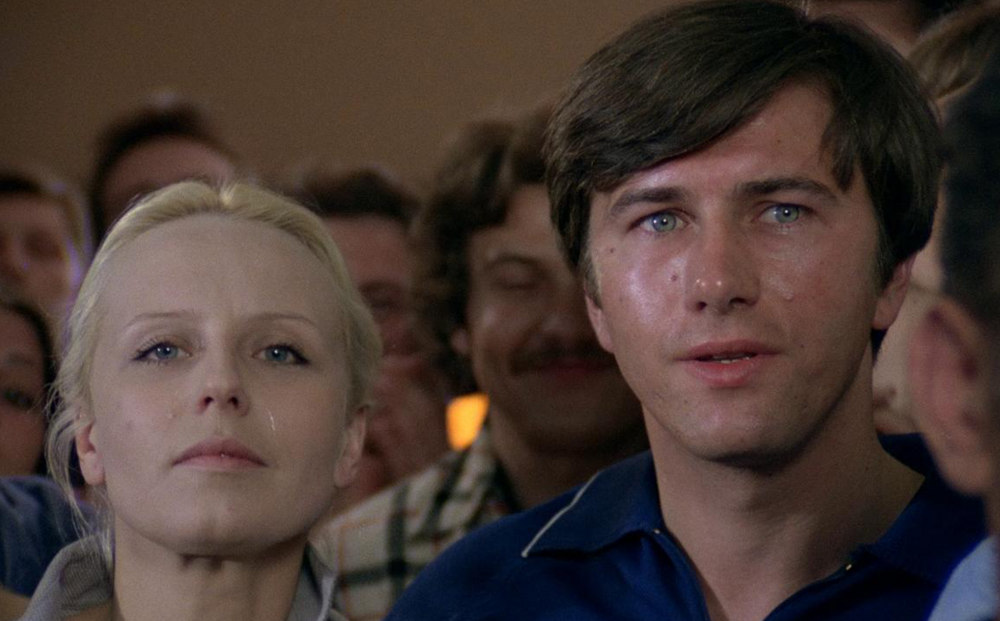
“MAN OF IRON is such an up-to-date report on political events in Poland that one attends to it less as a piece of fiction than as a prime-time television news special.”
– Vincent Canby, The New York Times
“Forged in a white heat, its structure molded by history, MAN OF IRON brings Wajda’s open-ended masterpiece, MAN OF MARBLE, to stunning, dialectical completion. Together, the films form a remarkable political epic, at once prophecy, intervention, and documentation.”
– J. Hobeman, The Village Voice
“Shot at the very epicentre of Solidarity’s activities and featuring an appearance by Lech Wałęsa, this brave, imaginative film became part of the political process it observed. After winning the Palme d’Or at Cannes, MAN OF IRON was banned at home and Wajda went into exile.”
– Phillip French, The Observer (UK)
Man of Iron
Andrzej Wajda / Człowiek z żelaza / 1981 / 152min / 35mm
Starring Krystyna Janda, Jerzy Radziwiłowicz, Marian Opania
The first Polish film to win the coveted Palme d’Or, Andrzej Wajda’s follow-up to Man of Marble was initially banned at home due to its anti-Communist stance. A colossal account of the Solidarity labor movement, this searing masterpiece honors the blood, sweat, and tears shed in the name of justice.
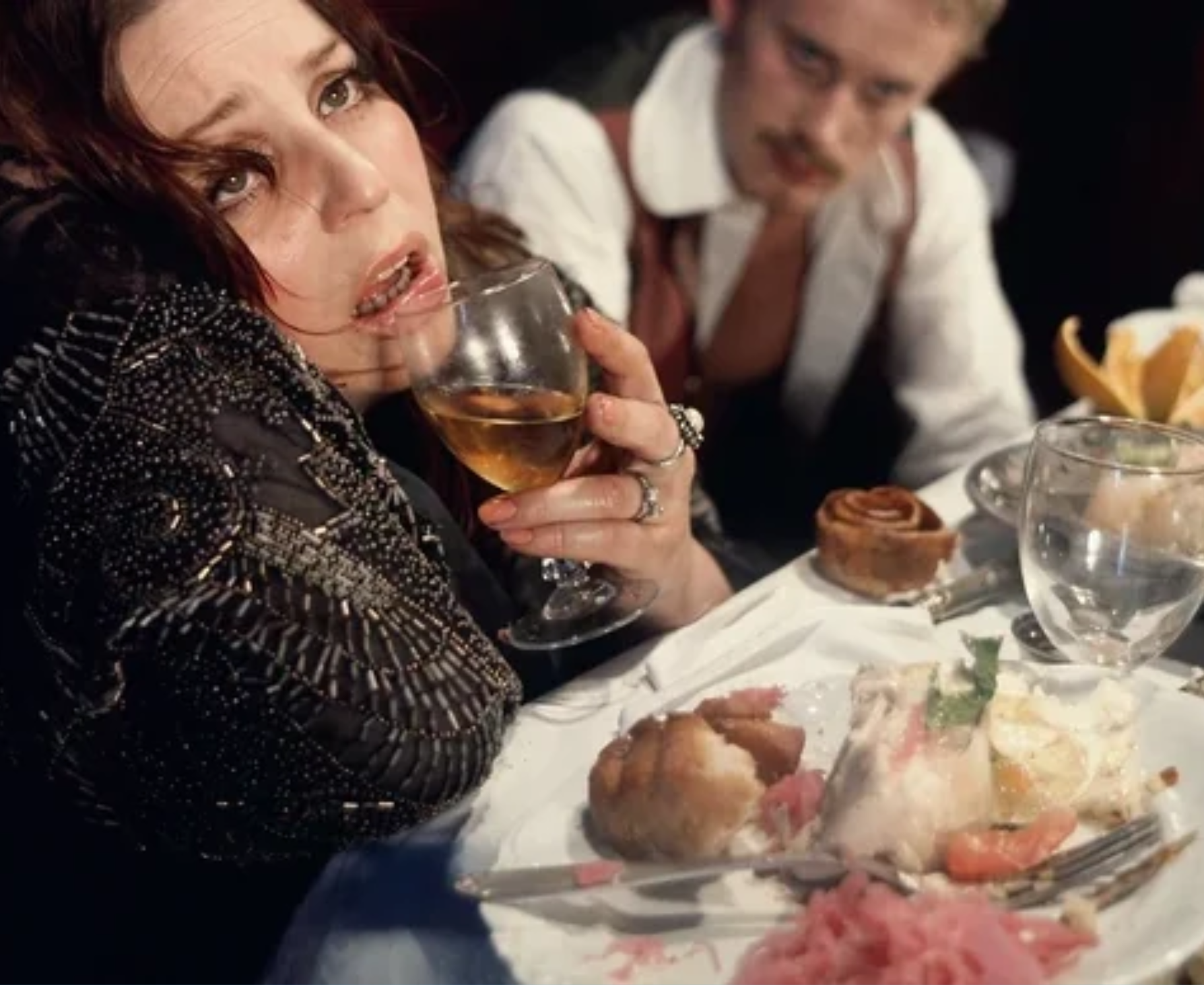
“The excitement and joy felt by the ‘heroes’ as they plan their future as factory owners is embellished by green-forested, pastoral scenes, exemplifying the traditional joys of ordered life among the gentility, so that contrasting looks at the degradation and gloom of the factory workers and their exploitation by greedy industrialists, are like visual descriptions from the worlds of Zola and Dickens.”
– Albert Johnson, “Letter from Cannes,” 1975
The Promised Land
Andrzej Wajda / Ziemia obiecana / 1975 / 163min / 35mm
Starring Daniel Olbrychski, Wojciech Pszoniak, Andrej Seweryn, Kalin Jedrusik
Casting a critical gaze over the dawn of the industrial revolution in Poland, Andrzej Wajda’s sweeping epic exposes the moral corruption that underpins this hallowed era of economic transformation. Weighed against bourgeois debauchery, the toil of the working class acquires a wrenching poignancy.
Andrzej Wajda
Film and theater director, screenwriter, and set designer; one of the most prominent creators in the history of world cinema; recipient of an Academy Award for lifetime achievement. He was born on March 6, 1926, in Suwałki and died on October 9, 2016, in Warsaw. From 1946 to 1949, Wajda studied at the Academy of Fine Arts in Kraków. In 1953, he graduated from the Directing Department at the National Film, Television and Theatre School in Łódź.
He made his feature film debut two years later with A Generation, a story about the fate of youths from the suburbs of Warsaw during the Nazi occupation. He subsequently directed Kanal (1957) and Ashes and Diamonds based on the work of Jerzy Andrzejewski (1958). These two films established him as one of the most important directors of the new generation in Europe. They initiated the famous movement known as the Polish Film School, which engaged in a debate on national martyrological tradition and romantic heroism. In 1959, Wajda directed his first color film, Lotna based on Wojciech Żukrowski, and in 1960, Innocent Sorcerers entered the cinema screens. The following year, Wajda directed Samson based on Kazimierz Brandys—which presented the story of a Jew who escaped from the ghetto—followed by two foreign films: the Yugoslav Lady Macbeth of the Mtsensk District (1962) and Love at Twenty, a French-German coproduction (1962). Ashes based on Stefan Żeromski (1965) provoked the most controversy of Wajda’s career up to that point, which was then over a decade long. The director created a work marked by historiosophical reflection, once again redefining the attitude toward Polish identity and tradition. In 1968, Layer Cake based on Stanisław Lem was produced, as well as the self-reflexive film about cinema people, Everything for Sale. The catalyst for the film was the tragic death of Zbigniew Cybulski, who played the legendary role of Maciek Chełmicki in Ashes and Diamonds. The director’s inspiration was Federico Fellini’s 8½, a so-called “film about a film.” In 1973, the director made The Wedding based on the drama by Stanisław Wyspiański. Two years later, The Promised Land based on Władysław Reymont was produced; nominated for an Academy Award, it is one of Wajda’s greatest cinematic achievements. In 1976, Wajda directed The Shadow Line based on Joseph Conrad as a Polish-British coproduction.
Man of Marble—a story about Mateusz Birkut, a shock worker whose 1950s fate is tracked by a contemporary documentary filmmaker—was produced in 1977, although the screenplay by Aleksander Ścibor-Rylski had been ready over a decade earlier. However, for censorship reasons, it could not be produced for years. The continuation of Man of Marble was Man of Iron (1981), a film pulsating with the contemporary life of Poland, in which the characters’ dramas unfold during the memorable August of 1980. The 1970s brought two more films by Wajda: Without Anesthesia (1978), which referenced the trend of cinema of moral anxiety, and The Man of Wilko (1979), another brilliant film adaptation of Iwaszkiewicz’s prose, which earned Wajda his second Academy Award nomination. In 1980, The Conductor was produced, featuring the prominent English actor John Gielgud. The 1980s were primarily a period of Wajda’s directing work abroad. In France, he directed Danton (1983). In Germany, A Love in Germany (1983) was produced. The only film from this period shot in Poland was Chronicle of Love Affairs. In his subsequent productions, Wajda vainly attempted to enter into a dialogue with audiences who, in the 1990s, received his successive films with relative indifference, much like a portion of the critics. Meanwhile, the director tackled various subjects. He directed the biographical film Korczak (1990), and based on Dostoevsky’s The Idiot, he directed Nastasja (1994) featuring Japanese actors Tamasaburo Bando and Toshiyuki Nagashima. He returned to wartime themes in Holy Week (1995) based on Jerzy Andrzejewski and the earlier The Ring with a Crowned Eagle (1994)—a film that film historian Jerzy Płażewski described as the true end of the Polish School of the 1950s. Finally, he brought a popular contemporary novel to the screen: Tomek Tryzna’s Miss Nobody (1996). He re-established authentic contact with audiences in 1998, when he adapted Pan Tadeusz based on Adam Mickiewicz. In 2000, the director made The Death of a President (released internationally as The Verdict on Franciszek Kłos), and in 2002, he brought Aleksander Fredro’s Revenge to the screen. After years of censorship restrictions—and, following 1989, repeated attempts to develop a suitable screenplay—Wajda finally succeeded in addressing the tragedy and the falsehood surrounding the Katyń massacre. In 2007, he directed Katyń, arguably the most personal film of his entire career. Wajda’s subsequent project was Wałęsa, a film that chronicles Lech Wałęsa not only as a political leader but also as a private individual—a husband and a father. The final film in Wajda’s oeuvre proved to be Afterimages, a narrative detailing how the communist regime systematically destroyed an eminent artist and defiant spirit who opposed the doctrine of Socialist Realism.”
Source: Culture.pl
The program is presented in partnership with the Polish Cultural Institute New York and MUBI.