

Wednesday, February 18 at 8:00 PM
Solar Myth
Presented by Ars Nova Workshop
1131 South Broad Street,
Philadelphia, PA 19147
Tickets
Thursday, February 19 at 7:00 PM
Raphael Rogiński w/ Pat Coyle
Manny’s
101 Hiester Street,
State College, PA 16801
Tickets
Sunday, February 22 at 5:00 PM
Raphael Rogiński /Kimia Hesabi
Presented by Outside Time
Rhizome DC
6950 Maple St NW
Washington, DC
Tickets
Tuesday, February 24 at 8:00 PM
Roulette
509 Atlantic Avenue
Brooklyn, NY 11217
Tickets
“Raphael Rogiński was supposed to be a sculptor, but his guitar got in the way.”
—Pitchfork“Sublime.” —The Quietus
Polish guitarist and composer Raphael Rogiński returns to the United States in February 2026 with a series of solo performances that reimagine the music of John Coltrane and the poetry of Langston Hughes. Known for blending jazz, blues, and global folk traditions into deeply spiritual, meditative soundscapes, Rogiński brings his internationally acclaimed project to Philadelphia, State College, Washington, DC, and New York. In Washington, DC at Rhizome, Rogiński will also present original arrangements of Crimean Tatar music, joined by violist Kimia Hesabi, work bridges Persian diaspora repertoire and contemporary performance practice.
Raphael Rogiński Plays John Coltrane & Langston Hughes, originally released in 2015 on Bôłt Records and reissued in an expanded edition by Unsound in 2024, this landmark recording brought Rogiński international recognition. Rather than approaching Coltrane from within the traditional jazz lineage, Rogiński slows the compositions down, extracts their polyphonic tensions, and reshapes them into meditative, intimate soundscapes. The result is a mystical, deeply personal interpretation rooted equally in blues feeling and global folk sensibility.
His long-standing interest in spiritual traditions across cultures led him to the poetry of Langston Hughes, a central voice of the Harlem Renaissance and pioneer of jazz poetry. Rogiński’s interpretations frame Hughes’s words within sparse, resonant guitar textures that bridge continents and histories.
Pitchfork described the album as “A perfect encapsulation of his mystical, spiritual energies… channeling an ancient, ancestral current of longing.” The Wire ranked the album among its annual highlights, marking Rogiński as the first Polish artist to appear in its year-end summary list.
At Rhizome DC, Rogiński and Dr. Kimia Hesabi will also present original arrangements of Crimean Tatar music — part of his broader research into minority traditions and forgotten repertoires of Eastern Europe. Dr. Kimia Hesabi, violist and Director of Learning & Engagement at National Philharmonic (DC), joins for a collaborative program that bridges Persian diaspora repertoire and Eastern European traditions. Hesabi has performed internationally and released her debut album Nemāno Gaona (New Focus Recordings, 2022), dedicated to viola works by composers of the Iranian diaspora. She is a recipient of the New Music USA Creator Development Fund and has performed at NPR’s Tiny Desk.
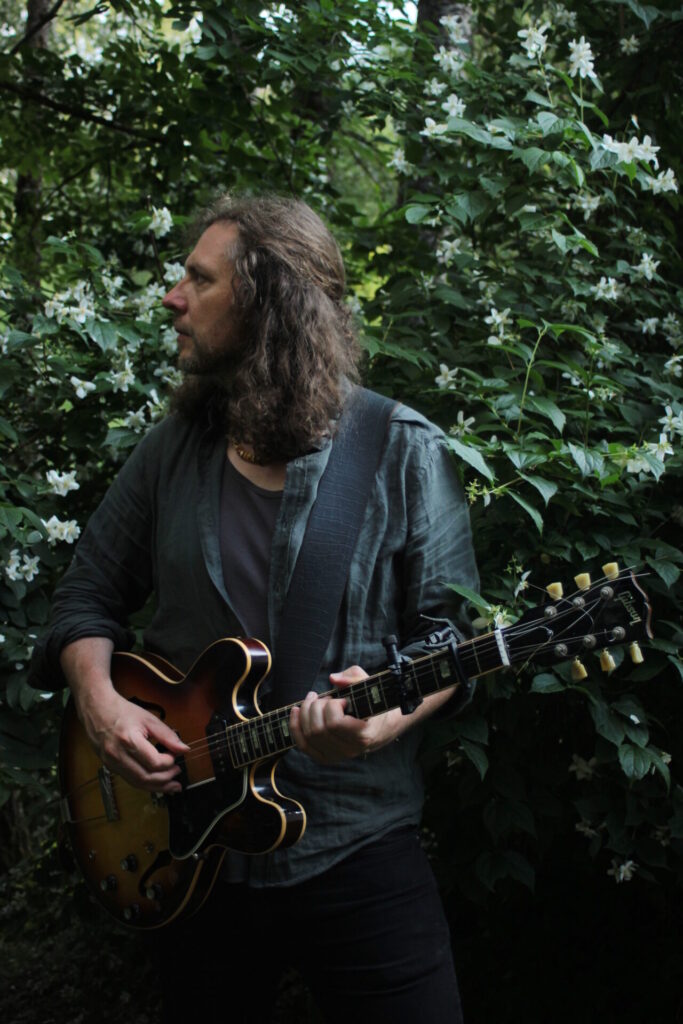
Raphael Rogiński is a Polish guitarist, composer, improviser, cultural animator, and researcher of musical folklore. Educated in jazz and classical music, he expanded his studies to include musicology and ethnomusicology — a combination that fundamentally shapes both his compositional language and performance practice.
Closely associated with Eastern European Jewish culture and other minority traditions, Rogiński researches forgotten musical forms and translates their meanings into contemporary artistic expression. As leader of pioneering ensembles such as Cukunft and Shofar, he has recontextualized traditional music within modern experimental frameworks.
His artistic practice extends across Turkish, Bedouin, African, Georgian, Persian, Armenian, and Crimean Tatar musical traditions, often performed in collaboration with musicians from those regions. A deep engagement with classic blues guitar techniques and vintage instruments from the 1950s and 1960s informs projects such as Wovoka and Shy Albatross.
Rogiński’s fascination with Kurpie folklore led him to collaborate with Genowefa Lenarcik, an outstanding singer of the region and daughter of the renowned folk musician Stanisław Brzozowy. He also worked with the last musicians of the Polska Roma community, founding the ensemble Drom.
His exploration of early music resulted in projects such as Bach Bleach, in which Johann Sebastian Bach’s works are performed on prepared guitars, and Plays Henry Purcell, reinterpreting Purcell through the aesthetic lens of 1980s Polish cold wave.
At the same time, Rogiński remains active in the international new jazz and experimental scene. His music has accompanied documentaries, animated films, theater productions, multimedia performances, and literary works. He has collaborated with directors and artists including Małga Kubiak, Jerzy Kalina, Paweł Miśkiewicz, Piotr Cieplak, and Maja Korczakowska, and has created music inspired by writers such as Tadeusz Różewicz, Mieczysław Myśliwski, Mieczysław Abramowicz, and Andrzej Stasiuk.
He performs primarily as a solo artist and bandleader. His ongoing projects include Shofar, Hizbut Jamm, Żywizna, Elik (a duo with Svitlana Nianio), and solo guitar programs.
Rogiński has collaborated with numerous internationally recognized musicians, including Jim White, Joe McPhee, Marylin Mazur, Michael Zerang, Frank London, Tim Sparks, Dave Rempis, Mark Sanders, Hania Rani, Mikołaj Trzaska, Natalia Przybysz, Wacław Zimpel, and many others. He regularly appears at festivals and concert venues in Poland and worldwide.
In 2015, Bôłt Records released Raphael Rogiński Plays John Coltrane and Langston Hughes African Mystic Music, which received widespread international acclaim. The album was included in The Wire magazine’s annual summary (ranked 16th), marking Rogiński as the first Polish artist to appear in its year-end list. In 2024, the album was remastered and reissued by Unsound with additional material. He was nominated for the prestigious Polityka Passport Award in 2015, and again in 2016 for projects including Żywizna and Shy Albatross.
Between 2018 and 2020, Rogiński collaborated with the Slovenian band Širom. His fascination with 1970s Senegalese culture led to the formation of Hizbut Jamm, whose debut album was released in 2024. Together with Ukrainian alternative music legend Svitlana Nianio, he founded Elik, a project dedicated to Ukrainian mythology.
During the pandemic, Rogiński developed the solo guitar program Dobroczynne Niguny, reinterpreting mystical Jewish nigunim. In collaboration with Natalia Przybysz, he reimagines music of the 1960s and 1970s.
His solo album Talán (Instant Classic, 2023) received highly positive reviews both in Poland and internationally. In 2024, the project expanded with the album Žaltys, focusing on original sources of Eastern European heritage. These recordings involve collaborations with musicians from Georgia, Serbia, Armenia, Ukraine, and other countries, presenting the region’s traditions through a contemporary lens.
In May 2025, Rogiński premiered Ružičniak Tajni (with Svetlana Spajić, Marina Džukljev, and Tijana Golubović), a project reinterpreting ancient Serbian musical traditions and those of neighboring cultures.