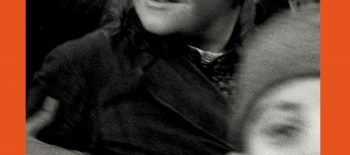

Andrzej Bobkowski with Grażyna Drabik – Encounters with Polish and Ukrainian Literature
S6E2 and all video recordings are available on our YouTube.
Encounters with Polish and Ukrainian Literature is a video series for anyone interested in literature and the culture of books and reading. Each month, host David A. Goldfarb will present a new topic in conversation with an expert on that author or book or movement in Polish literature. More about the Encounters with Polish and Ukrainian Literature series and the timeline.
Andrzej Bobkowski (1913-61) is seen as a major prose stylist of the twentieth century for a book he wrote in the 1940s, yet he was almost completely unknown in Poland for most of his life. Before the German invasion of Poland in September 1939, he and his fiancée had planned to live abroad, and they found themselves in France during the war with plans to emigrate to Argentina. They ended up emigrating to Guatemala after the war, where he lived in obscurity for thirty years. He stayed in contact with Polish editors such as Jerzy Giedroyć at the Instytut Literacki in Paris and Jerzy Turowicz of the liberal Catholic paper, Tygodnik Powszechny, and published stories and essays, but his masterpiece was called Pen and Ink Sketches (Szkice piórkiem), his diary of the German occupation in France, published in 1957 by Instytut Literacki. The work was banned in Poland for its anti-totalitarian views in opposition to both Nazi German fascism and Soviet Communism. His works and prolific correspondence began appearing in Poland in book form in the 1990s, after Poland’s political transformation of 1989, and more than thirty years after the author’s death.
Pen and Ink Sketches is published in an English translation by Grażyna Drabik and Laura Engelstein as Wartime Notebooks: France, 1940-1944.
In this episode, we focus on this work, providing some context for how Bobkowski found himself in Paris at the outbreak of the war in Poland, and the paradoxical situation of how he managed to maintain his identity as a writer and intellectual in the face of impending fascism. The beginning of the work reads much like the travelogue of a young man cycling through the south of France while it was still the zone libre, enjoying the wine, cuisine, and the rich landscape, at least until he returns to Paris to rejoin his fiancée, where the German presence is much more visible. And while we do get accounts of how he helped to keep fellow Polish émigrés out of trouble with the authorities through his knowledge of languages and position at a factory, he also writes reviews of the theater, musical performances, museum exhibitions, and engages in philosophical debates, not losing touch with the culture while surrounded by barbarism. He is of course aware of human suffering, acknowledging, for instance, the roundup and deportation of Jews at the Vel d’Hiver in 1942, but yet cannot fully engage with the magnitude of such tragedy, which is at best, for Bobkowski, unspeakable.
Andrzej Bobkowski in English translation and critical resources:
Andrzej Bobkowski. Wartime Notebooks: France, 1940-1944. Tr. Grażyna Drabik and Laura Engelstein. Margellos World of Letters. New Haven: Yale University Press, 2018.
Engelstein, Laura. “‘How to Convince Them You’re Not’: The Enigma of Andrzej Bobkowski.” In The Resistible Rise of Antisemitism: Exemplary Cases from Russia, Ukraine, and Poland. The Menahem Stern Jerusalem Lectures. Waltham, Mass.: Brandeis University Press, 2020. Ch. 3.
Mikołajewski, Łukasz. Disenchanted Europeans Polish Émigré Writers from “Kultura” and Postwar Reformulations of the West. Exile Studies, vol. 16. Oxford: Peter Lang, 2018.
The Polish Review. Vol. 67, no. 3 (2022). Special issue on Andrzej Bobkowski.
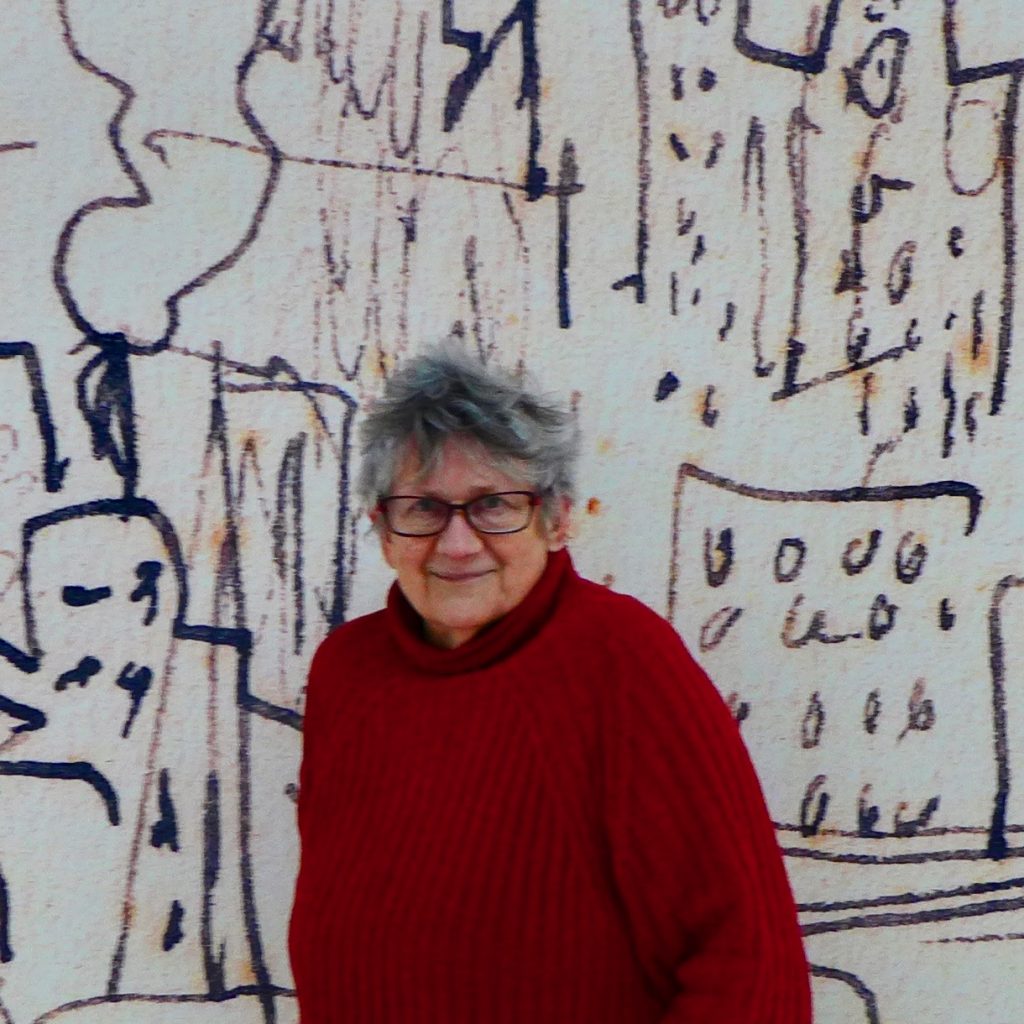
Grażyna Drabik teaches American literature at City College and Macaulay Honors College, CUNY, with special interest in literature of immigration and exile. Her translations of Polish poetry into English and Portuguese, have appeared in numerous literary journals and anthologies in the United States and Brazil, including in Polônia: o Partido, a Igreja, o Solidariedade, ed. by GD & Rubem Cesar Fernandes; Revista Brasilia; The Massachusetts Review; Modern Poetry in Translation; and The Bedford Anthology of World Literature. A book-length selection of Wisława Szymborska’s poems was published by Quarterly Review of Literature (1982), and of Anna Kamienska’s poems by Paraclete Press: Astonishments (2007). Together with Laura Englestein she prepared English edition of Andrzej Bobkowski’s Wartime Notebooks. France 1940-1944 (Yale University Press, 2018).
She is the editor of the blog All the World’s a Stage hosted on the platform of the Polish Theatre Institute of New York where she also writes regular column of theatre criticism: https://www.polishtheatre.org/blog
David A. Goldfarb, Host & Producer
Bartek Remisko, Curator and Executive Producer
Natalia Iyudin, Producer
Lead image: Andrzej Bobkowski on his bike, photo credit © M. Czerwińska
Guest photo: Image courtesy of Grażyna Drabik