

The Polish Book Institute, the Polish Cultural Institute London (PCI London), and the Polish Cultural Institute New York (PCI New York) are delighted to announce that Cultural Institute New York (PCI New York) are delighted to announce that Ursula Phillips has been awarded the 2026 Found in Translation Award (FiTA) for her translation of Ice by Jacek Dukaj, which was published last year by Head of Zeus in the UK.
This year’s jury consisted of Grzegorz Jankowicz, director of the Polish Book Institute, as well as Anna Tryc-Bromley, director of the PCI London, Małgorzata Szum, deputy director of the PCI New York and Mira Rosenthal, winner of last year’s FiTA.
Grzegorz Jankowicz commented on Ursula Phillips being awarded FiTA by saying the following: “Ursula Phillips has worked on the translation of Jacek Dukaj’s novel Ice for nearly a decade. The scale of this translation challenge was monumental, in fact quite incomparable to anything else. This is a truly exceptional book, with a complex narrative and linguistic structure, filled with neologisms for which the translator had to find solutions in English. Thanks to Phillips’ talent, experience and persistence, Dukaj’s remarkable novel has found a suitable, inspiriting literary form in English.”
This is the second time Ursula Phillips receives this award, after winning Found in Translation Award in 2015 for her translation of Zofia Nałkowska’s Choucas (Northern Illinois University Press).
About the book
A Trans-Siberian odyssey through political, criminal, scientific, philosophical and amorous intrigues, and into an endless winter to confront something utterly alien.
14th July 1924: In a Warsaw buried under feet of snow and Russian rule, Benedykt Gieroslawski, a dissolute young Polish mathematician, is roused from his bed by two officials from the Ministry of Winter and dispatched to Siberia, on the Trans-Siberian Express, to track down his long-exiled father.
The catalyst for this frosty metamorphosis of 20th century history is the impact of the Tunguska asteroid, deep in Siberia, in 1908. From this Ground Zero, emerge the Gleissen, silent harbingers of an eternal winter that follows in their ponderous wake. As they spread across the continent, agriculture collapses and people flock to cities as they seek protection from the deadly cold. As the land freezes, so does history: the Tsar still rules Russia; the Belle Époque endures; and the First World War never happened.
But out there, on the ice, a new world is being forged. The extreme, alien cold has transmuted elements into strange new forms, a ‘black physics’ that is the catalyst for a new industrial and scientific revolution. At the heart of it lies Siberia – a ‘Wild East’, a magnet for all the political, religious and scientific fevers shaking the world at the dawn of the 20th century, the crucible where black physics, shamanic lore and the cold logic of winter combine. And Benedykt’s final destination.
About the translator
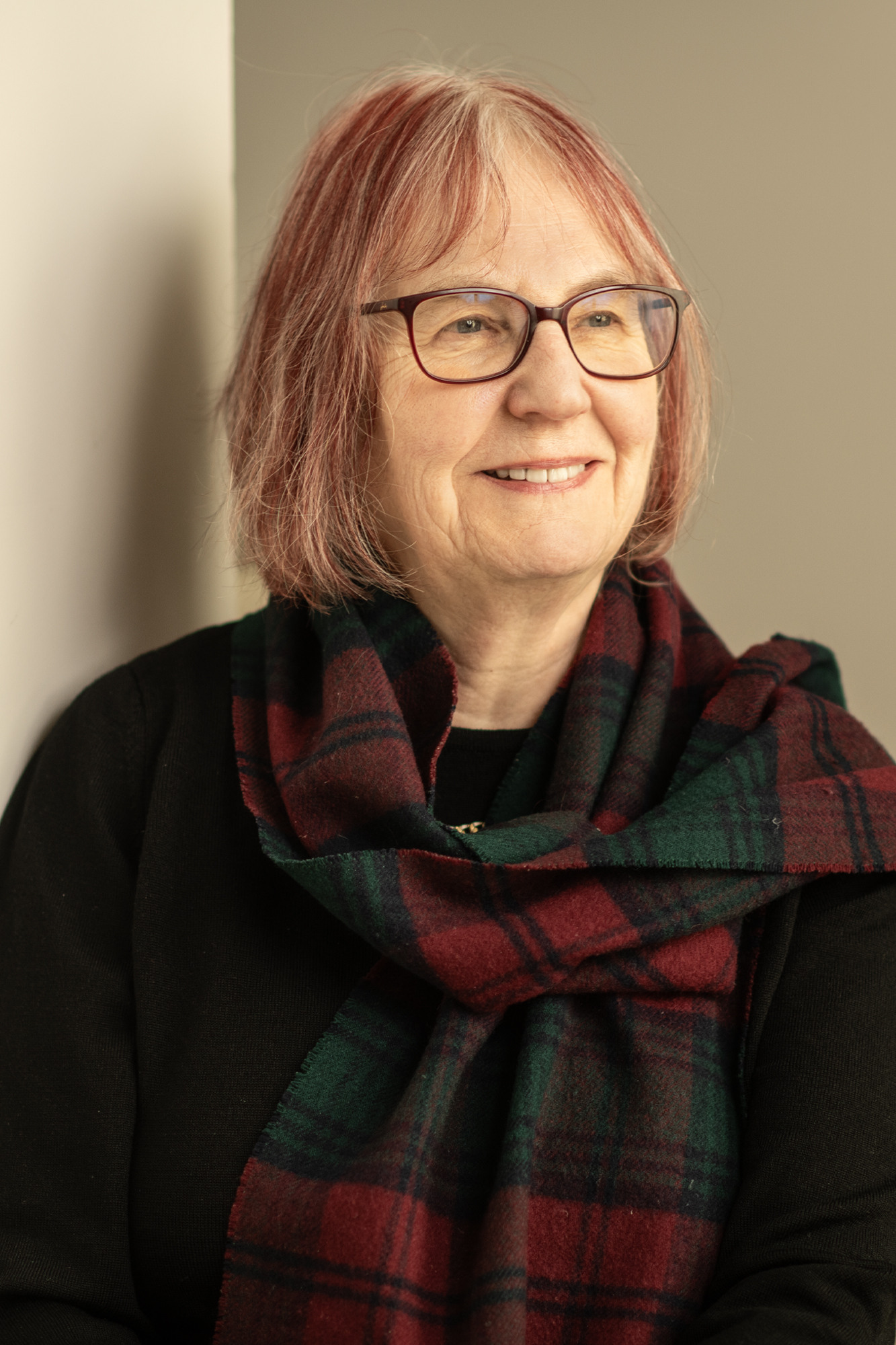
Ursula Philiips is an Honorary Research Associate of the University College London School of Slavonic and East European Studies with degrees in Russian from the University of Durham and Polish from the University of London, as well as a PhD from the Institute for Literary Research, Polish Academy of Sciences. In 2008 she published a monograph in Polish on Narcyza Żmichowska’s writing. She was the editor of Polish Literature in Transformation (LIT Verlag, 2013) and co-editor of the following works: New Perspectives in Twentieth-Century Polish Literature. Flight from Martyrology (1992) and Muza Donowa. A Celebration of Donald Pirie’s Contribution to Polish Studies (1995). She is on the editorial board of Slavonic and East European Review and publishes studies on Polish literature in British scholarly periodicals. Among her translations are Wiesław Myśliwski’s Palace, Grażyna Borkowska’s Alienated Women: A Study on Polish Women’s Fiction 1845-1918, Maria Wirtemberska’s Malvina, or The Heart’s Intuition, Narcyza Żmichowska’s The Heathen, Zofia Nałkowska’s Choucas (Found in Translation Award 2015) and Boundary (Wacław Lednicki Humanities Award 2017), short stories by Agnieszka Taborska and Piotr Paziński, as well as Grzegorz Niziołek’s The Polish Theatre of the Holocaust.
Previously awarded:
2008 – Bill Johnston for his translation of New Poems by Tadeusz Rózewicz
2009 – Antonia Lloyd-Jones for her translation of The Last Supper by Pawel Huelle
2010 – Danuta Borchardt for her translation of Pornografia by Witold Gombrowicz
2011 – Clare Cavanagh & Stanislaw Baranczak for their translation of Here by Wislawa Szymborska
2012 – Joanna Trzeciak for her translation of Sobbing Superpower by Tadeusz Rózewicz
2013 – Antonia Lloyd-Jones for the entire work of translations in 2012
2014 – Philip Boehm for his translation of Chasing the King of Hearts by Hanna Krall
2015 – Ursula Phillips for her translation of Choucas by Zofia Nalkowska
2016 – Bill Johnston for his translation of Twelve Stations by Tomasz Rózycki
2017 – Piotr Florczyk for his translation of Building the Barricade by Anna Swirszczynska
2018 – Jennifer Croft for her translation of Flights by Olga Tokarczuk
2019 – Madeline G. Levine for her translation of Collected Stories by Brunon Schulz
2020 – Anna Zaranko for her translation of The Memoir of an Anti-hero by Kornel Filipowicz
2021 – Ewa Malachowska-Pasek and Megan Thomas for their translation of The Career of Nicodemus Dyzma by Tadeusz Dolęga-Mostowicz
2022 – Jennifer Croft for her translation of The Books of Jacob by Olga Tokarczuk
2023 – Anna Zaranko for her translation of Peasant by Władysław Reymont
2024 – Alissa Valles for her translation of Firebird by Zuzanna Ginczanka
2025 – 2025 – Mira Rosenthal for her translation of To the Letter by Tomasz Różycki, Archipelago Books, 2024.
About FiTA
The award was established in 2008. It is given every year to an author/author of the best translation of Polish literature into English that was published in book form in the previous calendar year. The award is a one-month residency stay in Kraków, Poland with a monthly stipend of 2,000 PLN, a flight to and from Kraków and a prize of 16,000 PLN.
The award is given by a jury consisting of representatives of The Polish Book Institute Warsaw / Kraków, The Polish Cultural Institute London, and The Polish Cultural Institute New York, as well as translators, the winners of its two previous editions.
