
|
Date: Wednesday, 14.05.2025 Social upheavals and crises have always sparked new impulses in design – from the Arts and Crafts movement and the Bauhaus to the emergence of ecological design in the 1970s. How is design in Europe responding and evolving in light of current local and global disruptions? What strategies are emerging to build a more resilient European design culture? How do tradition, innovation, collaboration and artistic expression intersect in this context? And where do Europe’s strengths lie in comparison to other regions? The invited designers represent a new generation of European practice. Deeply rooted in the rich design traditions of their countries, they draw on longstanding expertise and established industrial or artisanal structures. At the same time, they look to the future with innovative perspectives, pursuing forward-thinking, imaginative responses to the complex challenges of our time. More PROGRAMME AEDES EXHIBITION TOUR at 16:30 Marking the final day of the current Aedes exhibitions – Rational Form Making by PangArchitect, Hong Kong/Boston and Shaping the Unbuilt Environment – Working With the Already-There by Gutiérrez-delaFuente Arquitectos, Madrid – Aedes curators Julia Schlütsmeier-Hage and Mathias Schnell will lead a guided tour. PROGRAMME LAB TALK at 17:30 Framed by two panels on social aspects and sustainability, the protagonists will present concise insights into their work, opening up the dialogue through a moderated discussion. Welcome Introduction and Moderation Panel I – Design as a Tool for Social Change Robida from Slovenia works in the abandoned village of Topolò at the intersection of design, language, media and space. Through the multilingual Robida Magazine and Radio Robida, the collective explores cultural possibilities in the post-rural space. Atelier Ad-hoc from Bucharest, Romania, operates an NGO alongside its design practice. The studio develops thoughtful, resource-efficient spaces and intervention strategies for marginalised communities, thereby strengthening urban resilience. The Dutch platform iii Instrument Inventors emerged from the ArtScience tradition in The Hague. It combines technological innovation with theoretical reflection and human experience. Henna Lampinen founded the fashion label henna in Helsinki, Finland, reimagining how fashion can be made more inclusive. Panel II – Resilience in Design Jules Péan from Luxembourg engages in material experimentation through his project NEW ROCKS, transforming waste from closed local mines into newly formed rocks and sculpting them into functional objects. Magdalena Jugo’s (Poland) tableware collection Regional Dreaming blends local materials and techniques — including ash from organic waste incineration in Poznań and the historic Raugo firing method of Baltic tribes — seamlessly balancing aesthetic excellence with functionality. Siim Karro and his team at Myceen from Estonia investigate the diverse applications of mycelium, ranging from lampshades to CO₂-negative building materials. Adrienn Király and Bálint Szalai run the socially driven label itthon („at home“) in Budapest. In collaboration with local artisans, they design everyday objects inspired by traditional techniques from Bálint’s native region of Vojvodina. Anthony Bonnici (Malta) presents the project URNA, developed in collaboration with a multinational team. The project introduces a new ritual for handling human remains, responding to the recent legalisation of cremation in Malta. It is featured at the London Design Biennale. ABOUT EUNIC Berlin EUNIC Berlin is the network of European cultural institutes in Berlin and part of the global EUNIC – European Union National Institutes for Culture – network. Clusters have been established in over 90 countries worldwide. EUNIC Berlin comprises 30 full and associate members, along with seven permanent guests. The network is committed to European values and works collaboratively to make Europe’s cultural diversity visible. Within the Berlin cluster, members develop joint cultural projects and engage in constructive exchange. EUNIC Berlin is also an active partner of the EU Representation in Germany. EUNIC Berlin is presenting Next! for the third time as part of Berlin Design Week – this year for the first time in a new lab talk format in collaboration with Aedes. The following day, the programme will provide participating designers with in-depth internal exchange and valuable insights into Berlin’s design landscape. This part of Next! is being organised in collaboration with the Werkbundarchiv – Museum der Dinge and other partner institutions. |
PARTNERS EUNIC Berlin, Aedes Metropolitan Laboratory IN COOPERATION WITH Berlin Design Week | Werkbundarchiv – Museum der Dinge EUNIC MEMBERS Collegium Hungaricum Berlin | Polish Institute | Finnish Institute | Embassy of the Kingdom of the Netherlands | Embassy of the Republic of Malta | Embassy of the Republic of Estonia | Slovenian Cultural Centre – SKICA Berlin | Romanian Cultural Institute | Grand Duchy of Luxembourg – Embassy in Berlin |
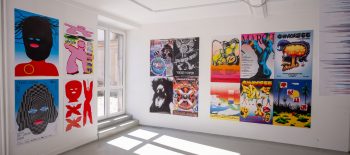
Polish representation at Forward Festival Berlin 2026

filmPOLSKA-Festivalabschluss: Hunting Flies 🗓