

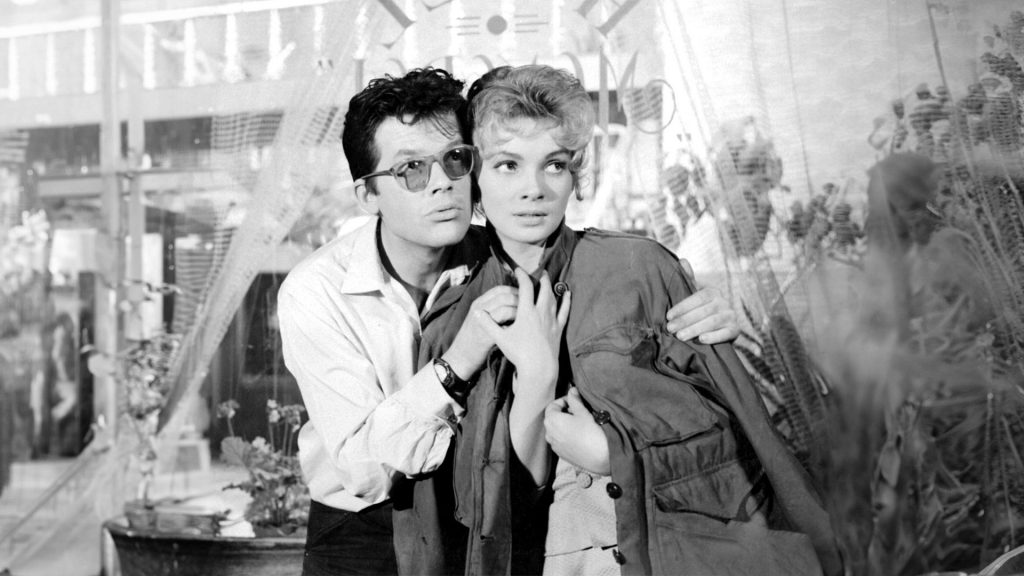
 © Polish Film Archives
To mark 2026 as the Year of Andrzej Wajda, the Polish Institute in Brussels, together with the Forum on Central and Eastern Europe and Cinema Zed Leuven, invites you to a screening of one of his early films.
Ashes and Diamonds / Popiół i diament (1958) by Andrzej Wajda is one of the most important films of the so-called Polish Film School. Set in post-war Poland, it portrays not only the moral and personal dilemmas of the individual, but also the conflict between generations, ideologies, and competing visions for a new Poland. Shot in a distinctive, highly realistic style enriched with powerful symbolism, Ashes and Diamonds has become a classic of Polish cinema, addressing themes of memory, identity, and the cost of ideals.
The film’s title, taken from lines by poet Cyprian Norwid, poses a haunting question: can any “diamond” of hope survive the ashes left by war?
The screening will be introduced by Kris Van Heuckelom,
and will be followed by a discussion with Konrad Klejsa.
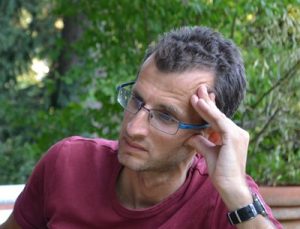
Kris Van Heuckelom, PhD, has a background in Slavic and Eastern European Studies and teaches in the MA programs in cultural, literary, and translation studies at KU Leuven. He specializes in late modern Polish literature and culture, with a focus on comparative and transnational perspectives. His teaching covers European literatures and cinemas, Polish–Dutch literary translation, and East–West dynamics in contemporary Europe.
As a literary translator, he co-edited a Dutch translation of Bruno Schulz’s letters (2017) and several anthologies of contemporary Polish poetry, including works by Adam Zagajewski and Ryszard Krynicki. He is secretary of the Flemish Association for Literary Studies and serves on the editorial board of Cahier voor Literatuurwetenschap. © KULeuven
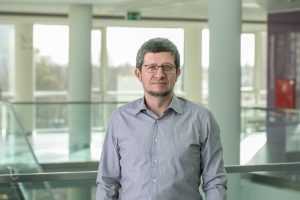 Konrad Klejsa, PhD, is an assistant professor in the Department of Film History and Theory at the University of Łódź. He is the author of Filmowe oblicza kontestacji (Warsaw, 2008) and co-editor of several collective volumes, including Kino polskie: reinterpretacje. Historia – ideologia – polityka (with Ewelina Nurczyńska-Fidelska, Kraków, 2007). © Maciej Andrzejewski (University of Łódż). © Maciej Andrzejewski (University of Łódż).
SCREENING:
Monday, May 4 at 5 PM
Film in Polish with English subtitles
Cinema ZED Leuven
Andreas Vesaliusstraat 9C, 3000 Leuven
TICKETS
Projection is organized as part of the programme “2026 – The Year of Andrzej Wajda”
Janusz Korczak: two events at UNamur 🗓
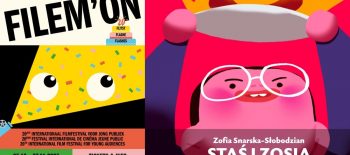
Animation: ‘Staś & Zosia’ at the Filem’On