

To mark the centenary of the birth and the tenth anniversary of the death of Andrzej Wajda, the Polish Institute Brussels and Cinéma Galeries are pleased to invite you to an exceptional film series: A Summer of Cinema with Andrzej Wajda.
Considered one of the leading figures of 20th-century European cinema, Wajda accompanied, film after film, the major upheavals of Polish history, from the Warsaw Uprising and the Katyn Massacre to the emergence of the Solidarity movement. Deeply rooted in history, his work also offers a universal reflection on memory, freedom, resistance and human dignity.
Through a selection of iconic films, this series offers a journey through different periods of both Wajda’s career and Poland’s 20th-century history.
Over four summer evenings, discover Ashes and Diamonds, Man of Iron, Sewer, and Katyn — four perspectives on the tragedies, hopes, and struggles that shaped modern Poland.
© Documentary and Feature Film Studio – WFDiF
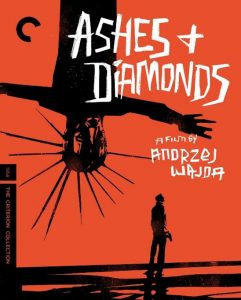
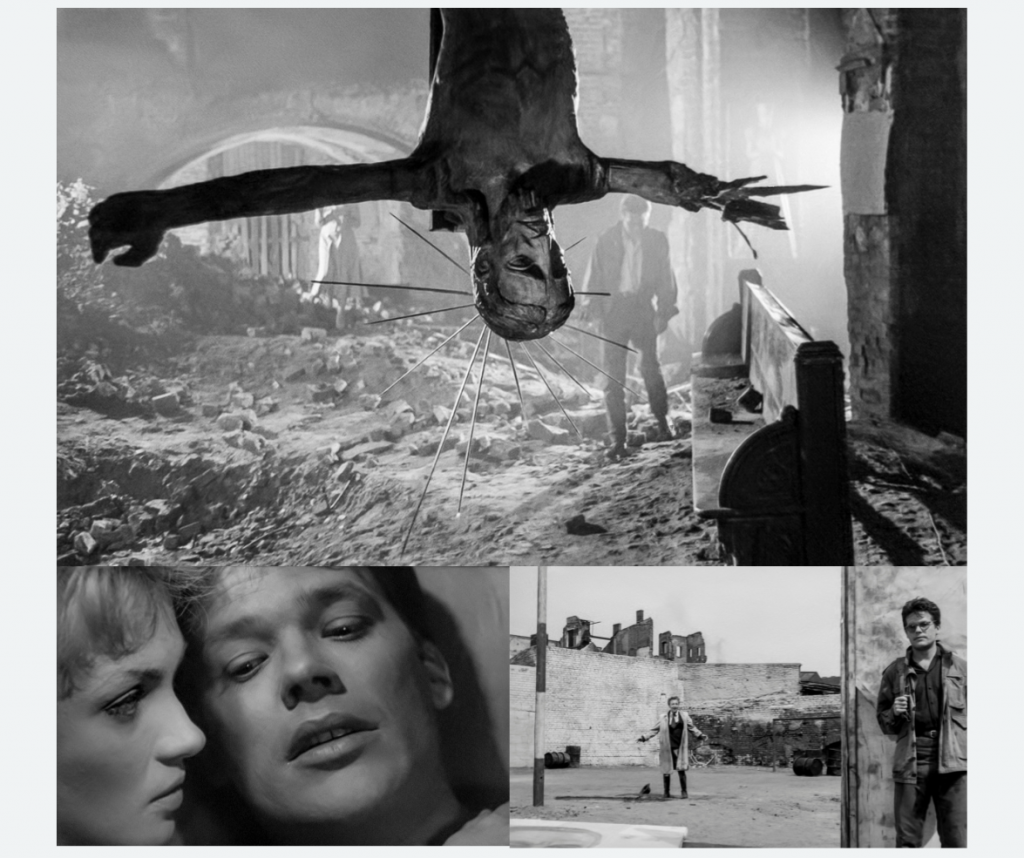
Ashes and Diamonds / Popiół i diament, 1958, 103 min
The film takes place in 1945, immediately after the end of the Second World War. Its main character is a former resistance fighter assigned to assassinate a Communist official.
By adapting the novel by Jerzy Andrzejewski, which was appreciated by the authorities of Communist Poland, Wajda significantly toned down its propagana aspects. Ashes and Diamonds focuses on the tragic fate of Polish anti-Communist resistance fighters in the postwar period. The director shifts the audience’s attention and sympathy away from an aging Communist activist toward a young partisan, highlighting his moral dilemmas, inner conflicts and tragic destiny.
Wajda also broke with the socialist realist aesthetic promoted by the regime. He adopted innovative formal techniques and developed a highly personal cinematic language based on powerful, sometimes “baroque” imagery, rich symbolism, and morally nuanced character portrayals.
This artistic freedom, combined with an interpretation less aligned with the regime’s expectations, met with resistance from Communist authorities. Excluded from the official competition at the Cannes Film Festival, Ashes and Diamonds was nevertheless screened at the Venice Film Festival, where it won the International Federation of Film Critics Prize, establishing Wajda’s international reputation.
© Documentary and Feature Film Studio – WFDiF
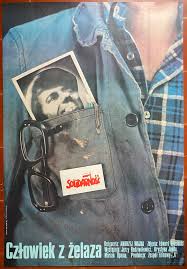
Man of Iron / Człowiek z żelaza, 1981, 153 min
© Documentary and Feature Film Studio – WFDiF
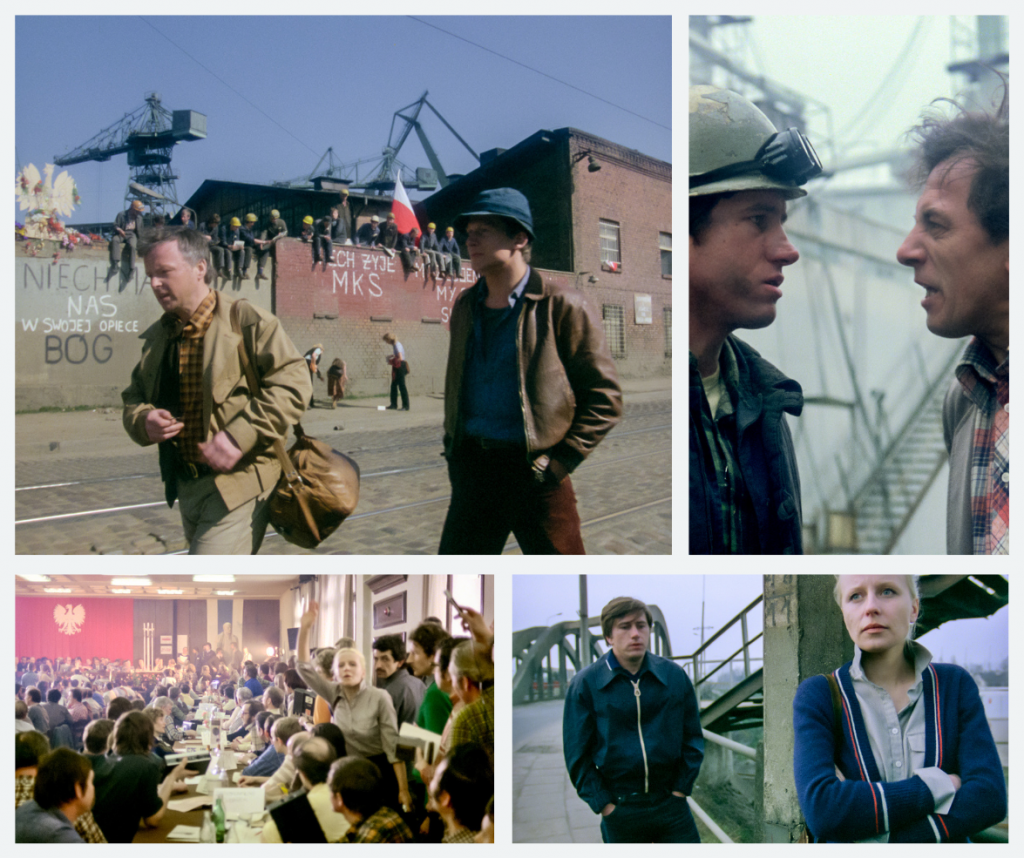
Set in 1980, the film immerses viewers in the events unfolding in Gdańsk during the birth of the Solidarity trade union. Its main character, Maciej Tomczyk, is a young worker involved in the movement that would become Solidarity. The film follows the lives of workers and their families, highlighting tensions between collective commitment, personal convictions, and individual responsibility.
Addressing contemporary reality, Wajda created a film that is both a historical chronicle and a human drama. Made “in real time,” almost simultaneously with the events it depicts, the film incorporates documentary footage and was partly shot in the Gdańsk shipyards, within the reach of the social movement itself. This approach gives the picture a remarkable authenticity as well as a palpable sense of political urgency.
© Documentary and Feature Film Studio – WFDiF
Sewer / Kanał, 1957, 91 min
© Documentary and Feature Film Studio – WFDiF
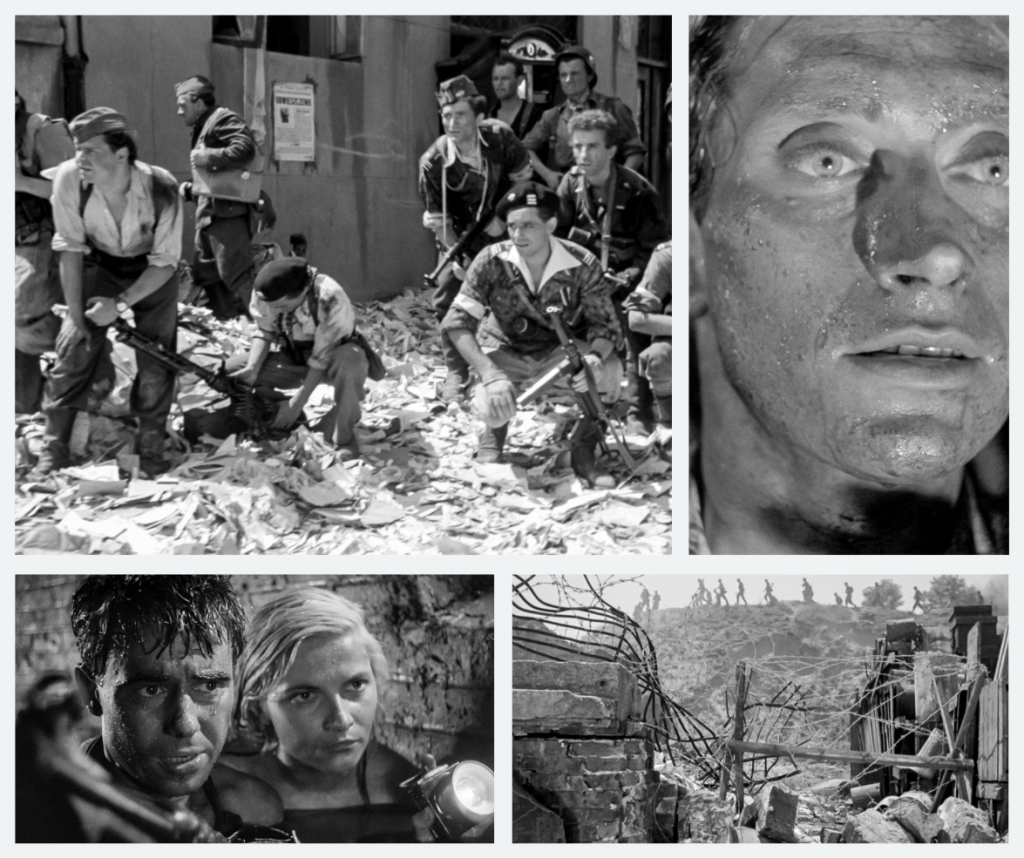
In Sewer, we follow a group of insurgents during the final days of the Warsaw Uprising of 1944. After fighting above ground, they seek refuge in the city’s sewers. Their journey takes them through what resembles the circles of a Dantean hell: poisoned air, sewage water, darkness and the bodies of the dead.
The screenplay was inspired by the wartime experiences of Jerzy Stefan Stawiński, a participant of the Warsaw Uprising. Once again, Wajda employed techniques innovative for the time, combining two distinct modes of representation: a realistic war reportage and an apocalyptic human drama. The claustrophobic sewer sequences play a central role, progressively intensifying the characters’ sense of confinement and despair.
The film’s dark atmosphere is also reinforced by its sound design. The use of instruments previously absent from film scores marked a clear break with the socialist realist aesthetic that had dominated Polish cinema music.
Simply addressing the subject of the Warsaw Uprising was a bold act, as the topic had remained largely absent from film screens under Communist rule. Despite official reluctance, Kanal won an international acclaim and received the Special Jury Prize at the Cannes Film Festival in 1957.
© Documentary and Feature Film Studio – WFDiF
Katyn / Katyń, 2007, 122 min
© TVP
Katyn, one of Wajda’s most personal films, is dedicated to the Katyn Massacre, a tragedy long suppressed by the Soviet regime. The film revisits the 1940 crime in which thousands of Polish officers and prisoners of war were executed by the NKVD.
The story is told through the eyes of soldiers and their families, particularly women who wait in vain for the return of their husbands, sons and brothers, unaware of their fate. The personal dimension of the project is crucial: Wajda’s own father was among the victims of the massacre. For decades, the director carried the ambition of dedicating a film to this family and national tragedy.
The film also examines how the tragedy was distorted, exploited, or denied for decades during the communist period and reflects on the work of historical memory that followed.
Released in 2007, Katyn received international critical acclaim. It was nominated for the Academy Award for Best Foreign Language Film and received the Excellence Award at the European Film Awards in 2008.
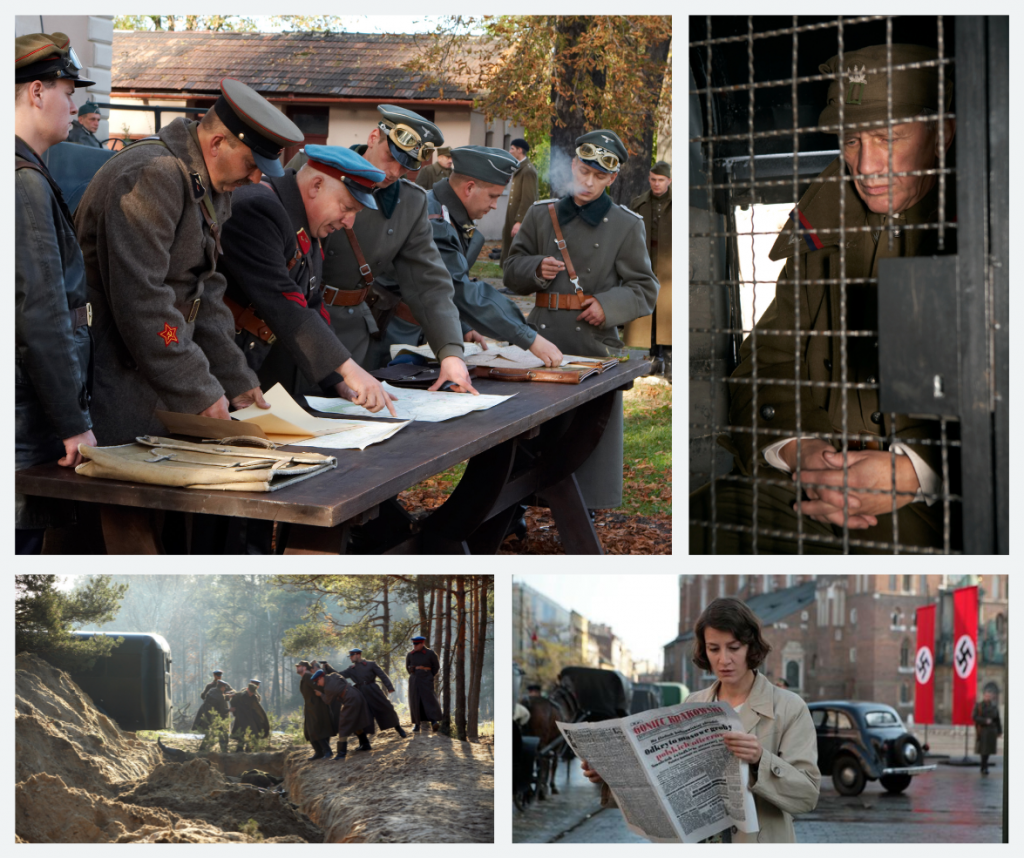
© TVP
The series will be inaugurated by Andrzej Wolski, a French-Polish filmmaker based in Paris. Director of the documentary Wajda by Wajda (2016), made only months before Wajda’s death, he also selected the films presented in this series.
He will attend the opening screening on June 29 to introduce the programme and to share his perspective on Wajda’s work.
A director of documentaries and feature films, Wolski has made around forty films for French television, the BBC and TVP. A specialist in historical and biographical portraits, he notably co-wrote, together with Agnieszka Holland, the screenplay for Europa Europa, which was nominated for an Academy Award in 1991.
His work consistently focuses on major figures and key moments in Polish and European history. He has devoted films to personalities such as Jerzy Giedroyc, Józef Czapski, Jan Karski and Jan Nowak-Jeziorański.
His relationship with Andrzej Wajda occupies a special place in his career. A few months before his death, as he approached his 90th birthday, the master of the Polish cinema invited Wolski to revisit the most important works of his career. These meetings gave rise to Wajda by Wajda, an exceptional documentary that serves both as a reflection on cinematic art and as Wajda’s artistic testament.
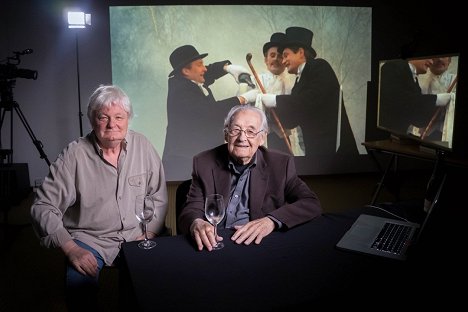
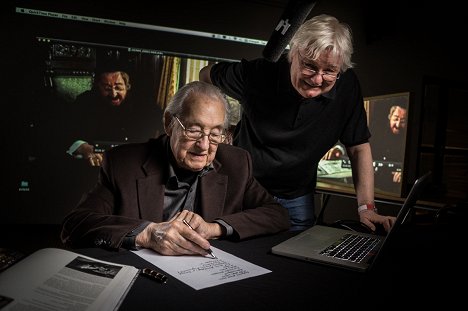
Andrzej Wolski et Andrzej Wajda © Grzegorz Hartfiel
PROGRAMME :
Monday, June 29, 2026
6:45 PM
Ashes and Diamonds / Popiół i diament
In the presence of Andrzej Wolski
Thursday, July 2, 2026
6:30 PM
Man of Iron / Człowiek z żelaza
Monday, July 6, 2026
7:00 PM
Sewer / Kanał
Thursday, July 9, 2026
6:45 PM
Katyn / Katyń
All films will be screened in their original version with English subtitles.
Cinéma Galeries
Galerie de la Reine 26
1000 Brussels

This series is part of the “2026 – The Year of Andrzej Wajda” programme
Partners:


TVP • 33 mm Platform • Wytwórnia Filmów Dokumentalnych i Fabularnych (Documentary and Feature Film Studio – WFDiF)
19ème édition de CinÉast 🗓
Le Ventre de la Ville 🗓