

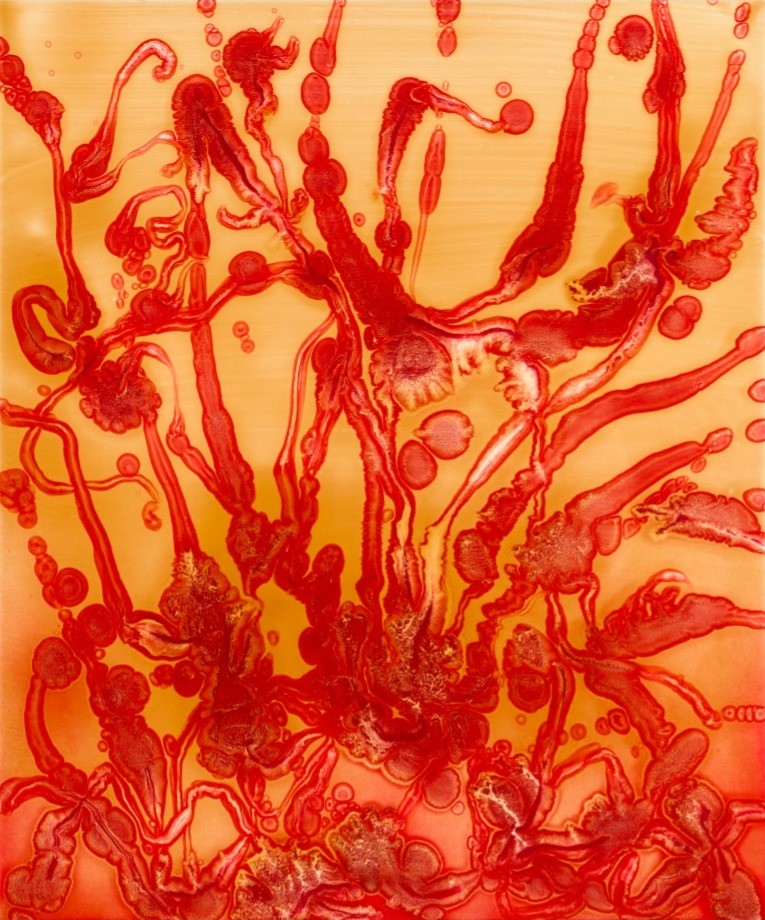
1. Your paintings combine abstraction with motifs from nature, often evoking biological forms and organic structures. Where did your passion for this subject come from?
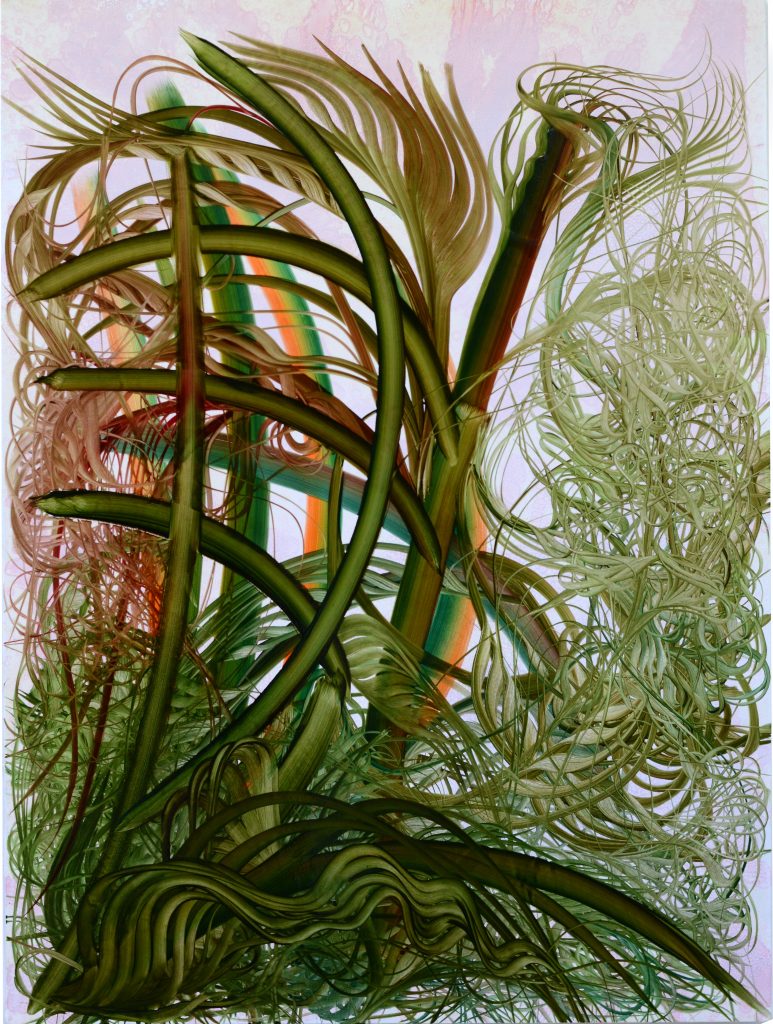
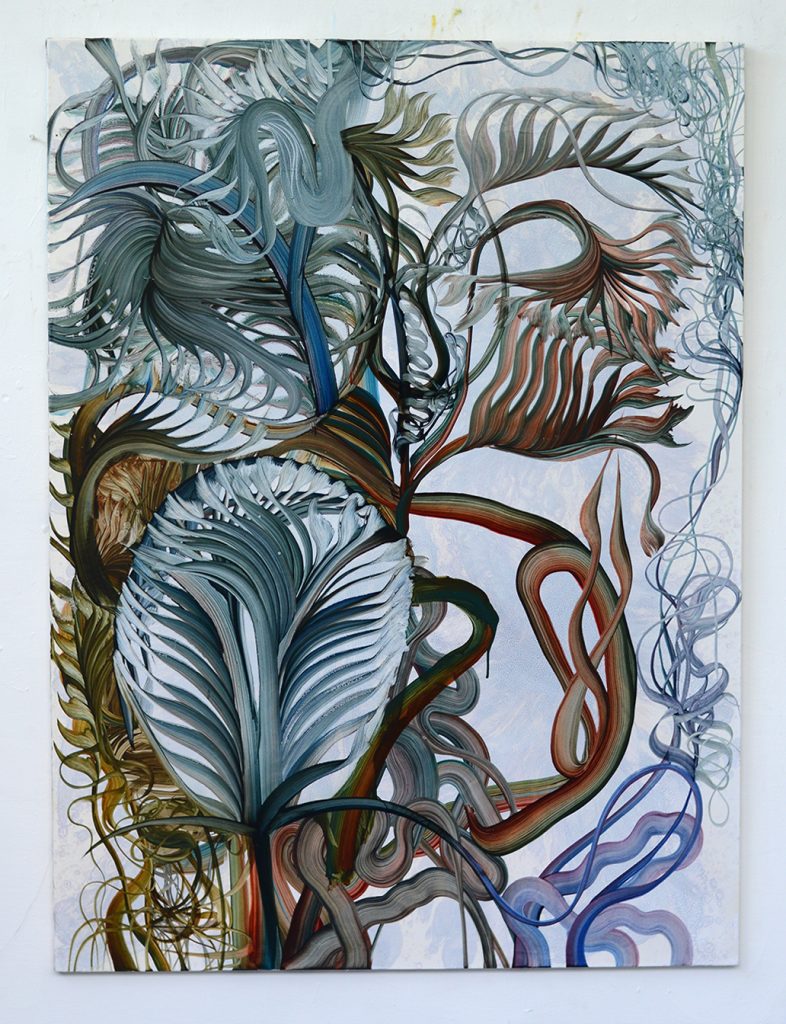
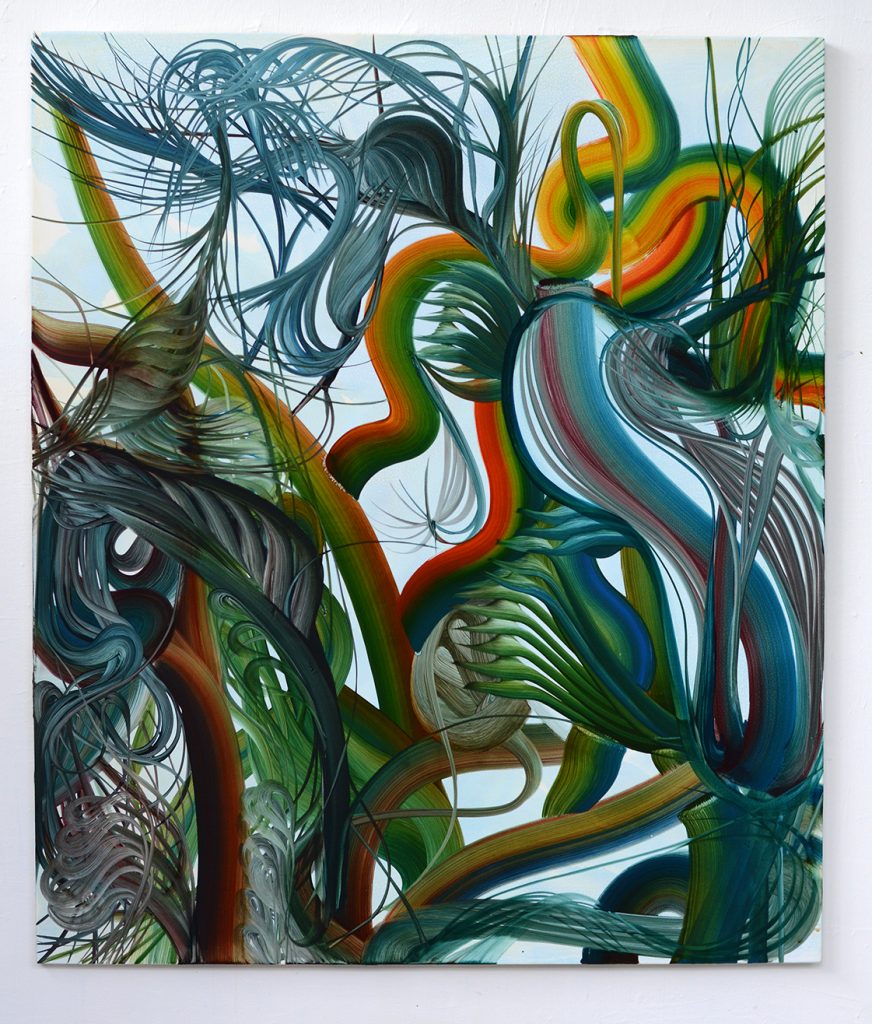
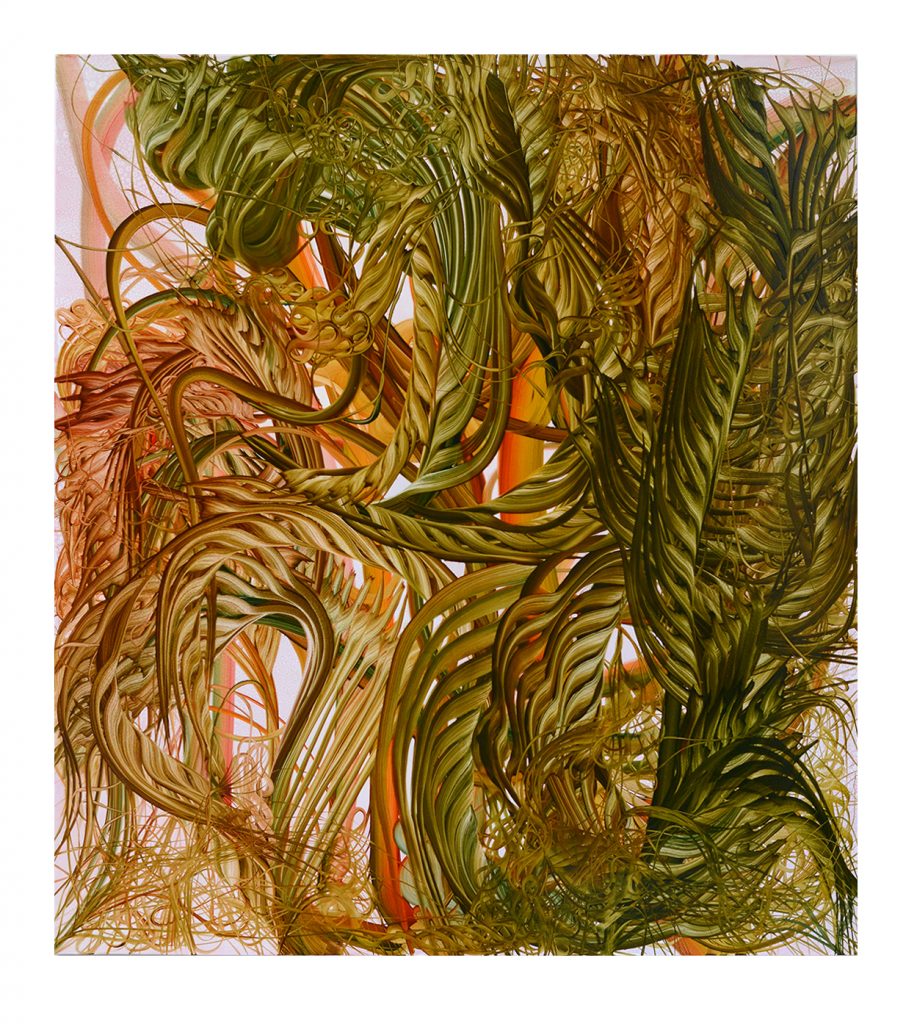
Edyta Hul: I think that the theme of my work – the associations it evokes – has evolved naturally over the years from the way I leave my mark on the canvas. It is also a compromise between what I am capable of doing manually and what I would like to express on these canvases. I wouldn’t be able to impose a different theme on myself in a logical or artificial way, so I stick to what I enjoy. It’s something that has simply stayed with me and has been shaping me for a long time. My works are constantly changing anyway – each new one grows out of the previous one – and this process is still ongoing.
2. What inspired you most in the early stages of your career, what experiences were formative for you?
Edyta Hul: I think there were many influences. The most inspiring thing for me was the very possibility of giving real shape to things that previously existed only in my imagination – both in drawing and in various spatial forms. Generally speaking: the possibility of shaping matter, transforming, creating, building. It gave me an incredible sense of satisfaction. I have always had a need to discover how I can create something I need from something else. The ability to spend a long time alone with myself in the creative process, the concentration that accompanies it, and sometimes even the stubbornness in searching for the right solution – this is also a very inspiring experience.
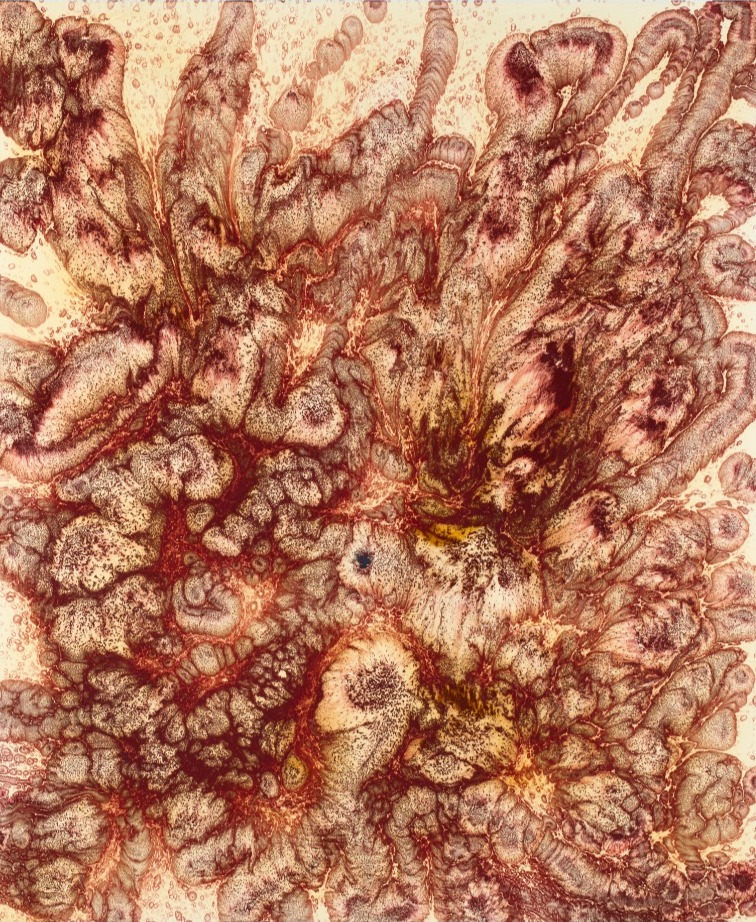
3. Your paintings show great freedom of gesture and confidence in the material. How would you describe the creative process itself, and has the process of painting become as important to you as the final result?
Edyta Hul: I believe that the theme of my work – the associations it evokes – has evolved naturally over the years from the way I leave my mark on the canvas. It is also a compromise between what I am capable of doing manually and what I would like to express on these canvases. I wouldn’t be able to impose a different theme on myself in a logical or artificial way, so I stick to what I enjoy. It’s something that has simply stayed with me and has been shaping me for a long time. My works are constantly changing anyway – each new one grows out of the previous one – and this process is still ongoing.
4. If you weren’t involved in painting, how else could you express your artistic sensibility? Can you imagine another form of expressing yourself or your emotions?
Edyta Hul: I’ve been thinking about this a lot lately – that I’ve been putting all my eggs in one basket for a long time. And yet I’ve always found it easy to engage in various forms of creative work with materials. However, I think that working with the body and movement gives me similar pleasant feelings to painting. In a similar way, it allows me to connect with myself, with my inner self – just as it does when I paint.
5. Is there a Polish artist whose work has made a particularly strong impression on you or has in some way guided your artistic pursuits?
Edyta Hul: It’s not out of pride or arrogance, but I don’t have that kind of name. I try not to look at too much so that I don’t get influenced by others. When I look at contemporary works, I often feel a twinge – a kind of unease – and then I prefer to go back to my studio to continue working on myself. However, I have a strong need to analyze – I’m interested in how something was made, how it came about. I get excited when I see a work created in a non-obvious, ambiguous way.
6. What emotions and reflections would you like to evoke in viewers visiting your exhibition? What would you like to see come out of this encounter with the audience?
Edyta Hul: I don’t have a prepared „script” of feelings for the viewer – I’m more curious about their reactions. It’s difficult to fully control this anyway, because the art of exhibition is a complicated matter, heavily dependent on space. However, I would like my paintings to have a monumental effect – to be somewhat overwhelming, drawing the viewer into another realm, visually and emotionally intense. These are works that require you to stop and look – it is worth viewing them from a distance, but also getting very close to discover the details and textures. When I paint, I stand just a few inches away from the canvas and focus on the details. It is also worth simply staying a little longer and feeling the atmosphere they create. My works are created in short, intense sequences of time, close to each other, which is why you can see common points between them – rhythms, repetitions, certain forms that last longer and evolve.
7. In recent years, you have participated in many significant projects, including the exhibition “Something’s in the Water” at the Bielska BWA Gallery and the project “If you can, send the rain” at Zachęta. You also won the Grand Prix at the 46th Bielska Jesień Painting Biennial (2023), and you are currently presenting your work in New York, at the SLAG&RX gallery (2025). What do these experiences mean to you and what are your exhibition plans for the coming years, both in Poland and abroad?
Edyta Hul: The Grand Prix was an important confirmation of the value of my work in the context of Polish contemporary art. I think I needed it to feel more confident and courageous in my further development. The three solo exhibitions mentioned above were milestones for me. They were extensive, each comprising around 30–40 objects, and required a great deal of focus and consistency on my part. I have always wanted to work abroad as well – to meet people from other cultural circles, to develop artistically and as a person. In this sense, New York is the fulfillment of a certain stage for me – it gives me a reason to be proud that my work is recognized in such an intense and competitive artistic environment. Next year, I am planning two solo exhibitions – one in Poland, the other abroad – as well as a new publication created in international collaboration.
8. And finally: is there a question about your art that no one has asked you yet, but which you would like to hear?
Edyta Hul: Maybe just how you felt when you were working on this painting, what was going on with you? It would be nice to hear such a question someday – or to see confirmation that someone really sees the person and their efforts in these works. Because it’s all very simple – it comes from life, from everyday existence, from a concern for a job well done. Each painting is like a page from a diary – a record of a fragment of reality.
Interview conducted by: Wiktor I. Michałowski