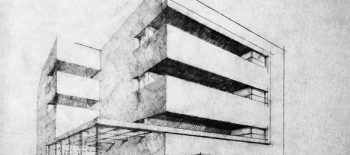


The duo exhibition at the Mishkan Museum of Art, Ein Harod is dedicated to the works of Batia and Yehoshua Grossbard — together and individually — and seeks to shed new light on two artists who worked for decades out of a deep connection both to the culture they came from and to the Israeli landscape in which they chose to settle. Born in Poland in the first decade of the 20th century, the couple arrived in Mandatory Palestine in the late 1930s, lived and worked in Haifa, and later became among the founders of the Ein Hod artists’ village in the 1950s. Until their deaths in the 1990s, they worked side by side while developing independent and distinct artistic languages.
Despite recognition in the local art scene, Batia and Yehoshua Grossbard remained largely outside the mainstream of Israeli art. They did not belong to any defined movement or school, and their work moved between European traditions and the search for a new local visual language. From this position — one of partial belonging and an outsider’s gaze — emerged a deeply personal and rich body of work dealing with memory, migration, identity, spirituality, and landscape.
As part of the project, a special tour of the exhibition will take place with curator Avi Lubin, a curator and researcher of contemporary art working within both institutional and independent frameworks in Israel, who will guide the tour and offer a Polish-Israeli reading of the Grossbard couple’s work. Through their life stories and artworks, the tour will explore the encounter between European culture and the reality of the Land of Israel, questions of displacement and rootedness, and the contribution of Polish-born artists to shaping Israeli art history. It will also highlight narratives that often remained outside the official canon but continue to resonate through their work.
The tour will take place on Thursday, 5 June at 11:00.
At the end of the tour, pierogi and Polish beer will be served in the courtyard, extending the cultural experience and connecting art, memory, migration, and flavors associated with Polish culture.
The exhibition will be opened to public until 3 October, 2026.
For information about the exhibition
Batia Grossbard (1908–1995)
Born in Ostrów Wielkopolski (Poznań region). She studied at the Academy of Fine Arts in Warsaw, where she received formal training in painting and specialized in oil painting, watercolor, and lithography. During her studies she met Yehoshua Grossbard, who later became her husband and artistic partner. She immigrated to Mandatory Palestine in the 1930s. Her work moves between painting and sculpture and is characterized by an intimate, poetic language concerned with memory, inner imagery, and emotional landscapes. Throughout her career, she developed a sustained dialogue between her European background and the local Israeli environment.
Yehoshua Grossbard (1900–1992)
Born in Serock, a town north of Warsaw. In the 1920s he studied art in Vilnius and Warsaw and joined the Association of Jewish Artists in Poland, as part of the vibrant Jewish artistic sphere in interwar Eastern Europe. In 1939 he immigrated to Mandatory Palestine as an “illegal immigrant” (ma’apil), joined his wife Batia Grossbard, and settled in Haifa. He later became an active member of the Ein Hod artists’ community. His work is characterized by a search for formal and abstract structures alongside engagement with landscape, material, and cultural memory. His oeuvre reflects a dialogue between European artistic traditions and an emerging Israeli visual language.
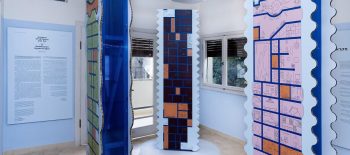
Agata Woźniczka at Beit Liebling 🗓
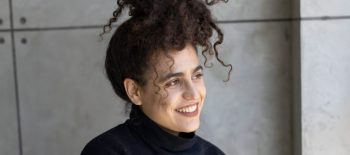
Salon Polin with Ofir Hovav 🗓