

Today, as sustainability reshapes design priorities, textiles are experiencing quite a renaissance across industries, including architecture. But for Aleksandra Gaca, a pioneer of three-dimensional textiles this is not a new concept or a passing trend. Exploring unorthodox applications for fabric has been the foundation of her work for decades. “One day, we will be building with textiles.” she asserts. To her, textiles are not just materials; they are structures in their own right. She often likens her process of interlacing warp and weft to creating a construction, building a skeleton.

A Poland-born, Netherlands-based, multiple award-winning textile designer, she produces work that defies convention. Her mastery lies in the interplay of material, colour, and pattern, creating textiles with both function and emotion. The Dutch Design Week jury once aptly captured the essence of her approach, calling it “poetic design with endless possibilities.”
Passionate and relentless, Aleksandra Gaca thrives on challenges. Tell her something is impossible, and she will prove otherwise. Throughout her career, she has expanded the potential of textiles, pushing them beyond decoration into the realms of sound engineering, well-being, automotive and spatial experience. Gaca reminds us that fabric is not just a surface but an active participant in shaping how we live, work, and feel.

Her career has been marked by extraordinary concepts and prestigious collaborations, but it has never been a story of overnight success. A slow burner, she has built her path through a fearless work ethic, insatiable curiosity, and a refusal to settle for the expected. Often, the market took time to catch up with her ideas, but she never lacked the confidence to push forward.

Her creative DNA is a fusion of influences – Poland’s rich textile legacy, the artistic freedom of Dutch design culture, and her own experimental approach. The vision of Magdalena Abakanowicz, who liberated textiles from their traditionally wall-bound role and transformed them into autonomous, sculptural forms, deeply fascinated Aleksandra. That boundary-breaking approach clearly characterises Gaca’s work too, as she continually challenges conventions—defying the lines between art, design, and architecture.
Read more HERE
European Writers Festival 3 Writers Revealed: Explore
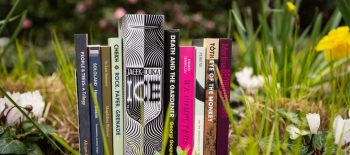
EBRD Literature Prize 2026 shortlist announced 🗓