
Exhibition – Come with us! – Democratic Transformations in Central and Eastern Europe after 1989
16th February – early May, Open on weekdays between 10.00 and 18.00 GMT, Europe House – 12 Star Gallery, 32 Smith Square, SW1P 3EU, London
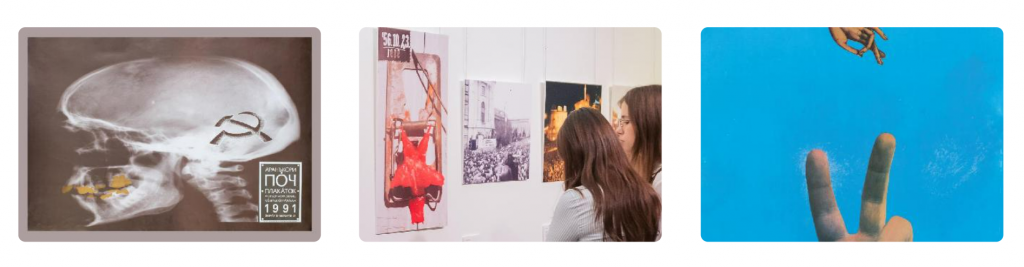
Conceived to evoke the atmosphere of streets and public spaces across Central and Eastern Europe, the exhibition traces the democratic transformations that followed the 1989 revolutions through a powerful selection of political posters and iconic visual material. Beginning with the first free elections of the early 1990s, it offers a compelling visual narrative of societies reclaiming political voice after decades of enforced silence.
Bringing together contributions from twelve countries — Bulgaria, Croatia, the Czech Republic, Estonia, Germany, Hungary, Latvia, Lithuania, Poland, Romania, Slovakia and Slovenia — the exhibition explores themes of mass mobilisation, the reinterpretation of the past and collective aspirations for a democratic future. Few artistic forms captured the urgency and optimism of this period as directly as street posters, which became an accessible and immediate medium for political expression at a decisive historical moment.
The European Parliament pays tribute to the significant achievements of democratization in many ways. Several symbols of the 1989 revolutions are publicly displayed on its premises in Brussels, including two segments of the Berlin Wall. The Antall József Building was named after the first democratically elected Prime Minister of Hungary, and the Esplanade Solidarność commemorates the iconic opposition movement in Poland. The symbolic naming of one of the central lobbies after the Baltic Way pays tribute to the Baltic democratic movement. This exhibition draws attention to that pivotal moment in history and geography—what was achieved then, and what is at stake now, as war has returned to the European continent with Russia’s full-scale invasion of Ukraine. It serves as a powerful reminder of the shared values that unite us and the respect of democracy.
The exhibition is the product of the combined efforts of the European Parliament Liaison Office in the United Kingdom (EPLO UK) and the Liszt Institute – Hungarian Cultural Centre London, with the support of the European Union National Institutes for Culture London (EUNIC) and the contribution of its Members: the Embassy of the Republic of Bulgaria in the United Kingdom of Great Britain and Northern Ireland, the Embassy of the Republic of Croatia in the United Kingdom of Great Britain and Northern Ireland, the Czech Centre London, the Embassy of Estonia in London, the Goethe-Institut London, the Embassy of the Republic of Latvia to the United Kingdom of Great Britain and Northern Ireland, the Embassy of the Republic of Lithuania to the United Kingdom and Northern Ireland, the Lithuanian Culture Institute, the Polish Cultural Institute in London, the Slovak Institute in London and the Embassy of the Republic of Slovenia to the United Kingdom of Great Britain and Northern Ireland. The exhibition is also supported by the European Delegation of the European Union to the United Kingdom of Great Britain and Northern Ireland.
See more HERE
Screenings of the documentary ‘Trains’ by Maciej
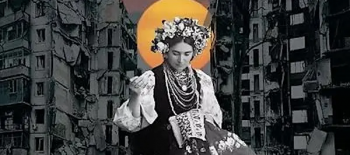
Stories from the East, dedicated to Ukraine