


POLIN Museum celebrates its 11th anniversary and presents the 2025 POLIN Award laureate
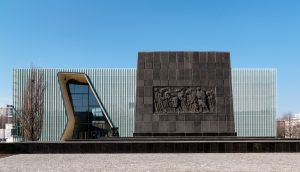
Built in the heart of what was once the Warsaw Ghetto, facing Nathan Rapoport’s Monument to the Ghetto Heroes, the museum was born out of a desire to broaden the perspective on Jewish history in Poland — to tell not only the story of destruction, but also the story of the rich, vibrant, and fascinating life of the largest and most influential Jewish community in Europe throughout a thousand years of existence.
The founders envisioned the museum not only as an exhibition space, but as a center for research, culture, and education — a place of dialogue, openness, and tolerance.
The building, made of glass, concrete, and copper and covering about 4,000 square meters, is an architectural masterpiece that has won numerous awards. Designed by Finnish architects Rainer Mahlamäki and Ilmari Lahdelma, its highlight is the main hall — symbolizing the parting of the Red Sea, a metaphor for movement, transformation, and the passage toward a new beginning.
The core exhibition, developed over several years by a team of about 120 researchers from Israel, Poland, and the United States, was inaugurated on October 28, 2014, in the presence of the Presidents of Poland and Israel at the time — Bronisław Komorowski and Reuven Rivlin. It consists of eight impressive galleries telling the story of Polish Jews through the ages — from the Middle Ages to the present — using original artifacts, interactive displays, and moving personal stories that bring history to life and connect visitors to the past.
Among its many projects, the POLIN Museum awards the annual POLIN Award to activists, researchers, entrepreneurs, and organizations dedicated to preserving and reviving the memory of Jewish life in Poland.
Since 2015, the award – which includes a financial grant, a certificate of recognition, and public acknowledgment – has been presented as a tribute to meaningful work in the fields of education, intercultural dialogue, and the commemoration of Jewish history through educational and cultural initiatives.
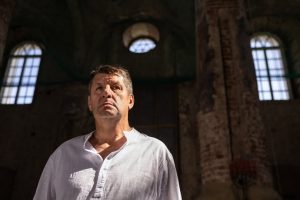
This year’s laureate is Marek Chmielewski, the head of the village of Orla in eastern Poland, who has worked for many years with extraordinary dedication to restore the memory of the local Jewish community.
Thanks to his efforts, the 18th-century synagogue in Orla has been restored as a place of remembrance and dialogue and has been included in a European program for the preservation of historic and cultural sites at risk of destruction – a step that will ensure its restoration and protection for the future.
Chmielewski is also the initiator of the “In Spite of Everything – Shalom” Festival in Orla, dedicated to the town’s Jewish heritage, as well as the annual memorial days for the victims of the deportation of Orla’s Jews to Treblinka.
His work stands as a model of dedication to memory, history, and the building of bridges between past and present.
If you visit Warsaw, don’t miss the POLIN Museum. It’s not just a history lesson — it’s a powerful and emotional experience, a connection to our shared roots and to an essential chapter in the story of both Jews and Poles.

European Day of Languages 🗓

Join us – we are looking for