
‘What we shared’ – film screening @ UN-CENSOR-ING: Cultural Heritage Network Symposium
12th March at 7 pm
Location: King’s College London, Bush House, Lecture Theatre 3 (NE) 0.01
Book your FREE tickets HERE.
Join the screening of Kamila Kuc’s movie ‘What we shared’ followed by a discussion and Q&A session with film producer & director, moderated by Dara Waldron from Technological University of the Shannon, author of ‘New Nonfiction Film: Art, Poetics and Documentary Theory’. This event is a part of UN-CENSOR-ING: Cultural Heritage Network Symposium, taking place on 12th March on Zoom. More information provided below.
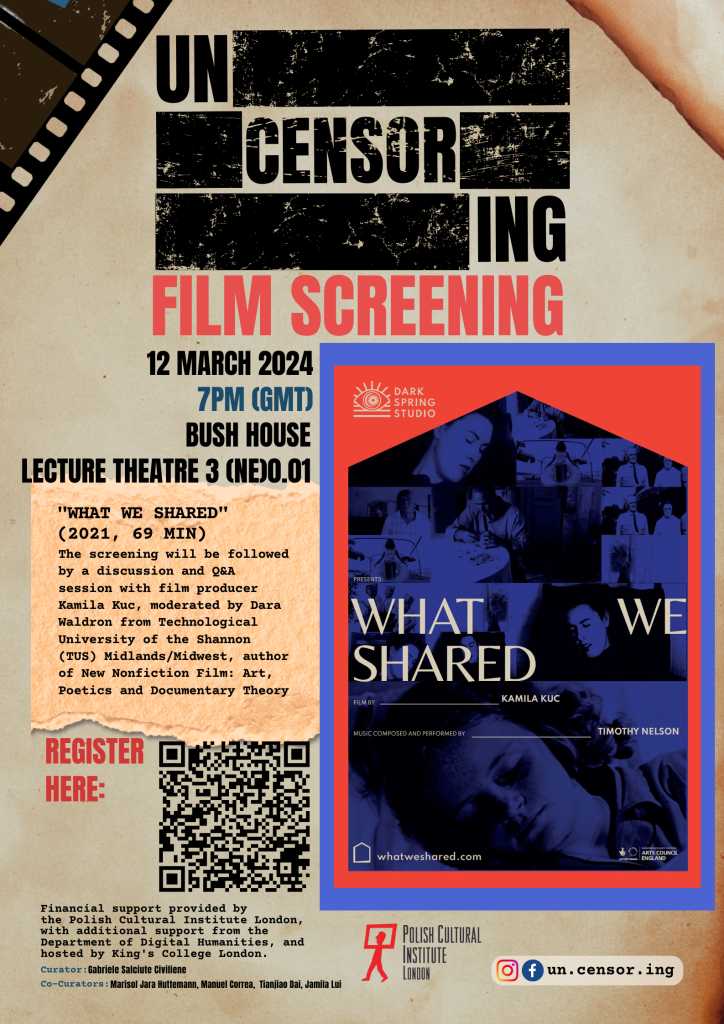
‘What we shared’ (2021) is an empathetic exploration of the de facto Black Sea state of Abkhazia that raises profound questions about displacement, memory, and trauma. In Kamila Kuc’s reimagination of the past and present, seven non-professional locals reenact stories from their own lives during 1992-93 war between Georgia and the separatist region of Abkhazia. Kuc interweaves those memories with auto-fictional narration, archival materials processed with AI technology, and an ethereal soundscape designed by Timothy Nelson. The result reveals the Abkhaz War to be not history, but an elusive mix of reality and dream that continues to disturb the post-Soviet zone today.
Film will be in Russian, Abkhaz, and English with English subtitles.
Kamila Kuc is a Polish-born, London-based filmmaker, whose hybrid practice stems from the belief that although we are unable to change our pasts, we have the power to shape our future narratives. She utilises empathy as form of resistance and employs methods of narrative psychology, speculative histories, memories and dreams to subvert dominant narratives of history and create new points of reference for the future. Kamila Kuc is a recipient of many international grants, most recently, the Arts Council England Project Grants. She is also the Founder and Director of Dark Spring Studio, a London-based production company dedicated to the creation and distribution of artist moving image works that are committed to social change.
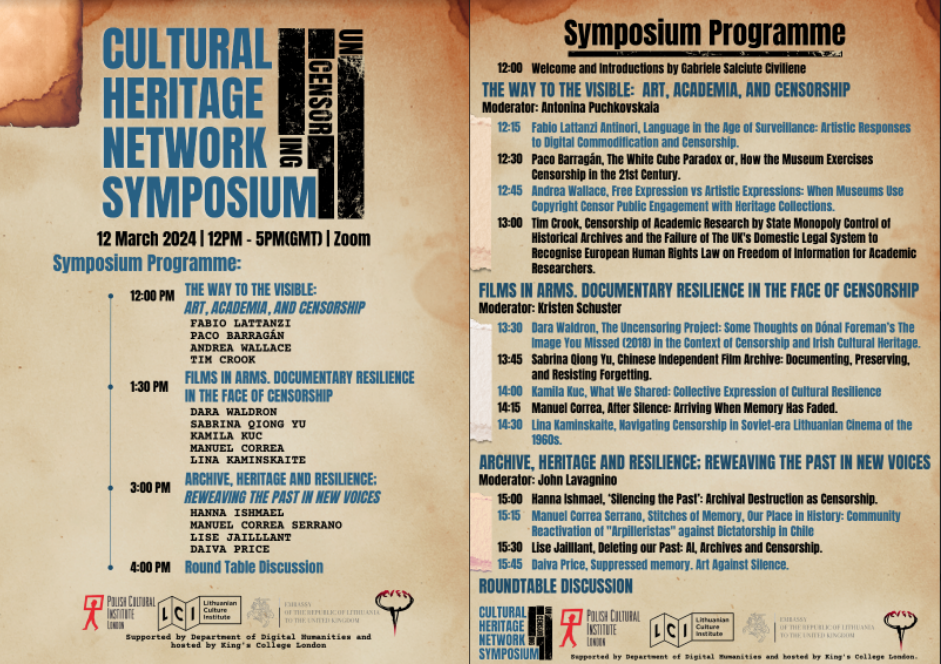
UN-CENSOR-ING: Cultural Heritage Network Symposium
The symposium brings a diversity of views, expertise, experiences, and institutional affiliations to present, reflect, provoke, and enlarge on the topics of censorship, its impact on cultural heritage, and the ways in which cultural heritage professionals, researchers, and artists deal with, resist, challenge, or undo the effects of censorship across space, time, and cultures.
During the symposium you will hear, among others, Kamila Kuc’s talk ‘Collective Expression of Cultural Resilience’ during the debate “Fire in Arms. Documentary Resilience in the Face of Censorship’. The event will be concluded by a roundtable discussion. Please find more information on a poster below.
Register HERE.

Kreative Talk with Masaya Inaba 🗓
Wojtek Mazolewski presents his Solo album live in the