


Why did Ze’ev Jabotinsky admire the Polish writer Henryk Sienkiewicz? How was he able to recite by heart passages from Konrad Wallenrod by Adam Mickiewicz, one of Poland’s greatest poets? What lies behind the intriguing name “Żegota” — a clandestine organization that became a symbol of aid to Jews in Poland during the Holocaust? And what are the biblical prophets Ezekiel, Jeremiah, and Daniel doing between the lines of Mickiewicz’s poetic works?
Alongside these questions, and a range of fascinating literary and historical anecdotes, the meeting will explore the long-standing encounter between Jewish culture, Polish literature, and Hebrew literature. Through masterpieces such as Mickiewicz’s Dziady and Stanisław Wyspiański’s The Wedding, we will examine how ideas, motifs, and images from Jewish tradition and folklore permeated and influenced classical Polish literature.
Dr. Ilona Dworak-Cousin, writer and activist for Israeli–Polish cultural relations, will speak about the interplay between Polish literature and Jewish culture.
The conversation will be moderated by literary scholar and translator Kinga Przewłoka, who will also discuss the history of translating Polish classics into Hebrew — from Mickiewicz and Wyspiański to the challenges of translating Polish literature for contemporary Hebrew readers.
During the event, we will also explore the profound influence of Polish literature and culture on Hebrew and Yiddish literature, as reflected in the works of Shaul Tchernichovsky, Hayim Nahman Bialik, and Y.L. Peretz.
Friday, 5 June
11:00 AM
Polish Institute Library, Rothschild 3 (Beit Pasgot), 22nd floor, Tel Aviv
The event will be held in Hebrew!
Free entry upon prior registration.
In cooperation with the Israel–Poland Cultural Relations Association.
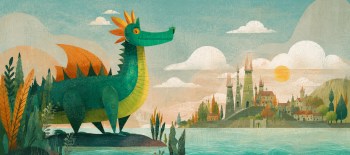
The Polish Dragon in Tel Aviv 🗓

Between History and Memory, Between Yiddish and