

Biennale Sessions | Polish Pavilion – Panel Discussion 19th June 2025
19th June 2025, 17:30 – 19:00, Somerset House Screening Room
Tickets: https://my.somersethouse.org.uk/8647/9042
This panel examines how the exhibition Records of Waiting reframes traditional Polish Highland woodcarving as a tool for recording and visualising time. Bridging design, sociology, and material culture, the conversation will explore how ornament can reflect both statistical data and lived experience.
Panelists include:
Peter Hall – Design Researcher and Suthor of Critical Visualization: Rethinking the Representation of Data
Marcin Nowicki – Graphic designer, artist, educator, and co-founder of the interdisciplinary Noviki Studio
Marta Foresti – Founder and CEO of LAGO Collective, researcher, and data expert
Together, they will consider how contemporary design can translate temporal inequalities into aesthetic and material forms. The panel will be chaired by Victoria Broackes, Director of London Design Biennale.
Tickets: https://my.somersethouse.org.uk/8647/9042
Biographies:
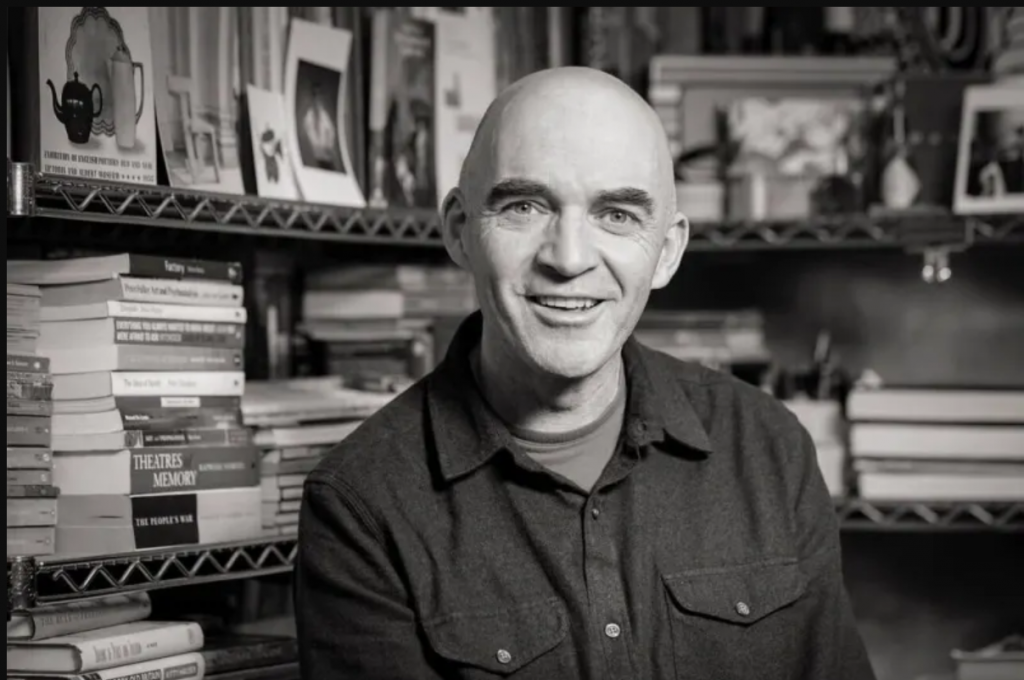
Peter A. Hall – Reader in Graphic Design at Camberwell College of Arts and Chelsea College of Arts, University of the Arts London (UAL). His research focuses on mapping and visualisation as critical and participatory practices. He has authored and co-authored several notable publications, including Critical Visualization: Rethinking the Representation of Data (2022), co-authored with Patricio Dávila; Sagmeister: Made You Look (2009); Else/Where: Mapping – New Cartographies of Networks and Territories (2005), co-edited with Janet Abrams; and Tibor Kalman: Perverse Optimist (2002).
Marta Foresti – Founder and CEO of LAGO, a research and creative collective on migration, culture and the arts. Before creating LAGO Marta spent most of her career as an executive and senior advisor in leading research and policy organisations at global and national level. She was Managing and Executive Director at ODI, a leading global affairs think tank where she established and led the institute migration and governance work and established ODI Europe. Marta is Chair of the Global Creative Economy Council, Senior Visiting Fellow at ODI Global and Senior Advisor at the Moleskine Foundation.

Marcin Nowicki – Graphic designer, artist, educator, and co-founder of the interdisciplinary Noviki Studio. His work bridges graphic design, contemporary art, and advanced technologies, often employing artificial intelligence and algorithmic image generation. He has led over 200 design projects for cultural institutions, earning numerous international awards. Nowicki regularly teaches and lectures at institutions including the Royal Academy of Art in The Hague and the School of Form in Warsaw. He is the author of the graphic interpretation of the Polish Pavilion at the London Graphic Biennale, and this year, the laureate of the European Design Awards in the Digital Installations category.

Kreative Talk with Masaya Inaba 🗓

Wojtek Mazolewski presents his Solo album live in the