


INFORMERS
In the days before the internet, when not everyone had a landline at home, or when their lines were intentionally disconnected, passing on uncensored, truthful information was a major challenge. In addition to the independent samizdat press, in which women were heavily involved in editing, transcribing, printing, and distribution, it was also important to pass on information to foreign journalists. Women used their knowledge of foreign languages and interpreting skills.
Mária Komárová: „Our phone was constantly tapped, police cars were parked in front of our house, and we were taken in for interrogation.“
Anna Šabatová: „People also often brought us information. For example, about criminal proceedings, I had to accept it, write it down, and provide it to those who were working on VONS communications. In later years, I had photos of imprisoned people, so when journalists came, it was like a factory. I gave them names, I remembered exactly who got how much and for what. I also went to the post office to make international phone calls, even though I was afraid!“
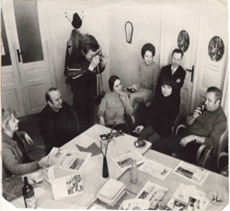
Information on the political trials in Czechoslovakia were passed on to the foreign journalists by signatories of Charter 77, including interpreter Zdena Tominová, who had an excellent command of English, German, and French, and journalist Mária Komárová (second from right in the photo), who also established contact with the American ambassador.
Source: Private archive of Vladimír Komár
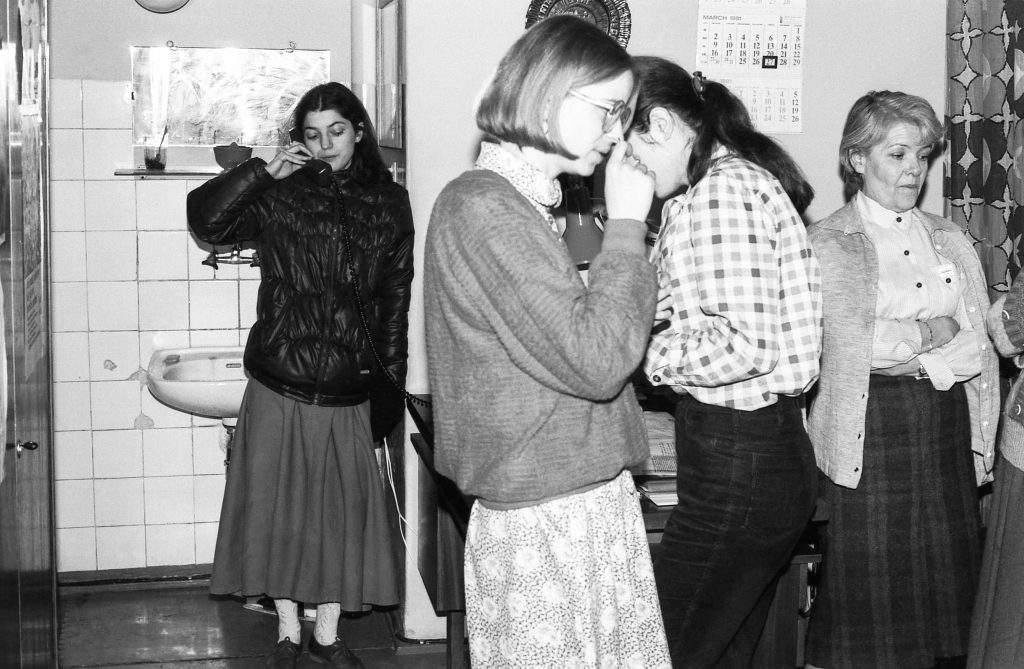
In Poland, at the time of Solidarity’s founding in August 1980, Joanna Wojciechowicz, Ewa Milewicz, and Maryla Płońska assisted Western journalists. In the photo, Bożena Rybicka (first from left), Lech Wałęsa’s secretary, is seen on the phone at Solidarity headquarters in Gdańsk in 1981. Photo by: Leszek Biernacki
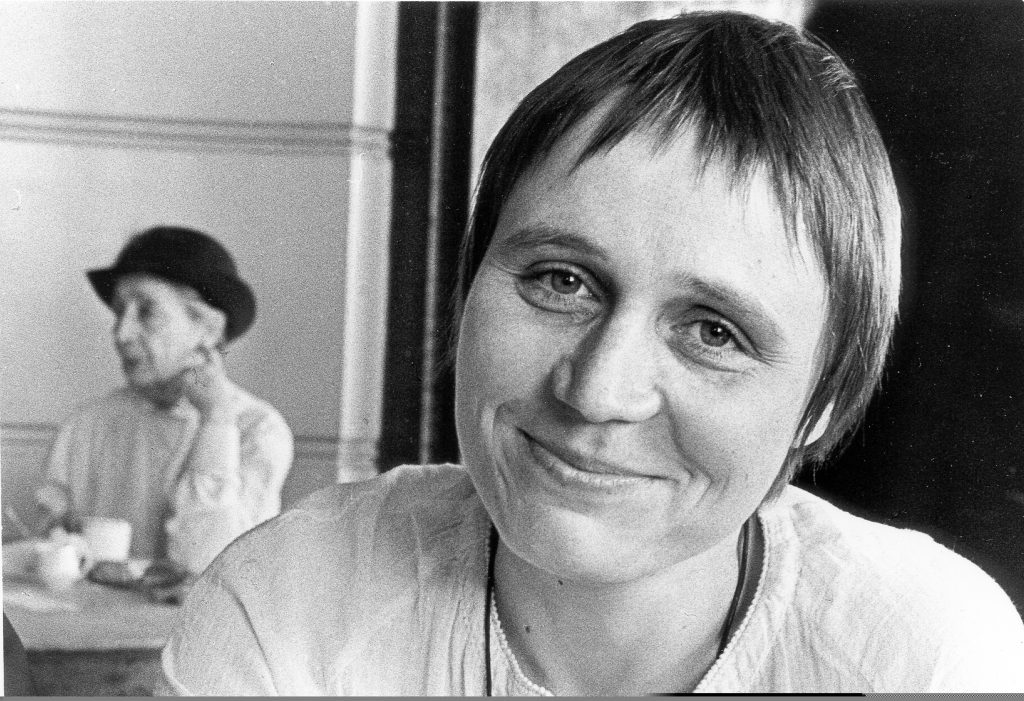
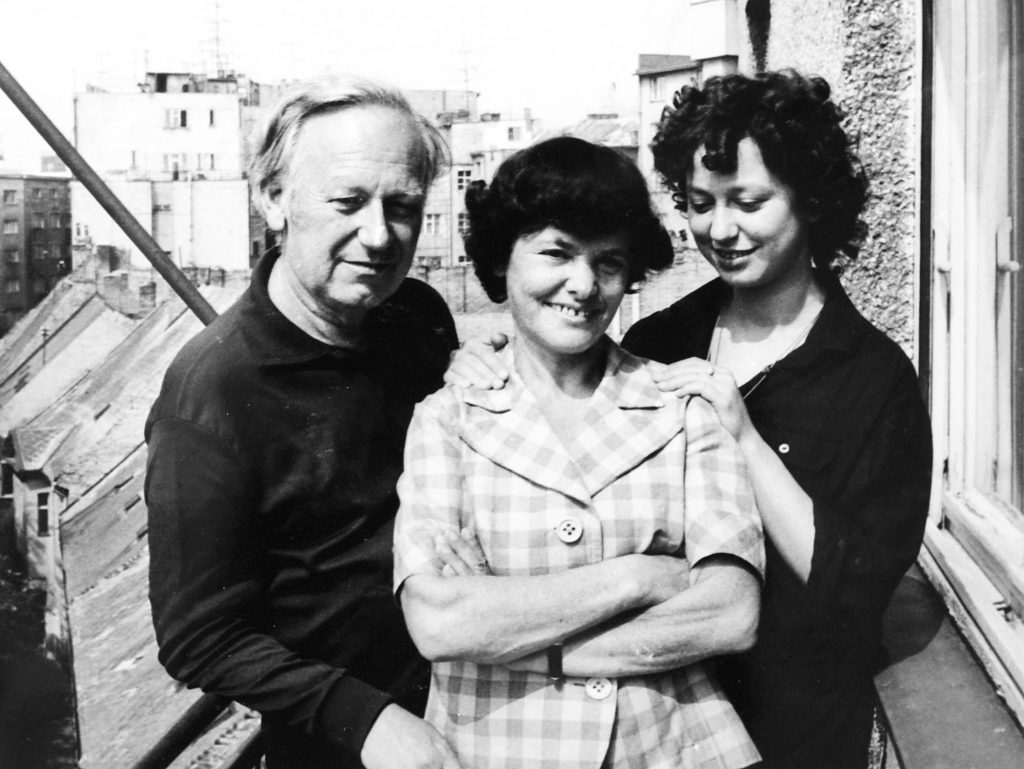
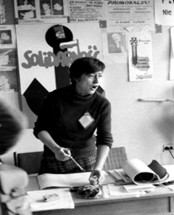
Joanna Wojciechowicz was head of Solidarity’s information department and co-founded the Solidarity radio agency and the Gdańsk Information Agency. An English interpreter, her apartment served as a contact point for Western journalists. Pictured in 1981, Photo by: Leszek Biernacki
Janina Jankowska PHOTO
In the photo, Janina Jankowska records during John Paul II’s visit to Poland in 1983. Source: Private archive of J. Jankovwska