

Epilogue
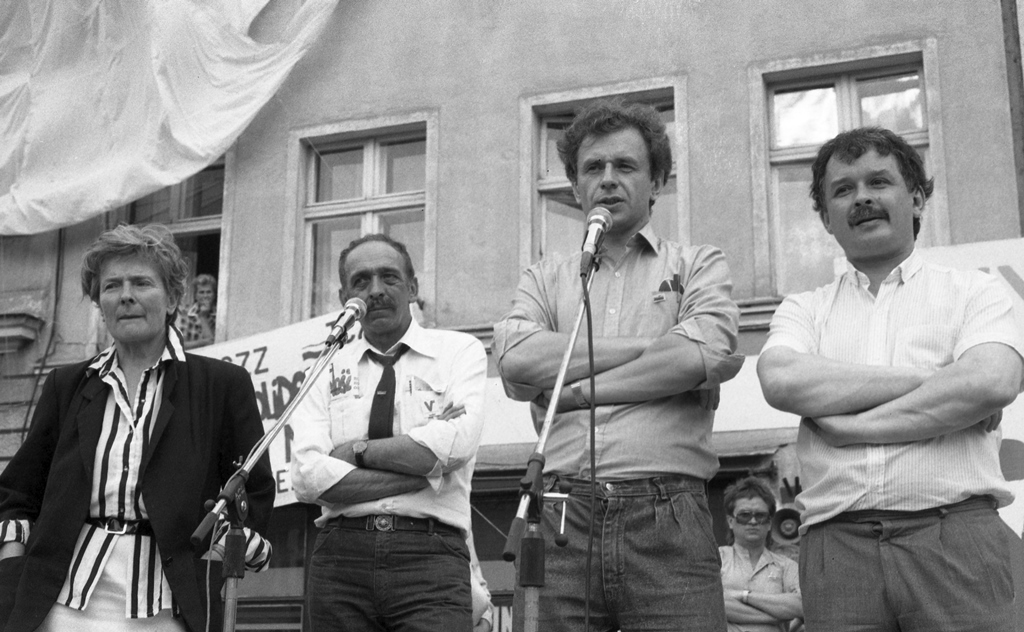
The success of the nonviolent revolution of 1989 is also thanks to women. They were involved at all levels: they took part in protests and strikes, produced samizdat, and provided logistical support, cooked meals while discussing strategy. They paid a high price for their involvement: they were harassed and imprisoned or forced into exile.
At the moment of democratic change and transformation, former female dissidents suddenly began to disappear from politics. Among the 58 participants in the round table talks in 1989, only one woman, Grażyna Staniszewska, represented the Solidarity movement. The other women played supporting roles. Only a few were involved in politics in the 1990s: Dana Němcová, Zuzana Mistríková, Barbara Labuda, Petruška Šustrová, Eleónora Sándor, Zofia Romaszewska, Gabriela Kaliská, and Olga Krzyżanowska. Former dissidents are mainly active in the civic and non-profit sectors, in education, culture, and foundations. Some have returned to their original professions, in which they were restricted during the communist era.
Grażyna Staniszewska: „I was always pushed into politics, but later I understood that it made sense. And that I could influence various things. One of my successes was that people voted for individuals, not entire lists of candidates. I felt I had a huge influence on what was happening in Poland.“
Zuzana Mistríková: „I have no desire to join politics as I don’t think that this country is shaped solely by the 150 people who sit in parliament. Each of us has the opportunity to influence our environment in our own field so that it functions as fairly and decently as possible.“ Denník N, Women of November, 17 November 2017
Dana Němcová: „Women rather inclined towards humanitarian and civil society organizations, such as the Helsinki Committee and other civic associations. In short, we stuck with the specific activities and work we had been doing up until then. We had no aspirations to develop any kind of ideology or party affiliation, as the men did.“
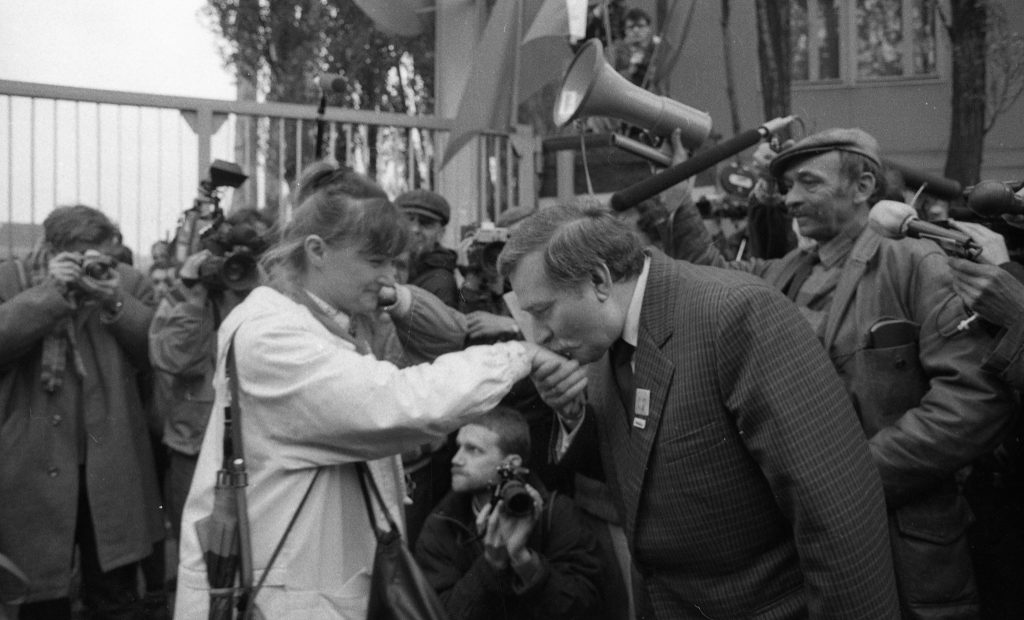
Source: Archive of Ośrodek KARTA, photo by Anna Pietuszko
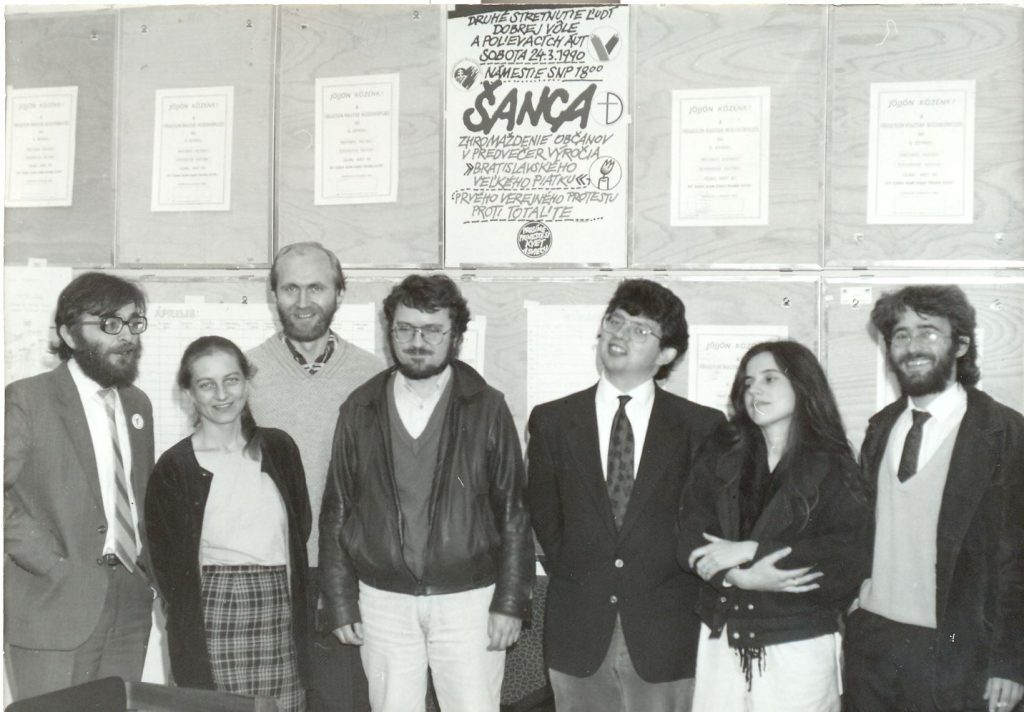
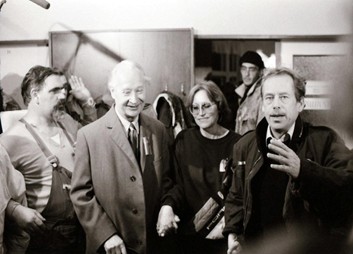
„Marta Kubišová’s „Prayer for Marta“ became the anthem of 17 November 17 and a symbol of the Velvet Revolution. She sang it on 21 November 1989, at Wenceslas Square, and today it is played during commemorative events. In the photo with Alexander Dubček and Václav Havel. Source: Archive of Vyšehradskej.cz, unknown author
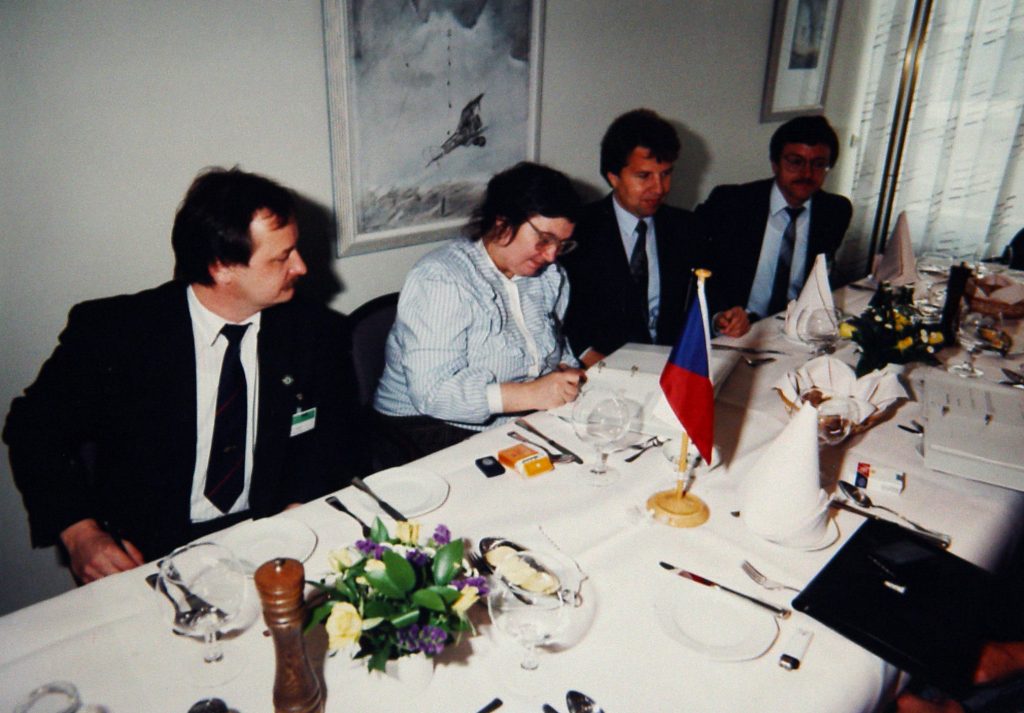
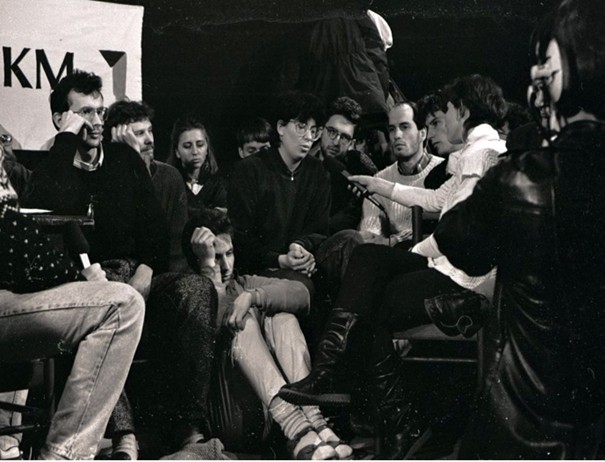
Source: Private archive of P. Šustrová / Nation’s Memory