Cultural life outside official structures and censorship could only develop thanks to the private initiatives of specific individuals. Concerts, author meetings, and theater performances took place in their apartments and cottages. Cellars and churches were transformed into alternative exhibition halls, and spontaneous happenings were organized in the streets and parks.
Kyra Matuštík: „At the time, I didn’t think I could get into trouble. I said they could take everything away from me, but they couldn’t take my soul.“
Ewa Dałkowska „It was the most amazing adventure I’ve ever had in my life. We had the opportunity to react directly to what was going on around us. We could stamp our feet, shout, laugh, whistle, and no censor had any influence on it.„
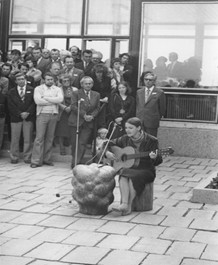
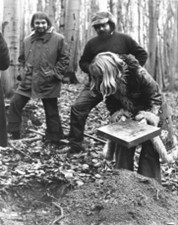
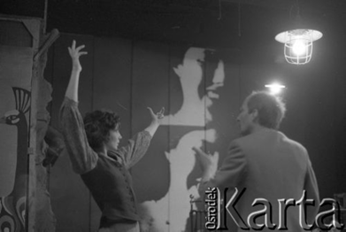
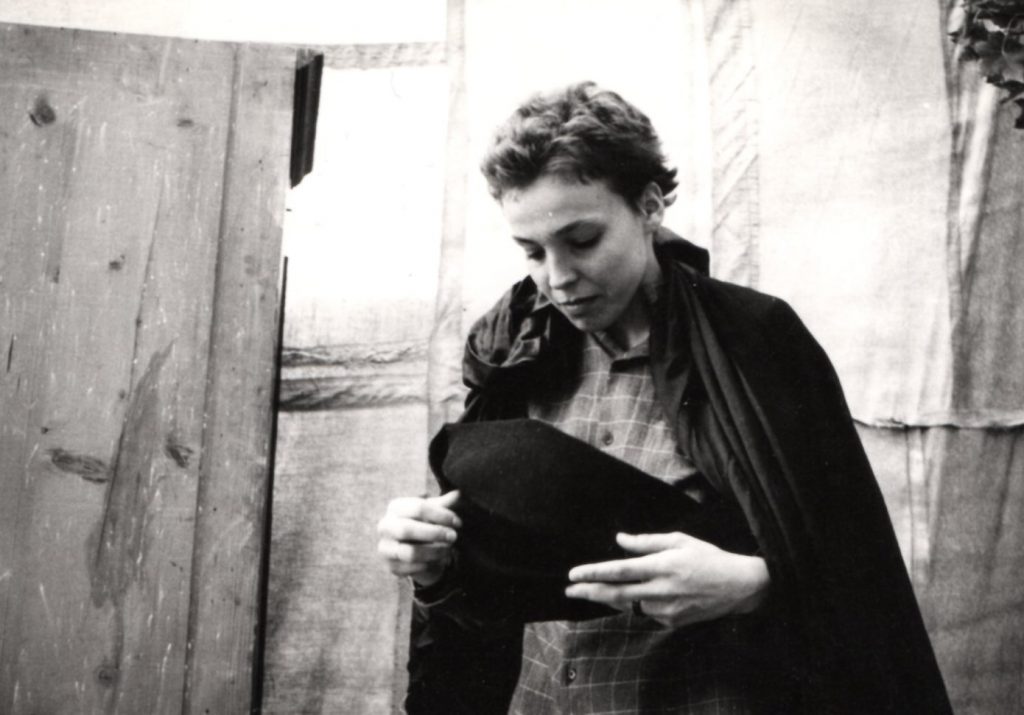
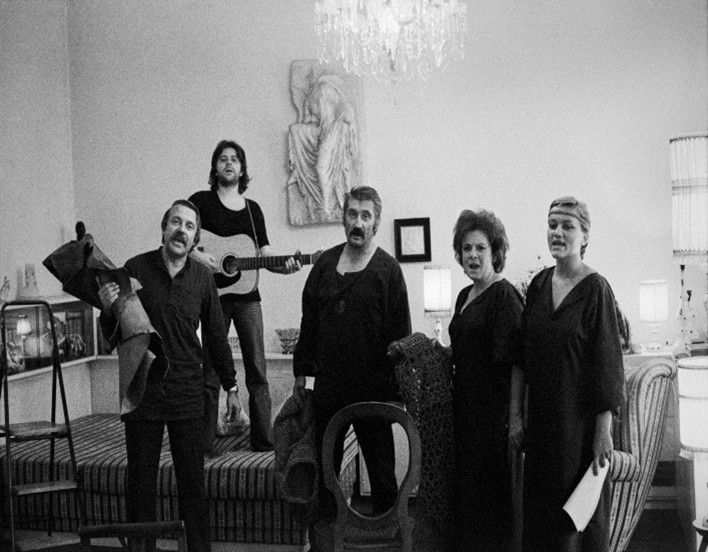
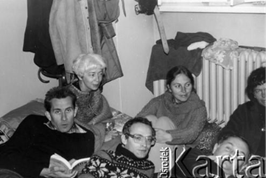
Vernissage of the unauthorized sculpture exhibition Meeting of Science and Art in May 1980. Zuzana Homolová plays the guitar and sings, behind her stands the curator of the exhibition, critic, and art historian Zuzana Bartošová, who organized a number of exhibitions of artists from the independent scene in the 1970s and 1980s. Source: Private archive of Z. Bartošová, photo by František EngelWomen helped shape Slovakia’s diverse alternative art scene: banned visual artist and performer Jana Želibská organized her own happenings and land art works. Ilona Németh, involved in anti-regime activities of the Hungarian minority, participated in the first festival of alternative, experimental, and multimedia art in 1988. The photo shows the burying of a box containing works by independent artists, including Jana Želibská, „for future generations“ on February 24, 1975, near Bratislava. Source: Private archive of Z. Bartošová, photo by Martin LičkoEwa Dałkowska was the co-organizer of Teatr Domowy, a residential theater, which presented plays by Václav Havel, among others, in private apartments during the state of emergency. The photo shows Ewa Dałkowska and Wojciech Pszoniak during a performance in 1977. Source: Archive of Ośrodek KARTA, photo by Jarosław TarańKyra Matuštík, one of the few Slovak signatories of Charter 77, co-organized independent cultural events. Together with friends from the Prague underground, they tore down Soviet flags and put up anti-regime stickers around the city. Source: Private archive of K. MatuštíkAfter being banned from public performances, actress Vlasta Chramostová organized theater performances in her apartment, involving other artists who had also been excluded from official cultural life. The photo shows the legendary play The Macbeth Play from 1978. From left: its author Pavel Kohout, singer-songwriter Vlastimil Třešňák, Pavel Landovský, Vlasta Chramostová, and Tereza Boučková. Source: Library of Václav Havel, photo by Oldřich ŠkáchaActress Halina Mikołajska was an important figure in Poland’s independent culture. She co-organized uncensored theater performances and participated in hunger strikes, protests, and demonstrations. The photo shows a hunger strike by members of KOR in the Church of the Holy Cross for imprisoned Czechoslovak Charter signatories in October 1979. In the front row, from left: Andrzej Czuma, Jan Lityński, and Jerzy Markuszewski; in the second row, from left: Halina Mikołajska, Joanna Gwiazda, and Anka Kowalska.
Source: Archive of Ośrodek KARTA, photo by Janusz Krzyżewski
Za účelem zlepšení našich služeb využíváme soubory cookies. Využívání našich webových stránek znamená, že cookies budou ukládány do Vašeho zařízení. Nastavení Vašeho prohlížeče lze kdykoli změnit. Zobrazit politiku cookies Read MoreACCEPT
Privacy & Cookies Policy
Privacy Overview
This website uses cookies to improve your experience while you navigate through the website. Out of these, the cookies that are categorized as necessary are stored on your browser as they are essential for the working of basic functionalities of the website. We also use third-party cookies that help us analyze and understand how you use this website. These cookies will be stored in your browser only with your consent. You also have the option to opt-out of these cookies. But opting out of some of these cookies may affect your browsing experience.
Necessary cookies are absolutely essential for the website to function properly. This category only includes cookies that ensures basic functionalities and security features of the website. These cookies do not store any personal information.
Any cookies that may not be particularly necessary for the website to function and is used specifically to collect user personal data via analytics, ads, other embedded contents are termed as non-necessary cookies. It is mandatory to procure user consent prior to running these cookies on your website.