


INDEPENDENT EDUCATION AND WOMEN
At a time when education was controlled, as were information and knowledge, educational activities independent of the regime became another form of dissent activity. Women participated in organizing secret lectures or foreign language courses, translated, distributed, and smuggled books from abroad. Children’s camps and youth events organized by environmental organizations and church circles became spaces of freedom. Dissidents sometimes held seminars in their own homes, such as Zdena and Julius Tomin in Prague, Soňa and Karol Říhovský in Bratislava, and Grażyna and Jacek Kuroń in Warsaw.
In Poland, the name „Flying University“ reflected the frequent changes in meeting locations. Among the lecturers were personalities such as Maria Janion, Barbara Skarga, and Irena Wóycicka. On the initiative of Teresa Bogucka, the so-called Flying Library was also created, which offered lending of banned books discussed in lectures.
Art historian Růžena Vacková, who spent a total of sixteen years in communist prisons, and Květuše Sgallová, who was expelled from university for political reasons and organized „underground Bohemistry,“ also participated in the secret education program.
Petruška Šustrová (spokespeople for Charter 77 and political prisoner): „We met once a week in the afternoon at the Baptist pulpit on Na Topolce Street, and there was a special, somewhat funny relationship between the teachers and students. Some of the students were already somewhat past the usual student age, and many of them had extensive experience in samizdat publishing. Of course, we liked and respected our professors – not only for their knowledge, but also for their courage.“ Lidové noviny 1.7.2011
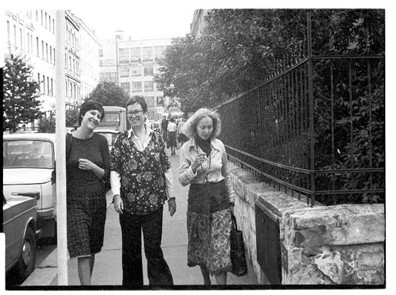
Photograph taken in 1979 by the secret police while monitoring people connected with the arrival of Oxford professor Kathleen Wilkes, who was giving a lecture at the Tomins‘. The IV. Directorate assigned twelve employees and six company cars to the operation. Pictured from left: Kateřina Dejmalová, Zdena Tominová, and Věra Jirousová in Prague. Source: Security Services Archive (ABS), SNB Surveillance Administration Fund – Files, Arch. Nr. SL-6467 MV (Code Name „Engineer 1“)
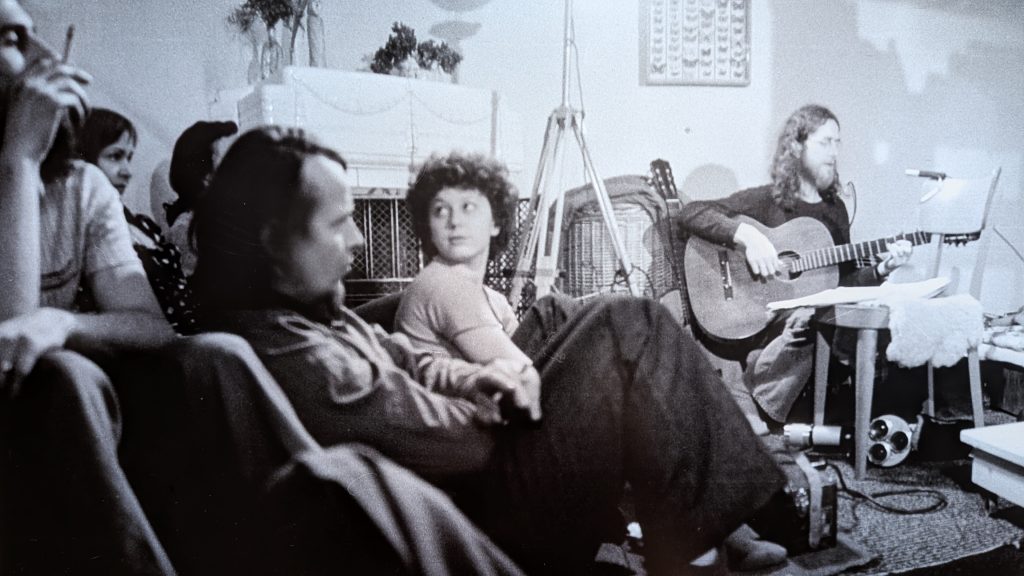
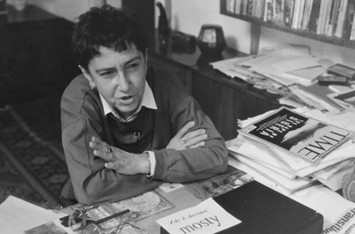
In the 1960s, Jiřina Šiklová co-founded the first department of sociology at Charles University’s Faculty of Arts. After being dismissed, she continued to provide consultations to students and was also an important figure in smuggling exile literature and texts by banned authors abroad. Source: Private archive of J. Šiklová / Nation’s Memory