The free dissemination of uncensored information became an important weapon for the anti-communist dissent, with the Polish „Second Circulation“ and the Czech and Slovak samizdat playing a key role. The publication of independent magazines, leaflets, and books by banned authors, and their distribution, opened up space for free social and cultural life. Women were active as authors, publishers, editors, and translators, and they also retyped hundreds of thousands of pages on typewriters.
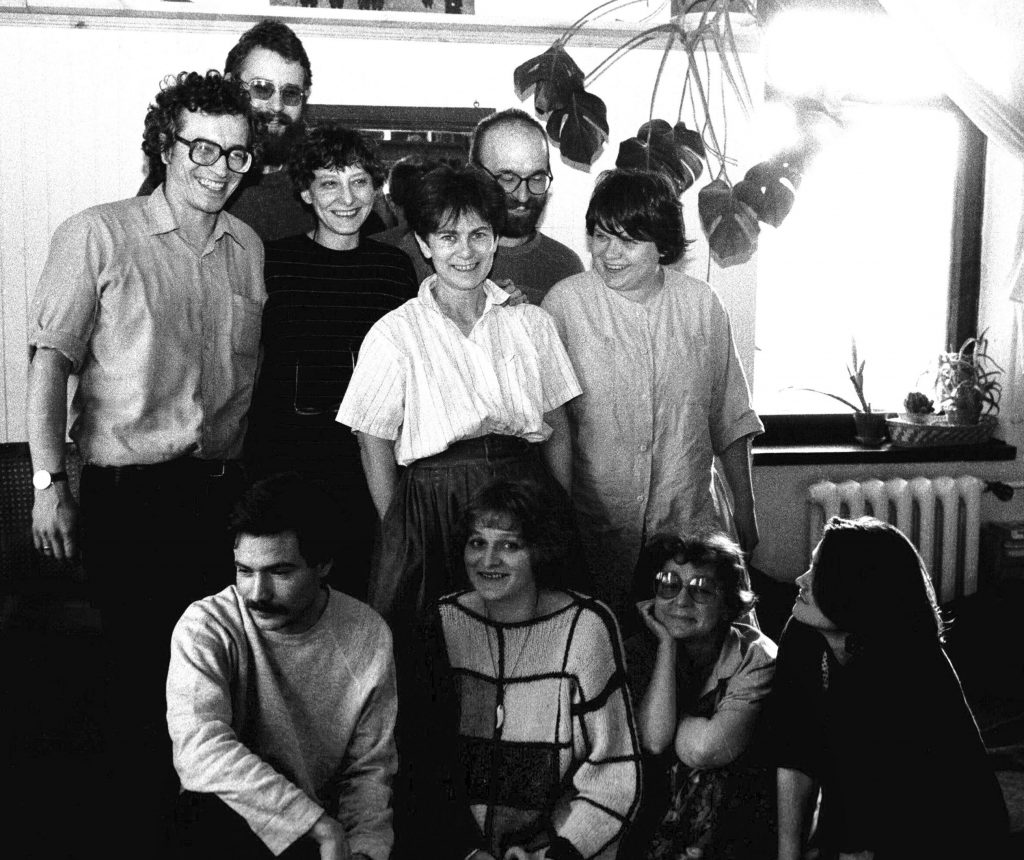
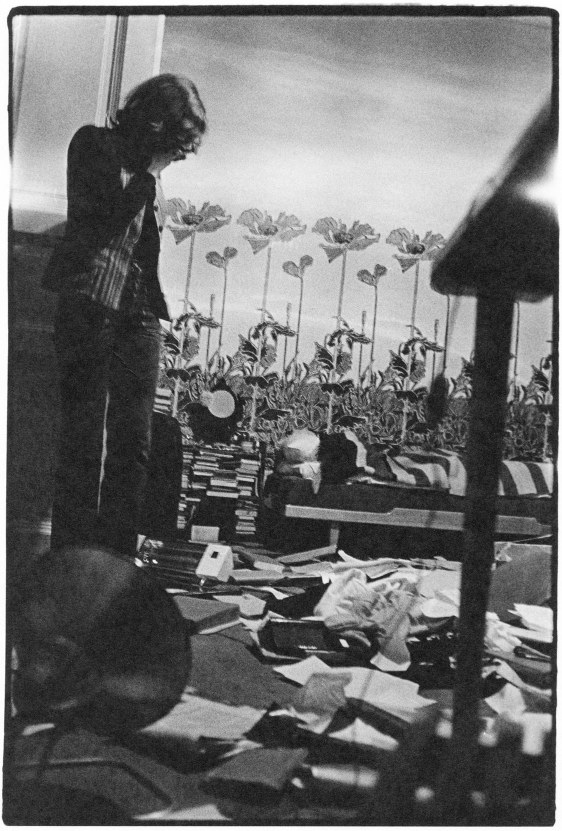
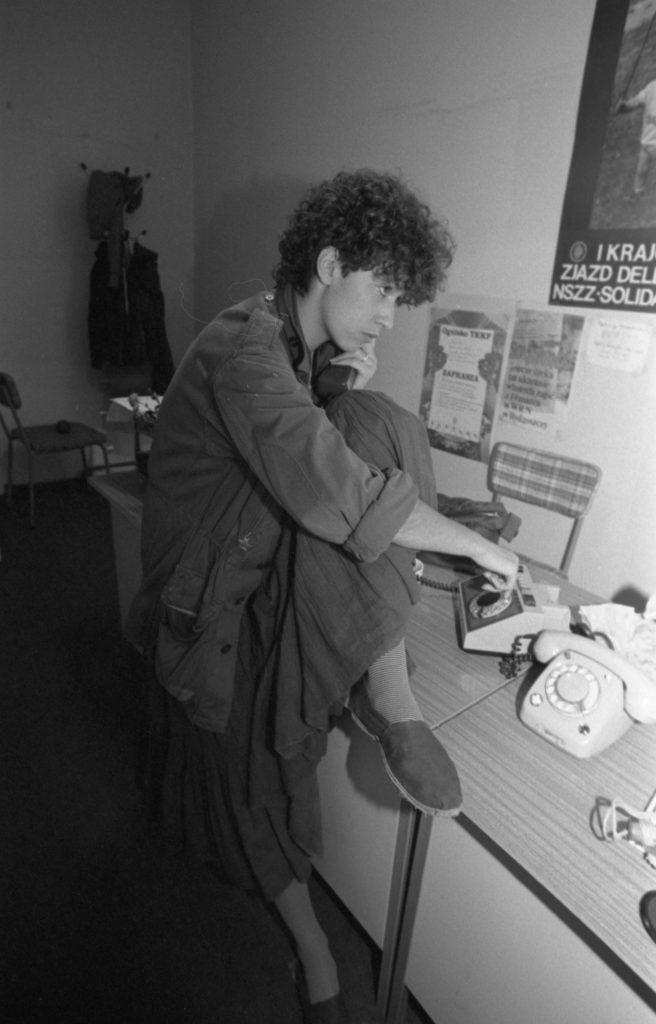
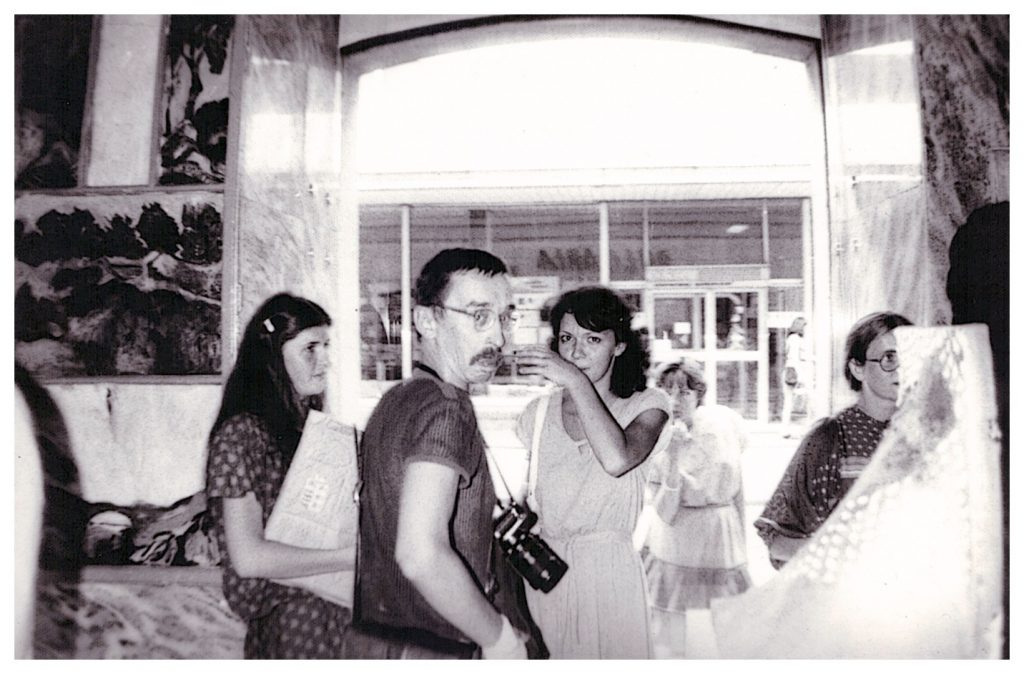
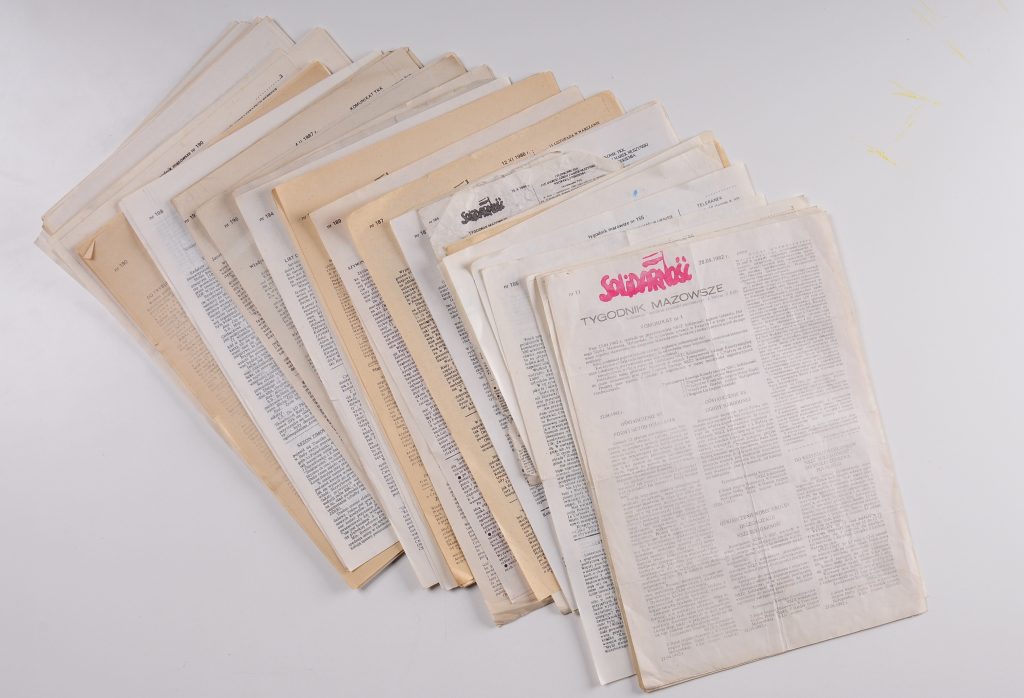
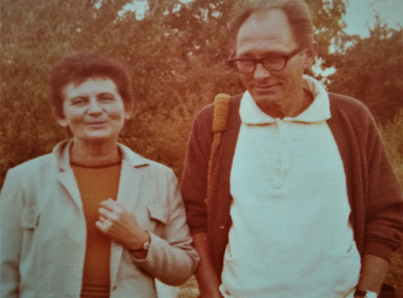
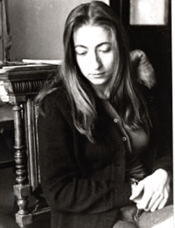
The most influential underground newspaper in Poland was Tygodnik Mazowsze, which had a circulation of several thousand copies. Its editorial staff included (from left, top) Wojciech Kamiński, Tomasz Burski, Joanna Szczęsna, Helena Łuczywo, Piotr Pacewicz, Anna Bikont; (from left, seated) Krzysztof Lesk, Marta Woydt, Zofia Bydlińska, Olga Iwaniak. Source: Archive of Ośrodek KARTA, photo by Anna Pietuszkoaňa Horáková, together with Václav Havel, ran one of the most important samizdat publishing houses, Edition Expedition. It published poetry, prose, political, and philosophical-theological texts. Many women transcribed texts for the Expedition and other samizdat publishing houses, risking interrogation, and persecution. In the photo, Daňa Horáková in her apartment after a house search. Source and photo: Bohdan Holomíček1981, Warszawa, Polska.ona Rajpert, who worked as a graphic designer creating book covers for the independent publishing house Niezależna Oficyna Wydawnicza NOWA, at the Solidarity printing center in Warsaw in 1981. Source: Ośrodek KARTA archive/Independent Polish AgencyĽudmila Pastierová was involved in the Bratislava samizdat movement. The secret police regularly interrogated her and searched her apartment. Pictured on the left, at the opening of an exhibition by independent artist Jaro Štuller in 1983. Source: Private archive of Ľ. Pastierová, photo by J. ŠtullerWeekly Mazowsze, Source: Digital Libraries Federation, Europeana 1989, CC BY-SA 3.0 PLTranslating the banned authors was dangerous. As a translator, Marta Ličková and her husband helped the world in discovery of Alexander Solzhenitsyn, a critic of the Soviet system. Pavol Lička was one of the first Slovak prisoners of normalization, and his wife had to endure frequent interrogations and house searches. She struggled to support her family and had to translate under a pseudonym until 1989. Dissident Eva Šimečková translated George Orwell’s cult novel 1984 while her husband Milan Šimečka was in prison. It was published in samizdat and by the exile publishing house Index. Source: Private archive of the Lička familyAt the end of the 1980s, Jarmila Johnová organized the distribution of photocopiers for reproducing illegal materials and Charter 77 documents. She had been involved in samizdat since her university studies. Source: Private archive of J. Johnová, photo by Jiří Dienstbier
Za účelem zlepšení našich služeb využíváme soubory cookies. Využívání našich webových stránek znamená, že cookies budou ukládány do Vašeho zařízení. Nastavení Vašeho prohlížeče lze kdykoli změnit. Zobrazit politiku cookies Read MoreACCEPT
Privacy & Cookies Policy
Privacy Overview
This website uses cookies to improve your experience while you navigate through the website. Out of these, the cookies that are categorized as necessary are stored on your browser as they are essential for the working of basic functionalities of the website. We also use third-party cookies that help us analyze and understand how you use this website. These cookies will be stored in your browser only with your consent. You also have the option to opt-out of these cookies. But opting out of some of these cookies may affect your browsing experience.
Necessary cookies are absolutely essential for the website to function properly. This category only includes cookies that ensures basic functionalities and security features of the website. These cookies do not store any personal information.
Any cookies that may not be particularly necessary for the website to function and is used specifically to collect user personal data via analytics, ads, other embedded contents are termed as non-necessary cookies. It is mandatory to procure user consent prior to running these cookies on your website.