
PERSECUTED
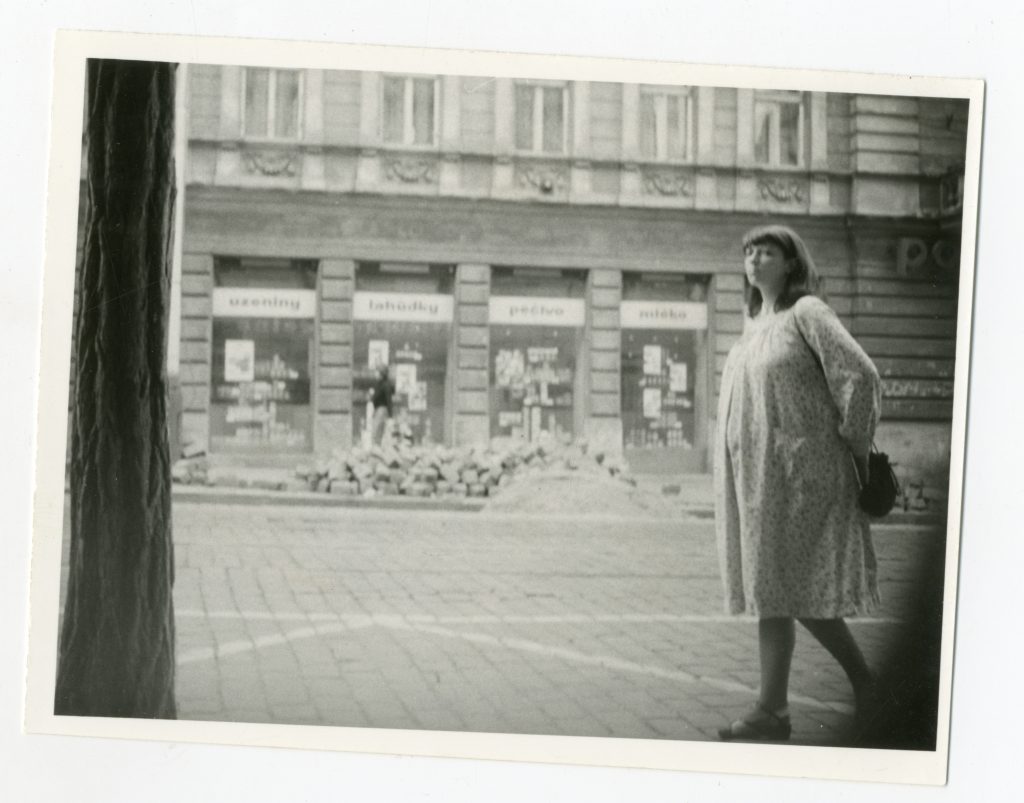
The secret police stopped at nothing – not even pregnancy, breastfeeding, or having small children protected women. On the contrary, during interrogations and house searches, mothers had to endure threats that „something“ might happen to their children.
The children of dissidents also became targets of repression by the secret police, witnessed interrogations and house searches, and were bullied at school. They had to endure the unexpected absence of their parents. Iva Kotrlá’s son was interrogated by the Secret Police at the age of 12, and her daughter was not admitted to any school, even though she had successfully passed the admission exams. The children of Janina Konczak Gotner, who was interned during the state of emergency, were taken to a children’s home, where they were told that they were there because of their mother. Zofia Romaszewska’s 19-year-old daughter, Agnieszka, was interned in place of her mother. The police officer was supposed to arrest Zofia, but when he learned that he was dealing with another Mrs. Romaszewska, he simply said, „Never mind,“ and took Agnieszka away. During her interrogation, Krystyna Starczewska heard: „A girl who looks like your daughter is walking in the park when a group of hooligans appear and rape her. The perpetrators are unknown. Do we understand each other?“
Ivanka Hyblerová: „What should we think of people who ruthlessly arrested and interrogated women in the late stages of pregnancy? One evening, they arrested me at Anna Šabatová and Petr Uhl’s house. Although I had my 16-month-old daughter in her pram and was nine months pregnant, they detained me and then interrogated me. After my interrogation, they continued to detain my husband, so I had to walk home alone from the Peace Square to our home on Myslíkova Street, in the evening, with little Žofinka in her pram, knowing that I could go into labor at any moment.“
Barbara Labuda: „I remember that after my arrest, when I had already been in prison for several months, I was given permission to visit my son. I apologized to him for being in prison, for not being with him. And he said to me: „You know, Mom, I understand, I know you have two children: me and Solidarity.“
Gabriela Langošová: „Most of all I was afraid that they would do something to the children. For example, sometimes they would start banging on our door and ringing the bell at half past five, and Jano would get really angry and say that it was rude – he was very well-mannered – and that we wouldn’t open the door before half past six. But it was awful waiting for that hour to pass. Then they took him away, and neither I nor the children knew what would happen. I calmed the children down and they went to school, then Jano came back from the interrogation and said that they had told him that the children could be hit by a car, that it wasn’t just a matter of course. Things like that used to upset me completely, I felt anxious about it.”
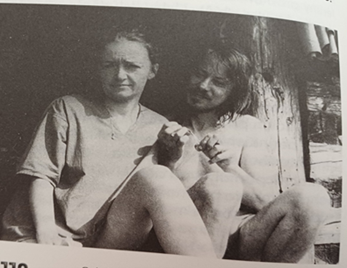
Gabriela Langošová with her husband Ján in the mountain village of Brízgalky in the 1970s. Many dissidents visited their simple cottage, which was, among others a favorite of Olga Havlová. Photo: Private archive of the Langoš family
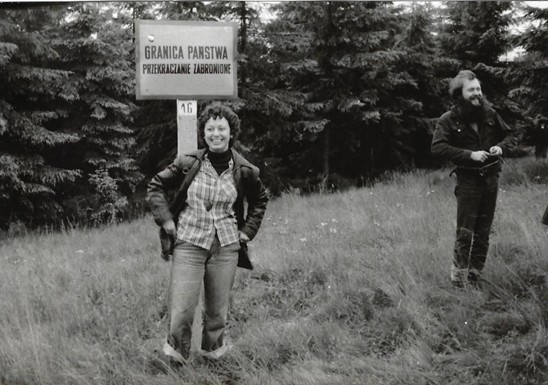
Wiretapping was also a form of persecution. Jolana Kusá, wife of Charter 77 signatory Miroslav Kusý, recalls that the Secret Police accused her of installing wiretapping devices in her apartment herself as a jealous wife. The regime labeled the family of Julia Kalinová, later Sherwood, as hostile to the state and refused to admit her to university for years; they later went into exile. „The transmitter was under the parquet flooring, and when my father wanted to copy down the number, he opened the parquet again, but it was no longer there. That was probably the biggest shock we experienced. Because we realized that they could come to us whenever they wanted.“ In the photo, during an „illegal“ crossing of the Polish-Czechoslovak border on a trip in the summer of 1978. Photo: private archive of J. Sherwood